
Last updated November 15, 2026
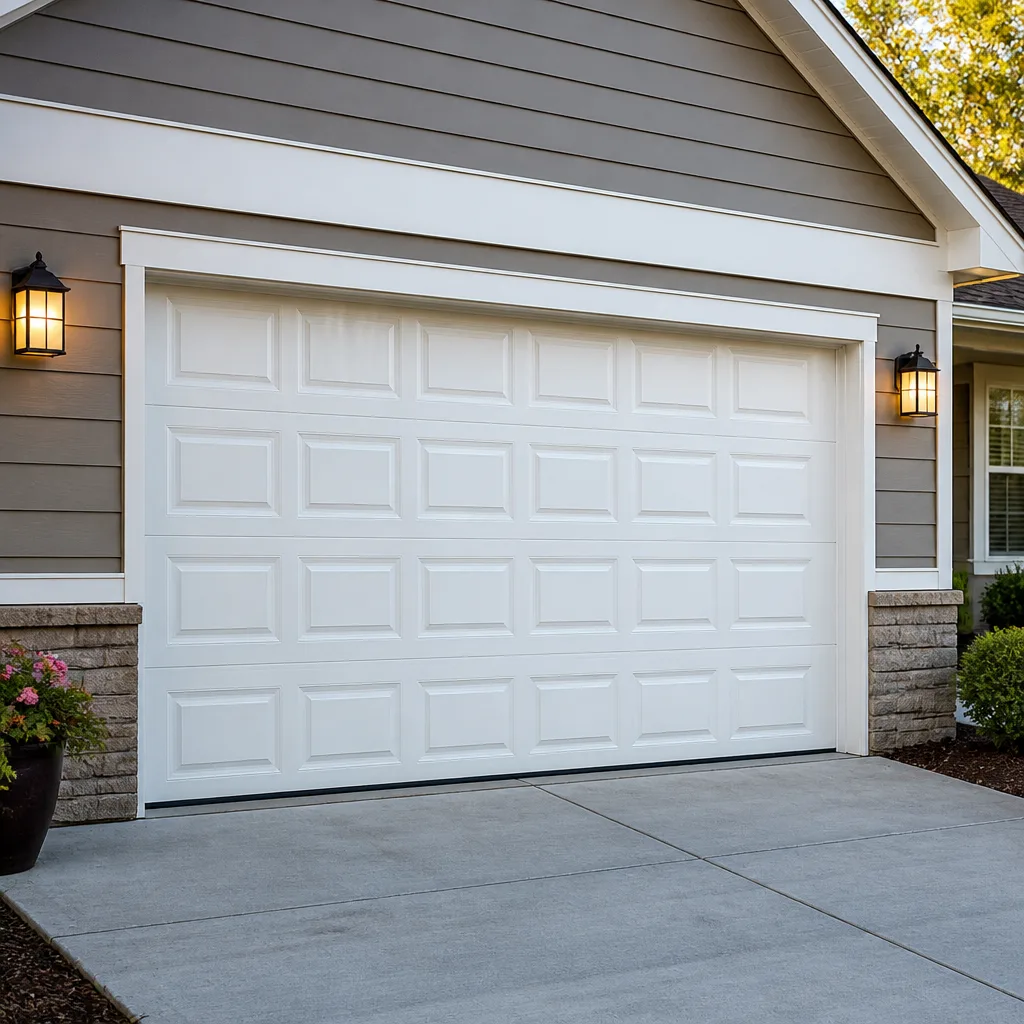 Raised-panel steel
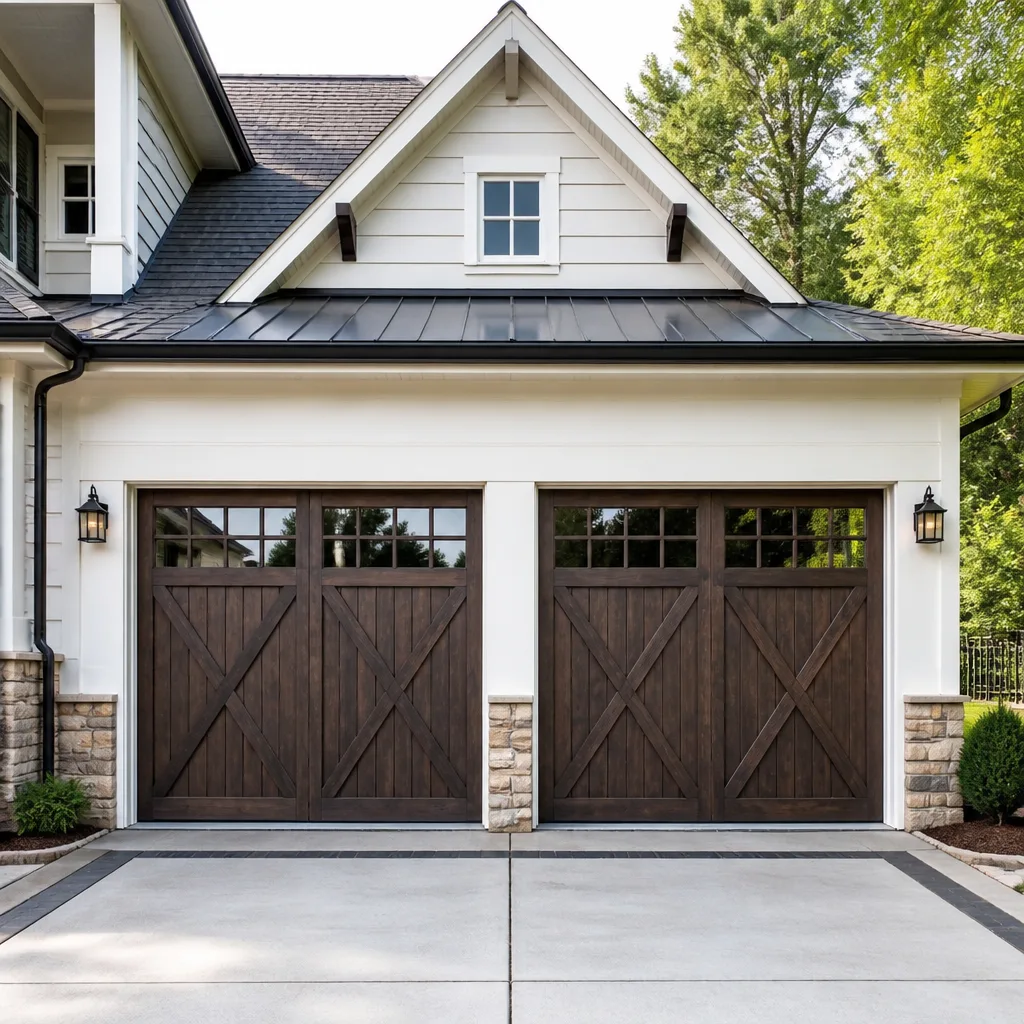 Carriage house
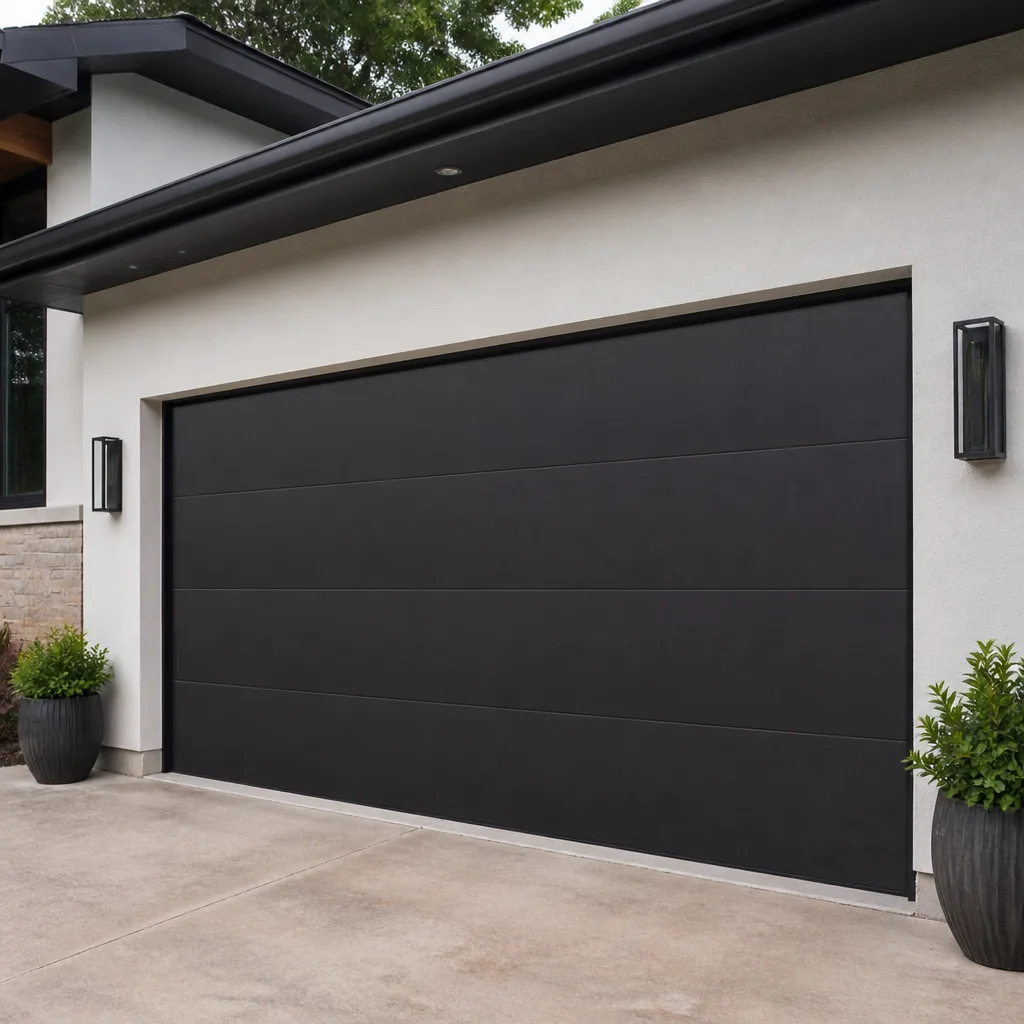 Modern flush
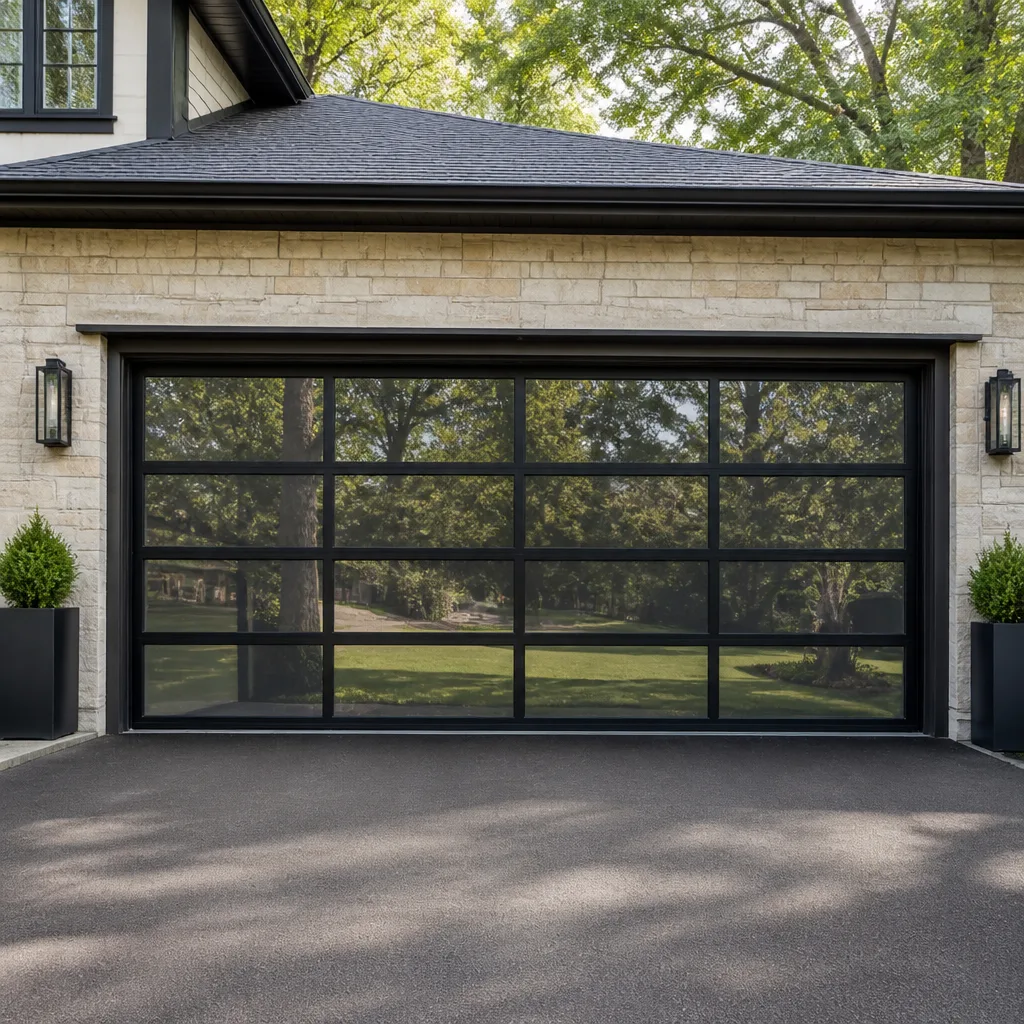 Full-view glass
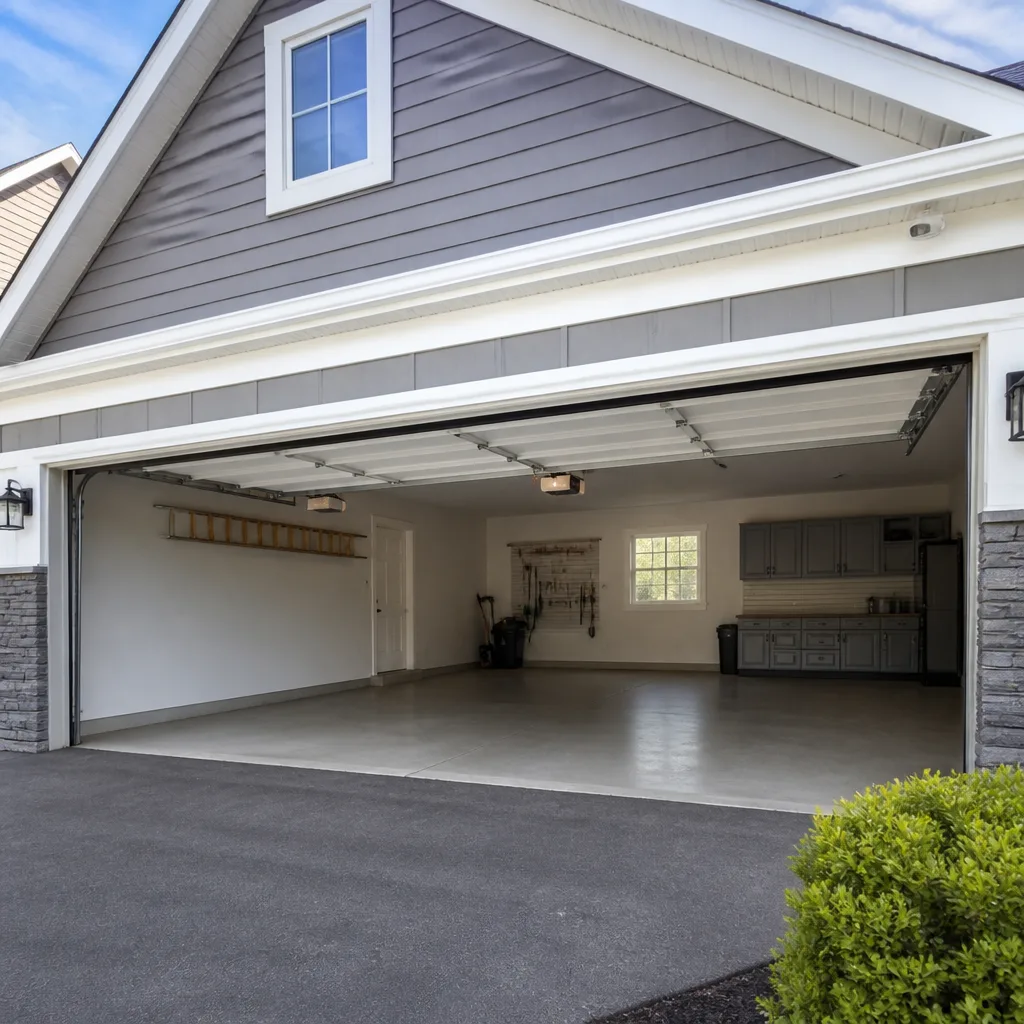 LiftMaster openers
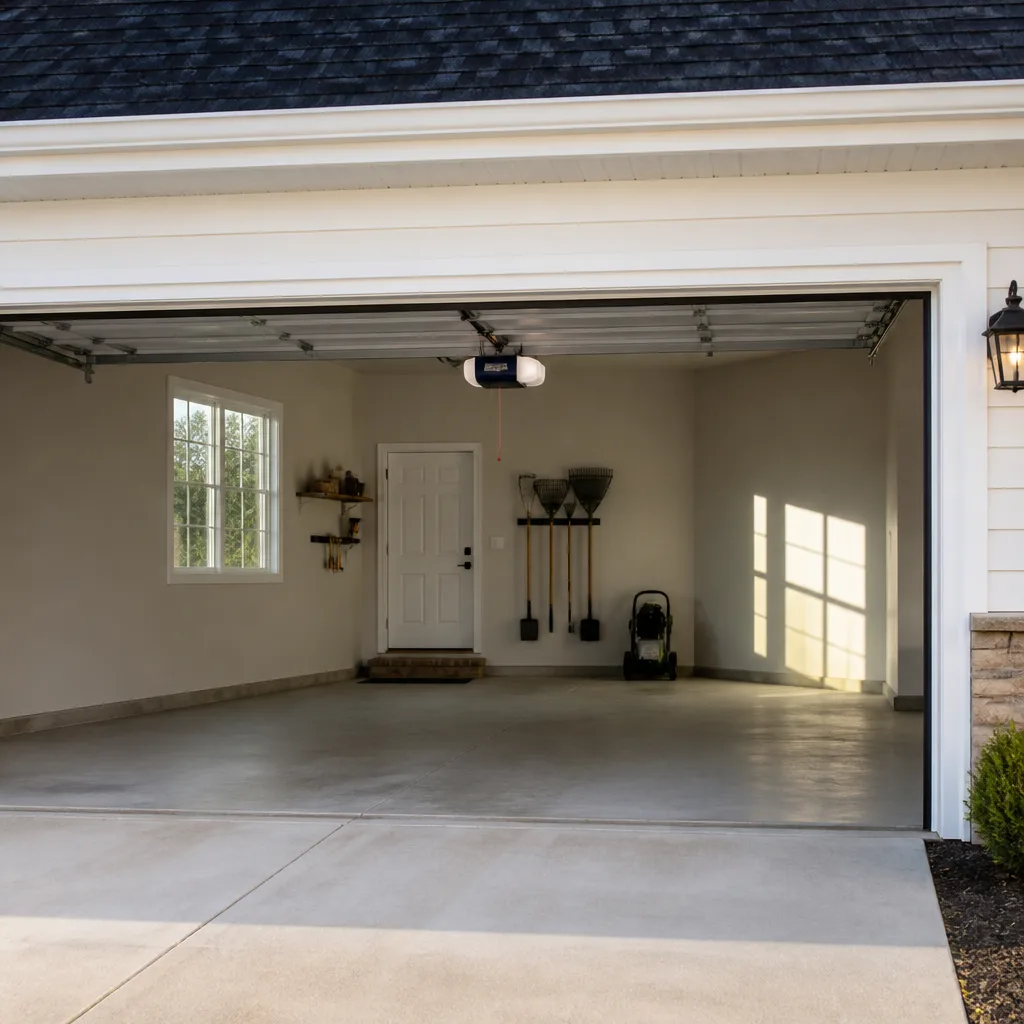 Chamberlain openers
Full 25-point door and opener safety check with every visit - springs, cables, rollers, tracks, and your LiftMaster or Chamberlain opener included
You get a price before we start. It does not change when the pro arrives.
Get your free estimateGarage Door Emergency Preparedness Guide for Palm Coast Homes
Most Palm Coast homeowners treat the garage door as an appliance: it opens, it closes, and nobody thinks about it until a storm is on the radar and the power is already flickering. Here’s the counterintuitive part. The feature you’ll need most during a Flagler County power outage isn’t a battery or a generator. It’s a rope with a handle on it, and most families have never once pulled it. When a storm knocks the grid out, a garage door that won’t disengage by hand traps your car, your supplies, and sometimes your escape route. This guide walks you through the manual release, the right way to secure a dead door before a storm, and the sequence to get everything re-engaged once the lights come back.
Quick Answer
A garage door emergency plan in Palm Coast comes down to three things: knowing how your manual release works before you need it, securing the door safely when the opener dies and weather is closing in, and knowing which failures you can wait out and which ones require a technician right away. Test the release cord while the power is on and the door is down, keep the door balanced and lubricated ahead of storm season, and never force a stuck door or prop a dead one open with whatever’s in the garage. That preparation is what separates a minor inconvenience from a real safety problem.
Styles & brands we work with
- Raised-panel steel
- Carriage house
- Modern flush
- Full-view glass
- LiftMaster openers
- Chamberlain openers
Table of Contents
- How Does the Manual Release Work on a Garage Door?
- What Mistakes Do People Make Under Stress?
- How Do You Secure a Garage Door When the Opener Is Dead?
- What Should Be on Your Pre-Storm Garage Door Checklist?
- What Do You Do When the Door Won’t Re-Engage After Power Returns?
- The Diagnostic Sequence, Step by Step
- When to Call a Technician and When to Wait
- After the Storm: What to Check Before You Use the Door Again
How Does the Manual Release Work on a Garage Door?
Every automatic garage door has a manual release, and it works the same way on nearly every brand. A cord with a red or T-shaped handle hangs from the trolley that connects the opener’s rail to the door. Pulling that handle disconnects the door from the opener so you can lift it by hand. That’s the whole mechanism. The confusion comes from how people pull it, when they pull it, and what state the door is in when they do.
The correct sequence for using the manual release is short, but each step matters:
- Make sure the door is fully closed first. Disengage the opener only when the door is down. Pulling the release with the door partway up leaves a heavy panel hanging on the springs, and the door can drop.
- Stand clear of the door’s path and to the side of the track. Reach for the cord without standing directly under the panels.
- Pull straight down firmly until you feel the trolley click free. A short, sharp pull works better than a slow tug.
- Lift the door by hand slowly. A properly balanced door should rise with steady pressure and stay up on its own once it’s open most of the way.
If the door feels impossibly heavy, or if it slams down when you let go, stop. Something is wrong with the springs or the balance, and this is exactly where homeowners get hurt. High-tension springs and the cables that run alongside them store enormous force and can cause serious injury if they fail while you’re working near them. We never recommend adjusting, removing, or touching a spring or cable yourself. Our technicians have up to experience precisely because this isn’t the part of the job to learn by trial and error.
In our experience across Palm Coast, the single best thing you can do is test the release on a calm afternoon with the power on. Pull it with the door closed, lift the door by hand to feel the weight, then re-engage it and run the opener to confirm it still works. Practicing when nothing’s at stake is how you avoid fumbling in the dark. For the actual repair side of door problems, our garage door repair team handles springs, cables, tracks, and panels.
What Mistakes Do People Make Under Stress?
Stress changes how people handle a garage door. In a hurry, with a storm approaching and the power already out, the brain reaches for shortcuts that turn a manageable situation into a stuck door or a dangerous one. We’ve walked into enough post-storm scenarios to know the patterns. Here’s what tends to go wrong.
Pulling the release while the door is up. This is the most common one. People come home, hit the button, the door starts to rise, the power cuts out, and they panic-pull the cord with the door half open. Once disengaged, that door is dead weight held only by the springs. It can drop hard and fast. Always close it manually first, then disengage.
Yanking the cord without understanding the trolley. Some homeowners pull so hard and fast that the cord snaps or the trolley jams at an angle. The door is now neither connected nor cleanly released. If you feel resistance that won’t give, stop pulling and look at the trolley before you try again.
Forcing a heavy door up or down. If the door won’t move easily by hand, the spring system may have failed. Forcing it bends panels, tweaks the tracks, and puts you next to a spring under load. Leave it and call for help.
Re-engaging by hand with the opener running. Never try to click the trolley back onto the rail while the opener motor is cycling. That’s how people get a finger caught or jam the mechanism.
Propping the door open with whatever’s handy. A dead door held up by a broom handle or a cooler is a door waiting to fall on someone. If you need the door open for ventilation or access, get the opener or the balance fixed rather than improvising a prop.
Assuming the release handle is reachable. In a two-car garage packed with boxes, the cord is often buried behind the hood of a car. Clear that space today, not during a storm warning.
These aren’t exotic failures. They’re the ordinary results of doing the right action in the wrong order. If a door has already been forced and now sits crooked or won’t close, that’s a repair call, and we’d rather see it before it becomes a bigger job.
How Do You Secure a Garage Door When the Opener Is Dead?
When the opener is dead and a storm is coming, the goal is simple: get the door fully closed and keep it there. A closed garage door is far more storm-resistant than an open one, and it also keeps wind-driven rain and debris out of the house. The right approach depends on whether the door is already closed or stuck open.
If the door is closed and the opener is dead: You’re in the best position. Leave the door down. Don’t disengage the release unless you actually need to lift it by hand, because leaving the trolley engaged keeps the door locked to the rail. If your opener has a manual lock or a deadbolt slide on the track, engage it. Then focus on the house, not the door.
If the door is stuck open: This is the situation to avoid, but it happens when power cuts out mid-cycle. Do not stand under the door and try to strong-arm it closed. Disengage the release with the door in whatever position it’s in, then lower it slowly by hand while standing to the side, letting the springs do most of the work. If it won’t come down smoothly or it fights you, leave it where it is and call for help. A door that resists is telling you something failed.
The wrong ways to secure a door are the ones we see most in Palm Coast after a storm warning: wedging a chair against the inside of the door, tying it shut with rope, or stacking boxes behind it. None of these hold against wind pressure, and all of them create hazards. The right way is to use the door’s own hardware, or to get a technician out to fix the opener so the door closes on its own.
What about sandbags or panels across the door opening? Those are flood measures for the house, not garage door fixes, and they don’t substitute for a door that closes properly. If your opener is failing before a storm, the honest move is to get it looked at now. Our garage door opener repair service covers LiftMaster, Chamberlain, Genie, and the older mechanical units that many Palm Coast homes still run.
What Should Be on Your Pre-Storm Garage Door Checklist?
A little preparation before storm season beats scrambling during a warning. This checklist is what we’d run through on our own homes, and most of it takes an afternoon.
Inspect:
- Look at the springs above the door. Rust, gaps, or a stretched look are signs of wear.
- Check the cables on each side for fraying or slack.
- Look at the tracks for dents, bends, or debris that could stop the door mid-travel.
- Run the door up and down and listen. Grinding, popping, or a door that hesitates means something needs attention.
- Check the weather seal along the bottom. A torn seal lets water and wind in during a storm.
Disengage and test:
- With the door closed, pull the manual release and lift the door by hand. It should move with moderate effort and hold open.
- Lower it gently, then re-engage the trolley and run the opener once to confirm normal operation.
- Confirm the release cord is reachable and not tangled in stored items.
Document:
- Take photos of the door, opener, and any existing wear before storm season. If there’s damage afterward, you’ll have a record of the condition beforehand.
- Write down the make of your door and opener. Clopay, Amarr, and Wayne Dalton doors and LiftMaster, Chamberlain, and Genie openers are all common in Palm Coast, and knowing what you have speeds up any repair. Wayne Dalton doors in particular use a proprietary torque-tube spring system that many general handymen decline to work on, so it pays to know your brand.
- Save a technician’s number somewhere that doesn’t depend on your phone’s battery.
Set a backup battery on your opener if it supports one. Many modern LiftMaster and Chamberlain units accept a battery backup that lets the door run a few cycles during an outage, which buys you time and convenience. Check your manual for whether yours does.
What Do You Do When the Door Won’t Re-Engage After Power Returns?
Power comes back, you press the button, and the opener runs but the door doesn’t move. Or the door moves but the trolley won’t click back onto the rail. This is a common post-outage problem, and it’s usually fixable without a service call. The trick is working through it in order instead of forcing anything.
The most frequent cause is a trolley that’s out of position. When you disengaged the release, the trolley stayed where the door was. The opener, once powered, may have cycled and moved the rail’s carriage, so the two no longer line up. The fix is to bring them back together: run the opener once so the carriage returns to a known position, then pull the manual release cord again to reset the trolley, then use the wall button or remote to cycle the door. In many cases, the trolley re-engages on the next full cycle.
A second common cause is a door that’s slightly off its closed position. The opener won’t engage a door that isn’t seated properly at the bottom. Check that the door is fully down against the floor and sitting square in both tracks. If one side is riding higher than the other, the door is off balance, and that’s a spring or cable issue rather than an opener issue. Don’t force it.
A third possibility is a tripped safety sensor or a limit switch that needs resetting. The photo-eye sensors near the floor can be knocked out of alignment by debris or a bump during the storm. Clean the lenses, check that the indicator lights on each sensor are steady, and try again. If the opener’s light flashes a code, check the manual, because modern openers use flash patterns to tell you what’s wrong.
If the door still won’t re-engage after working through these, the problem is likely mechanical rather than electrical. That’s when it’s worth having a technician look, because it could be a stripped gear, a failed logic board, or a door that needs a spring adjustment. Diagnosing by brand matters here. A Genie with a chain drive fails differently than a LiftMaster with a belt, and a Wayne Dalton door behaves differently than a Clopay when the balance is off.
The Diagnostic Sequence, Step by Step
When something’s wrong after an outage, work through this sequence in order. Each step rules out a cause before you move to the next, so you’re not guessing.
- Confirm the power. Check the outlet the opener plugs into, and check the breaker. A tripped breaker looks like a dead opener and isn’t.
- Check the wall control and remote. Try both. If one works and the other doesn’t, the problem is the control, not the opener.
- Look at the safety sensors. Both lights should be steady, not blinking. Clear debris and realign if needed.
- Listen to the opener. A hum with no movement suggests a gear or motor issue. Silence suggests power or logic. A click but no motion suggests a limit switch or board.
- Try the manual release. With the door closed, disengage and lift by hand. If the door is heavy or won’t stay up, the problem is the door’s spring system, not the opener.
- Check for physical obstruction. A bent track, a piece of debris, or a misaligned panel can stop a door that otherwise runs fine.
- Reset the opener. Unplug it for a minute, plug it back in, and cycle the door once. Some units need a full cycle to relearn limits after a power loss.
Running through this sequence takes ten minutes and tells you whether the problem is electrical, mechanical, or structural. If it points to anything involving springs or cables, stop and call. Those aren’t parts to diagnose by feel. And if you’re not sure which step applies, a phone call is cheaper than a wrong guess.
When to Call a Technician and When to Wait
Not every garage door problem is urgent, and knowing the difference saves you a panic call during a storm. Here’s how we think about it.
Call a technician right away if:
- The door is stuck open and won’t come down, especially with weather approaching.
- You hear a loud bang from the garage and the door won’t lift – that’s often a broken spring.
- A cable is hanging loose, frayed, or snapped.
- The door is crooked, off its tracks, or hanging at an angle.
- The opener runs but the door doesn’t move, and you’ve already tried the reset and the manual release.
- The door has damage from wind or debris and won’t close flush.
It’s generally safe to wait until the storm passes if:
- The door is closed and stays closed, and the opener just won’t run.
- The remote doesn’t work but the wall button does.
- The opener is noisy but the door still travels normally.
- The safety sensors are dirty or misaligned but the door is closed and secure.
If you need a technician during a storm warning, our phone line is staffed regardless of the weather. We answer 24/7. Fast dispatch from 7am to 7pm, Sunday through Friday.
After the Storm: What to Check Before You Use the Door Again
Once the weather clears, don’t just press the button and assume everything’s fine. Storm damage to a garage door is often subtle, and running a compromised door can turn a small problem into a big repair. Here’s what we look for after a storm in Palm Coast.
Start with a visual walk-around before you power anything. Look at the panels for dents or bends, the tracks for debris or misalignment, and the bottom seal for tears. Check the springs and cables for anything that looks different from your pre-storm photos. Look for water intrusion around the door and along the floor. If the door looks physically sound, run it once by hand with the release engaged to feel whether it’s still balanced and moving smoothly. Only then re-engage and test the opener.
Watch for these post-storm signs that warrant a call:
- The door travels unevenly or stops partway.
- Grinding or scraping sounds that weren’t there before.
- The door doesn’t sit flush against the floor.
- The opener strains or the door reverses on its own.
- Visible damage to the panels or the frame.
If your door has storm damage, get it assessed before continuing to operate it. A bent track that gets used repeatedly will wear the rollers and eventually damage the panels. Fixing it early is usually simpler than fixing it later.
For homes in Palm Coast neighborhoods like Palm Harbor, Indian Trails, and Grand Haven, the pattern is the same: a home that’s been through a few storm seasons without a garage door inspection tends to have small issues that add up. A door that’s been off balance for a while, or an opener that’s been straining, is going to be less reliable when the next outage hits. That’s why we recommend a check before storm season rather than after.
Common Mistakes to Avoid
- Disengaging the release with the door up. This puts a heavy door on the springs alone. Always close the door before pulling the handle.
- Forcing a stuck door. If the door won’t move easily by hand, the spring or cable has failed. Forcing it bends panels and puts you near a loaded spring.
- Standing under the door while testing the release. Reach for the cord from the side, not from directly beneath. A door that drops will drop fast.
- Assuming the opener’s battery backup is working. Many units have a backup that’s never been tested. Check yours before you need it, not during an outage.
- Ignoring cosmetic damage. A small dent in a panel can worsen over time and compromise the door’s structure. Get it looked at rather than letting it ride.
- Propping a dead door open with household items. A cooler or a broom handle isn’t a lock. A door held open by something temporary is a door waiting to close on someone.
- Calling only after the storm. If your door has been struggling for weeks, the middle of a storm warning is a bad time to discover it. Get it inspected before the season, not after.
See the difference
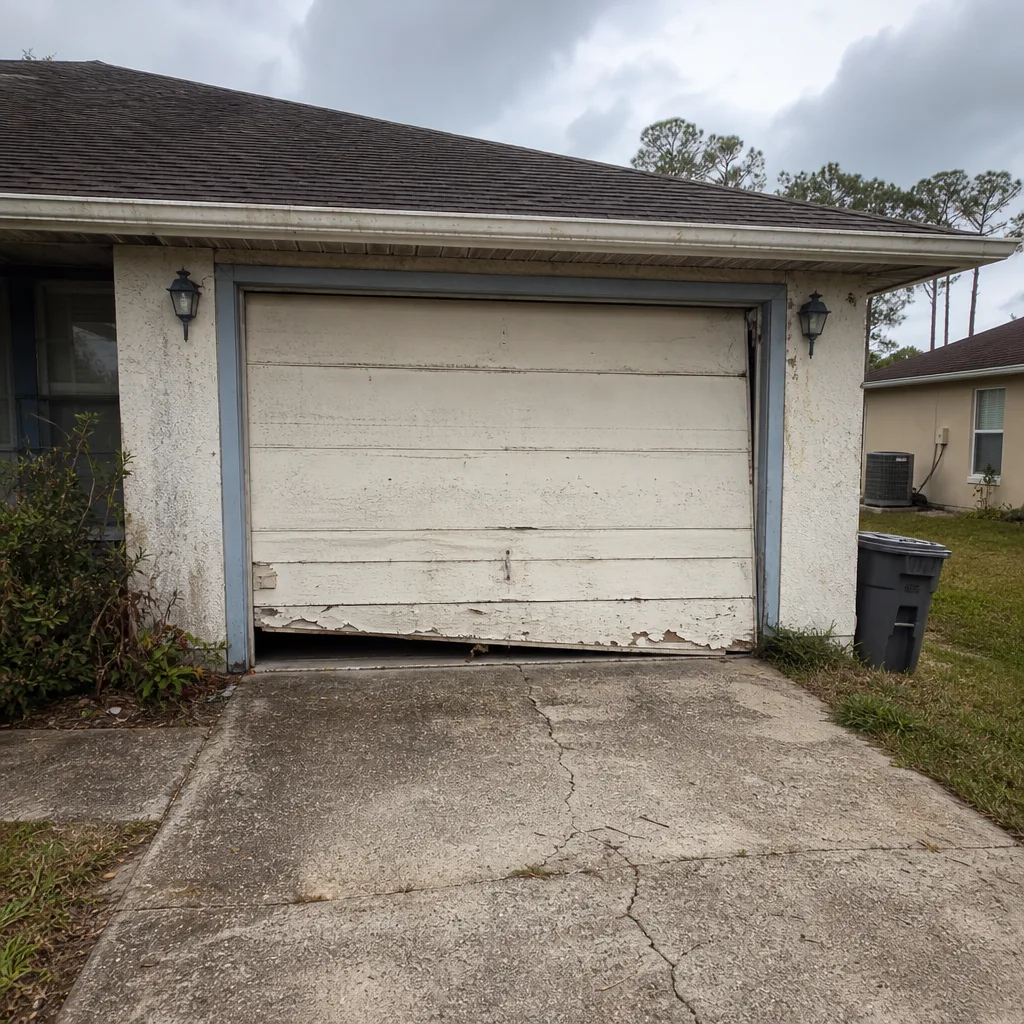 Before
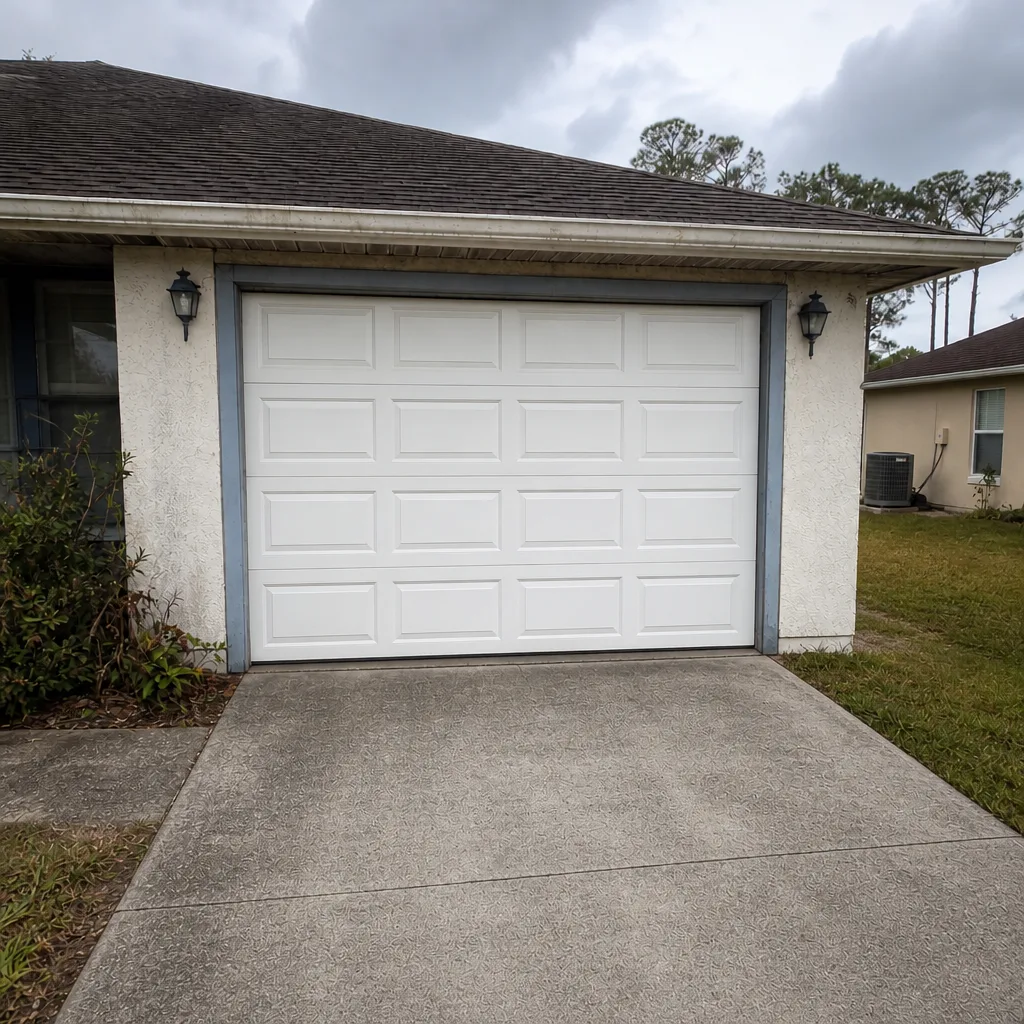 After
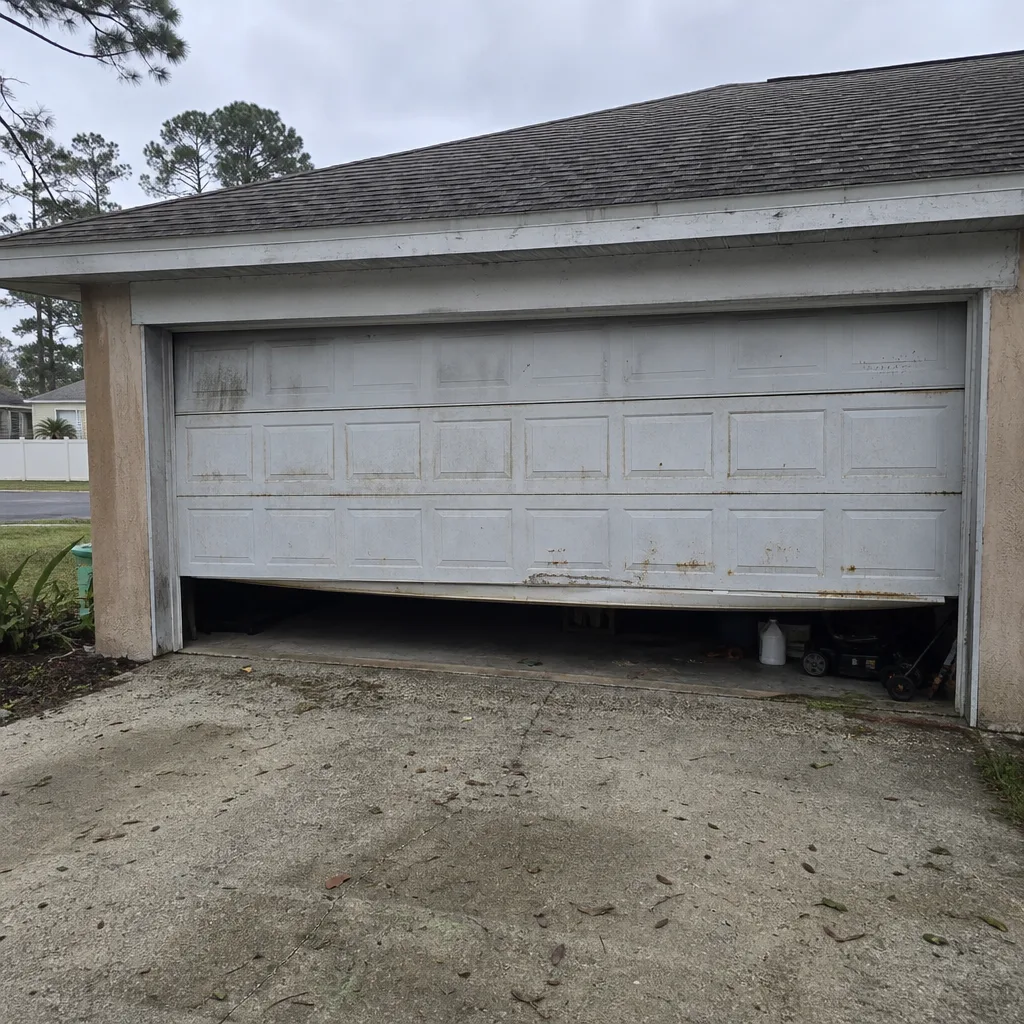 Before
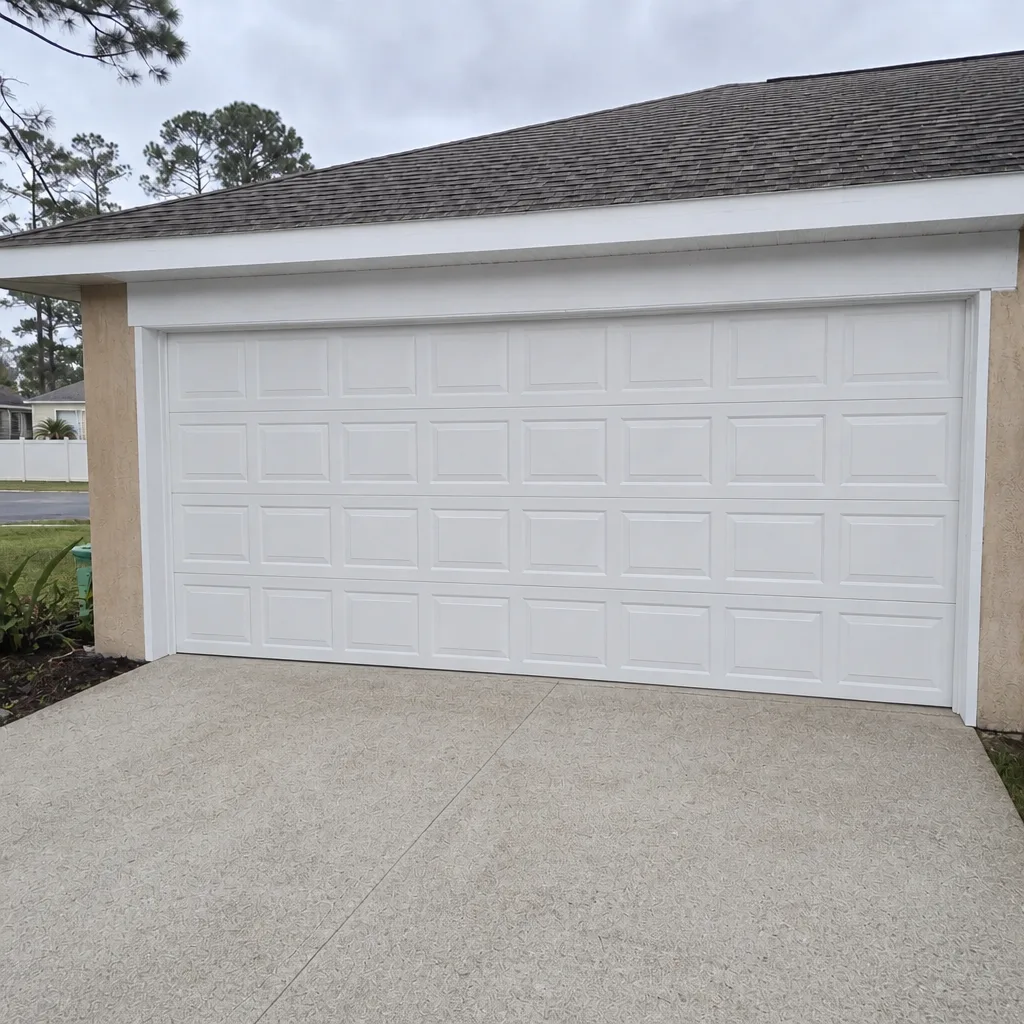 After
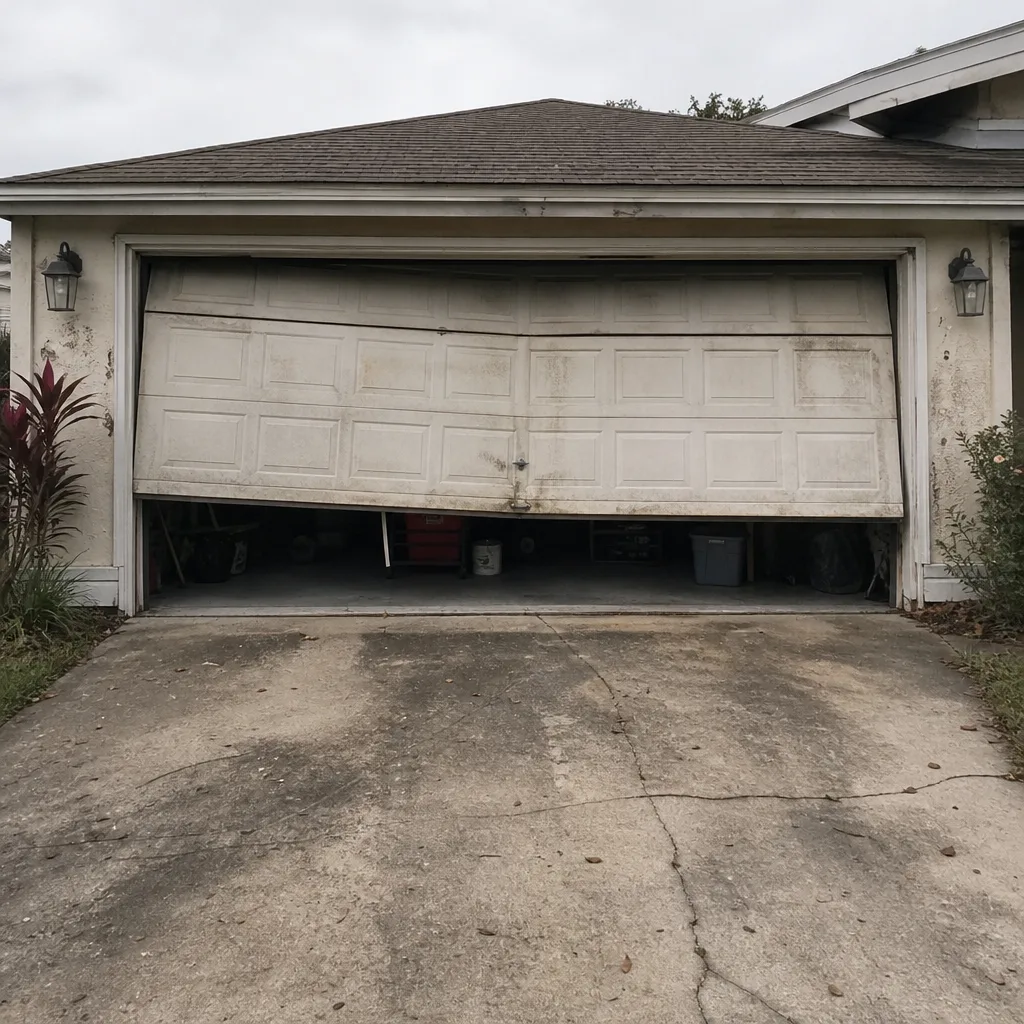 Before
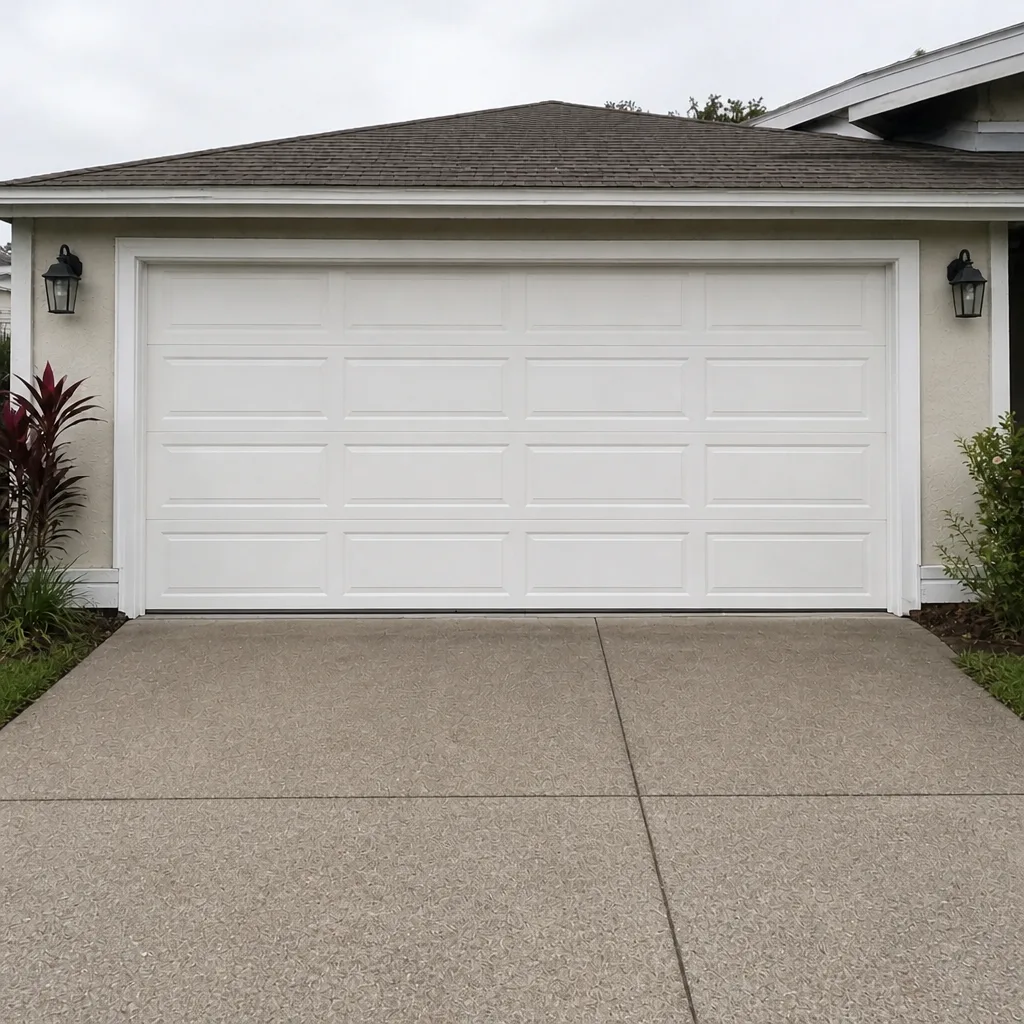 After
When to Call a Professional
There’s a clear line between what you can handle yourself and what needs a trained technician. You can safely test your manual release, check your safety sensors, clean your tracks, and document your door’s condition. You should not touch a spring, a cable, or a door that’s off balance. Those parts carry stored force and can cause serious injury. If your door is stuck open, hanging crooked, making a loud bang, or won’t move after a reset, that’s a call. If you’re not sure which category you’re in, calling is the safer choice. Charter Garage Door Repair offers free estimates in Palm Coast – call (866) 984-8329. We work on the door and the opener you already have, so you’re not pushed into a replacement you don’t need.
Frequently Asked Questions
Close the door fully first, then pull the manual release cord hanging from the trolley straight down until it clicks free, and lift the door slowly by hand from the side. If the door feels too heavy or won’t hold open, stop and call a technician, because that points to a spring problem. For help with the opener itself, call (866) 984-8329 – estimates are free.
Disengage the release with the door where it is, lower it slowly by hand from the side while letting the springs do the work, and secure it closed. Don’t stand under it or force it, and don’t prop it with household items. If it won’t come down smoothly, call (866) 984-8329 right away.
The trolley is usually out of position. Run the opener once to reset the carriage, pull the release cord again to reset the trolley, and cycle the door with the wall button. Check that the safety sensors are aligned and the door is fully seated at the bottom. If it still won’t engage, call (866) 984-8329 for a diagnostic.
No. Springs are under high tension and can cause serious injury if they release while you’re working on them. A broken spring shows up as a door that won’t lift by hand, a loud bang from the garage, or a door that hangs unevenly. Call a technician – (866) 984-8329.
Twice a year is a good baseline, and it’s worth adding a check before storm season. Look at the springs, cables, tracks, and seals, and test the manual release while the power is on. If anything looks worn or the door feels off balance, schedule an inspection. Call (866) 984-8329 for a free estimate.
Only if it has a working battery backup. Some LiftMaster and Chamberlain units have one; many older or mechanical units don’t. Test yours before an outage by checking the backup light and running the door on backup power. If it doesn’t work, you’ll need the manual release – and if the opener itself is failing, call (866) 984-8329.
The Bottom Line
Garage door emergency preparedness in Palm Coast isn’t about gadgets or expensive upgrades. It’s about knowing your manual release, testing it while the power is on, and understanding the right way to secure a dead door before a storm. Get your door inspected and balanced before the season, keep the release cord clear and reachable, document your door and opener brands, and know when a problem is safe to wait on and when it isn’t. The homeowners who come through a storm with the least trouble are the ones who practiced ahead of time. When you need a hand, Charter Garage Door Repair is one call away, whether it’s a repair, opener service, or a full new door. We work on what you already have. For service in Palm Coast and the surrounding area, call (866) 984-8329 for a free estimate. We answer 24/7. Fast dispatch from 7am to 7pm, Sunday through Friday.
Written by the team at Charter Garage Door Repair.