
Last updated November 15, 2026
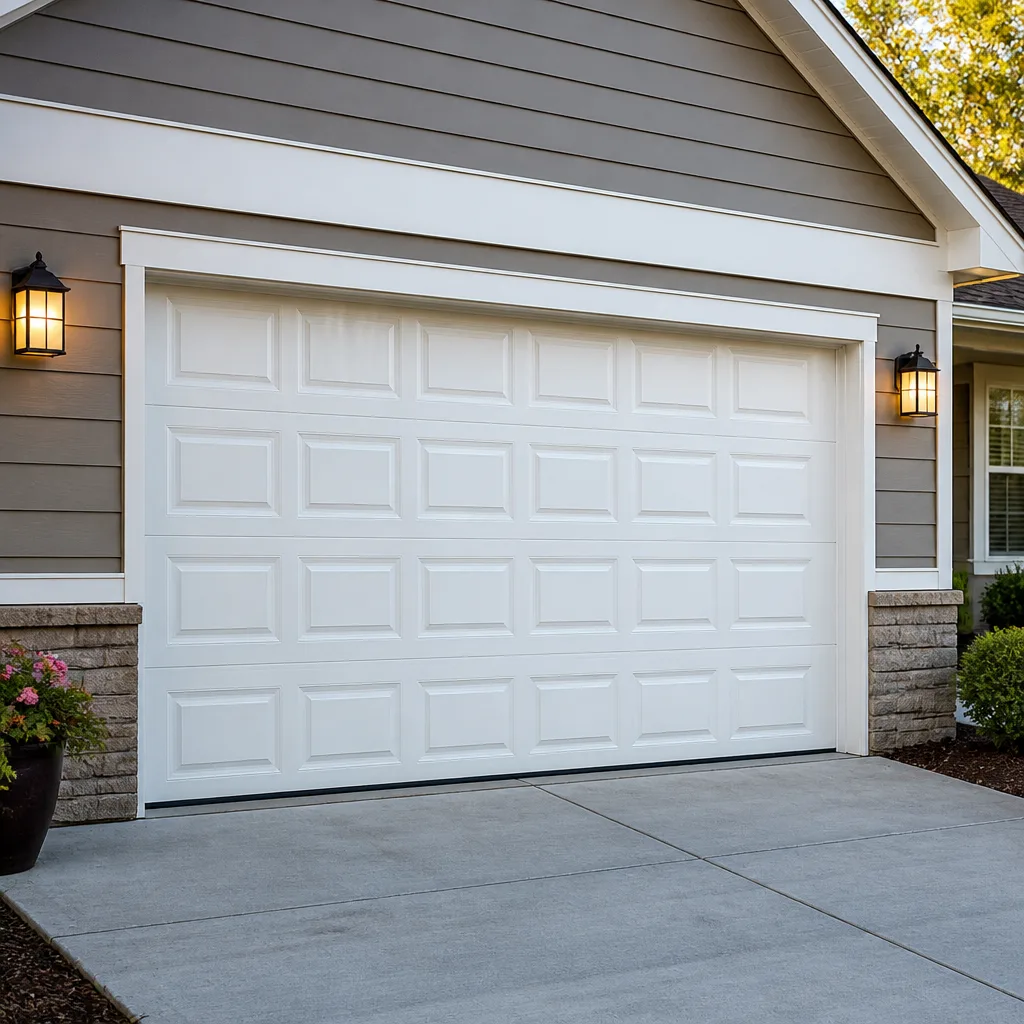 Raised-panel steel
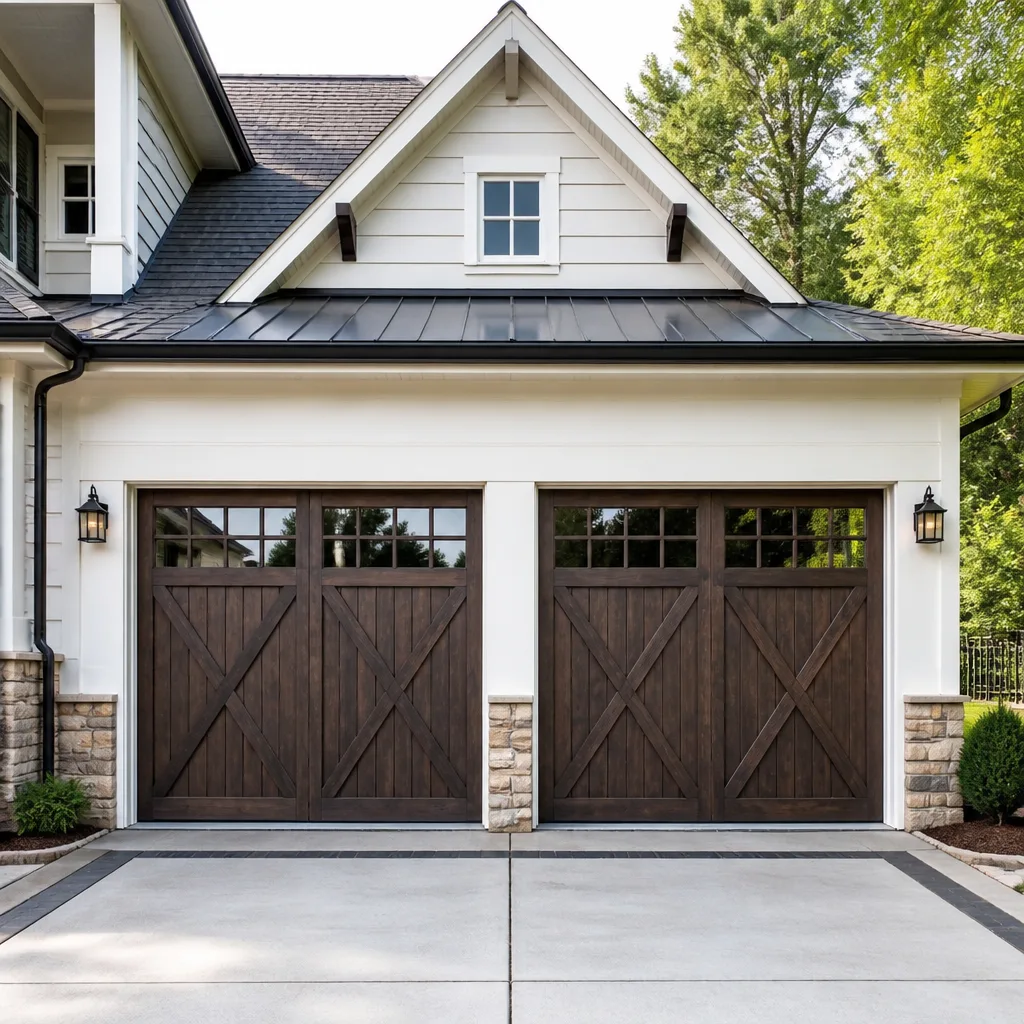 Carriage house
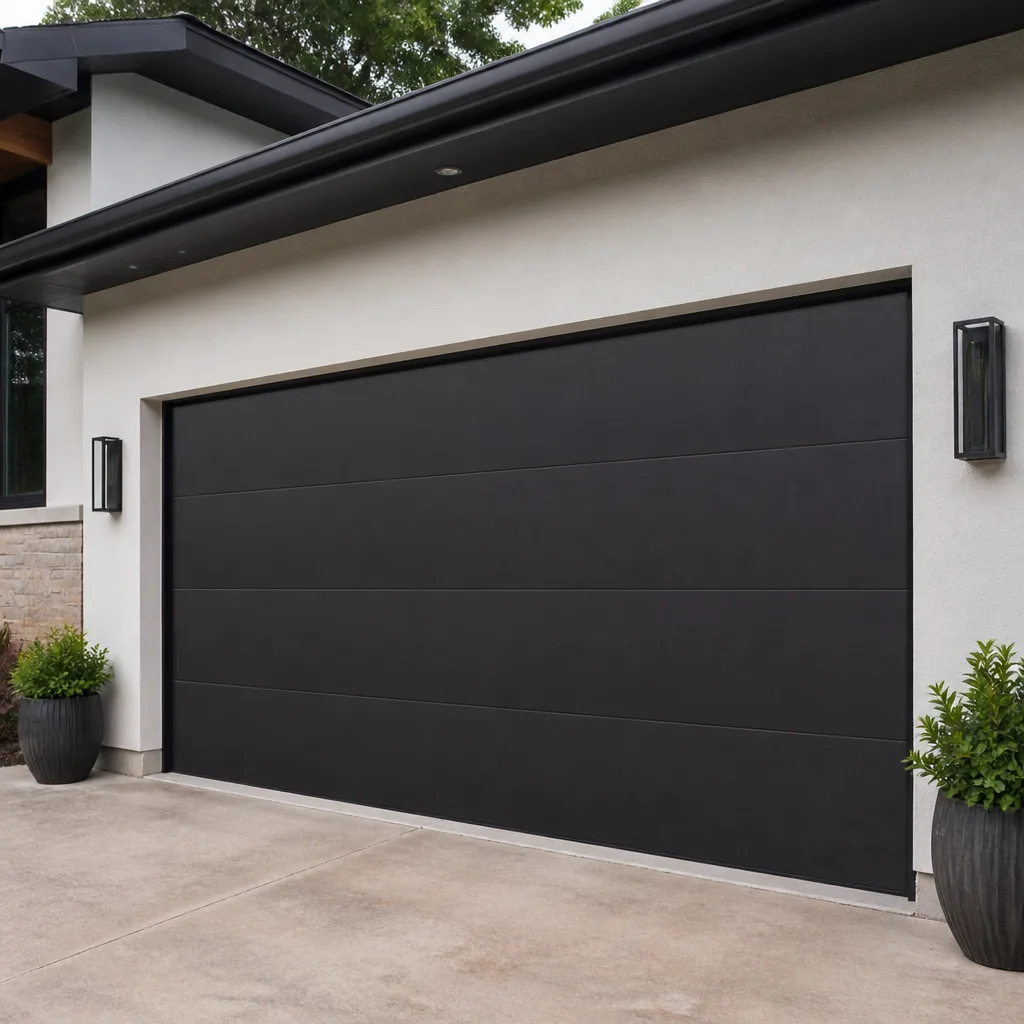 Modern flush
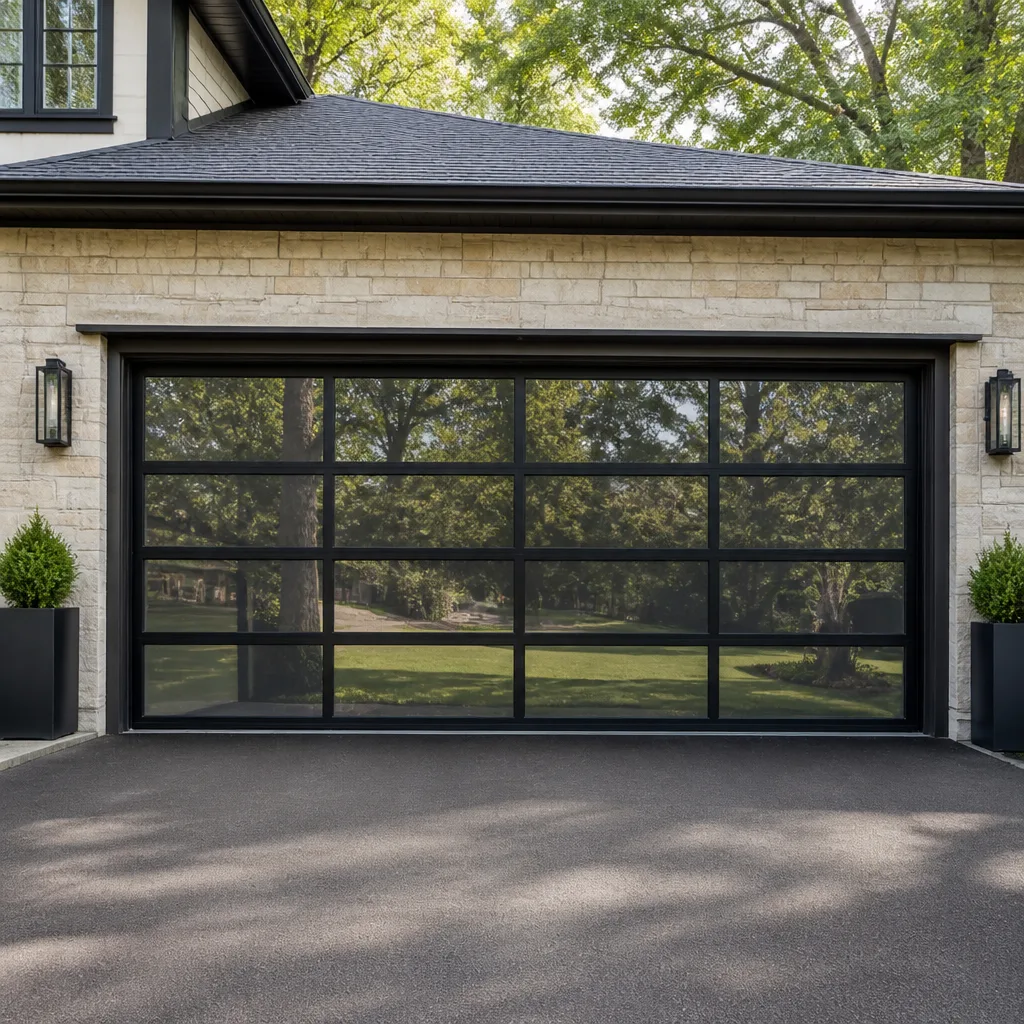 Full-view glass
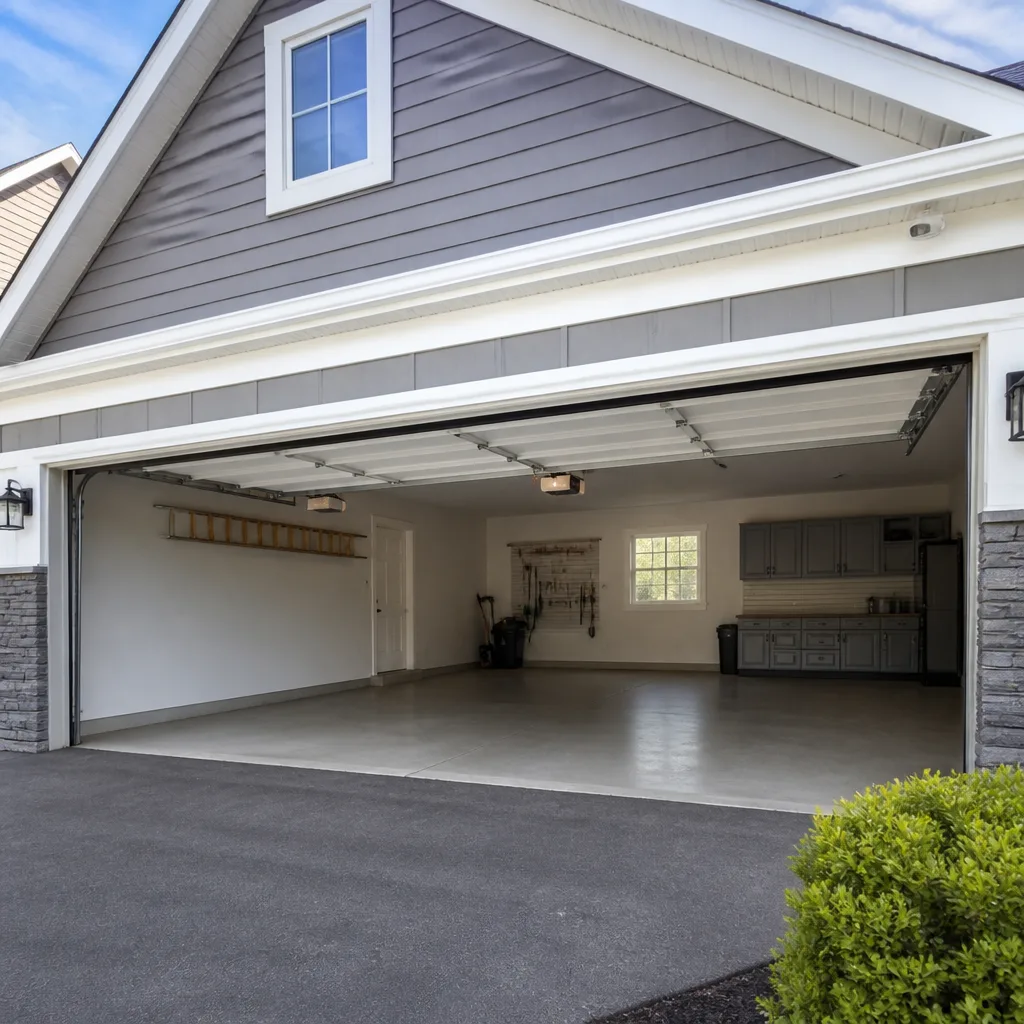 LiftMaster openers
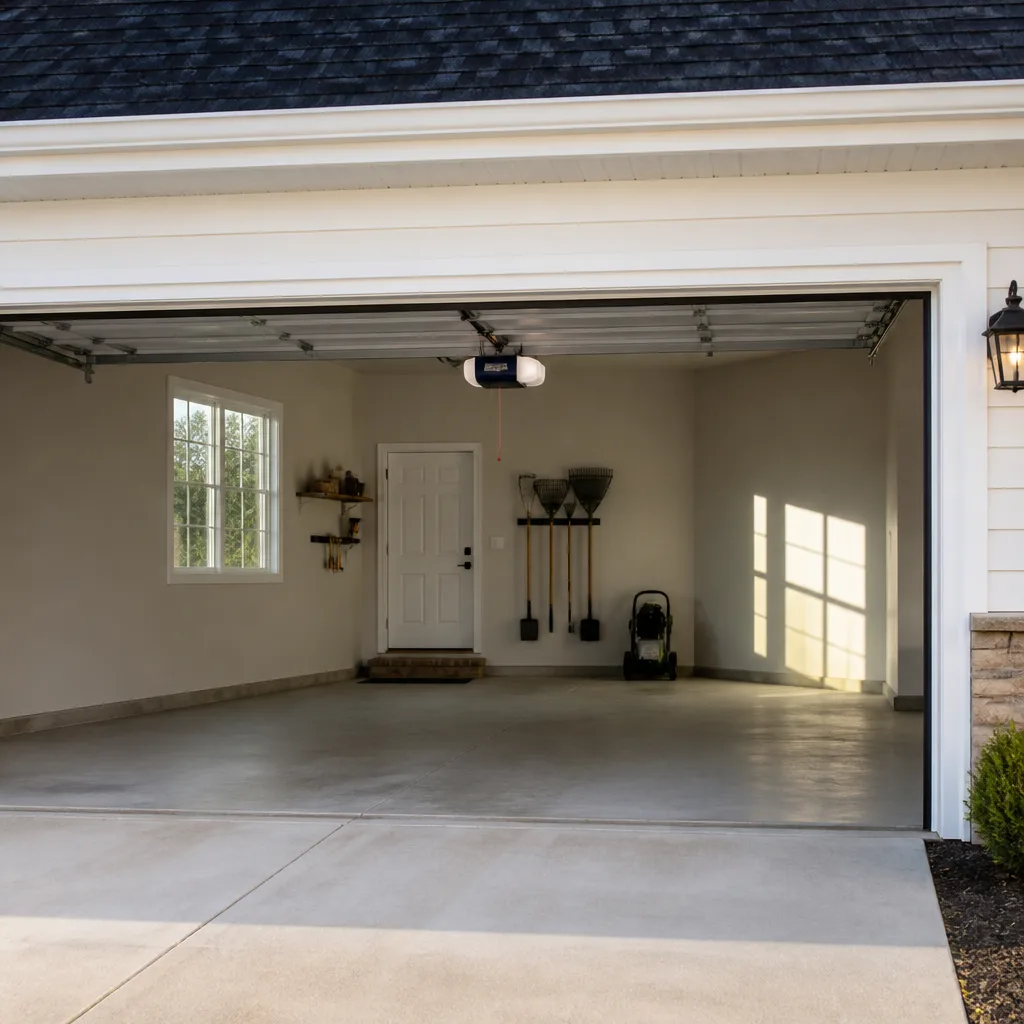 Chamberlain openers
Full 25-point door and opener safety check with every visit - springs, cables, rollers, tracks, and your LiftMaster or Chamberlain opener included
You get a price before we start. It does not change when the pro arrives.
Get your free estimateGarage Door Repair Maintenance Checklist for Palm Coast Homeowners
Most garage door maintenance advice you’ll read was written for a climate that isn’t ours. It talks about freeze-thaw cycles and road salt, neither of which has anything to do with a door in Palm Coast. Meanwhile, the thing that actually ends garage door life here gets almost no attention: the 90-second inspection most homeowners skip, the one that catches humidity-driven corrosion on a torsion spring before it snaps under load. Springs don’t usually announce themselves. They rust quietly, lose tension slowly, and then let go when the door is halfway up. In this guide we’ll walk through a maintenance checklist built around the failure patterns technicians actually see in Palm Coast homes, organized by how often you should do each task, with notes on which lubricants hold up in high humidity and which ones make things worse. You’ll also learn exactly where the line sits between what you can safely check yourself and what needs a trained technician.
Quick Answer
A garage door maintenance checklist for Palm Coast homes should cover monthly visual inspections of springs, cables, rollers and weather seals, quarterly lubrication with a silicone- or lithium-based product (never WD-40 as a lubricant), and annual testing of the auto-reverse and photo-eye safety systems. Because Palm Coast’s humidity accelerates corrosion on torsion springs and hinges, the single most important task is a monthly spring inspection that catches rust before it turns into a snapped spring. Anything involving spring tension, cable replacement, or opener electrical work belongs to a licensed technician, not a homeowner with a ladder.
Styles & brands we work with
- Raised-panel steel
- Carriage house
- Modern flush
- Full-view glass
- LiftMaster openers
- Chamberlain openers
Table of Contents
- The Monthly Inspection: 10 Minutes That Prevent Most Failures
- Quarterly Lubrication: What to Use in Palm Coast Humidity
- How to Spot Spring Corrosion Before It Fails
- Testing the Auto-Reverse and Photo-Eye Sensors
- The Annual Deep Check: What Changes Year to Year
- DIY vs. Professional: Where the Line Actually Sits
- Seasonal Adjustments for Palm Coast Weather
- Why Brand Matters in Maintenance
The Monthly Inspection: 10 Minutes That Prevent Most Failures
Once a month, with the door closed, walk the perimeter of your garage door and look at five things. This isn’t a deep mechanical inspection. It’s a visual sweep that catches problems while they’re still cheap. Most of what we see on garage door repair calls started as something visible months earlier that nobody looked at.
Here’s the monthly routine, in order:
- Springs. Look at the torsion spring (the coiled spring on the horizontal shaft above the door) or the extension springs (the two springs running along the tracks on either side). Look for rust spots, visible gaps in the coil, or a spring that looks stretched compared to its neighbor. A broken spring will have a clear gap, usually about two inches.
- Cables. Check the thin steel cables running down each side. Fraying, kinks, or a cable that looks slack means it needs a technician. Never touch a cable under tension.
- Rollers. Rollers should spin freely and look round. Flat spots, cracks, or a roller that wobbles means replacement.
- Hinges and hardware. Loose bolts, worn hinge plates, and rust at the pivot points are all common here.
- Weather seal. The rubber strip along the bottom should touch the floor evenly. Gaps let in water, insects, and humid air, which accelerates corrosion inside the garage.
None of this takes more than ten minutes, and none of it requires touching anything under tension. If you spot something on the list that looks wrong, that’s your cue to call rather than investigate. The monthly check is about noticing, not fixing.
Quarterly Lubrication: What to Use in Palm Coast Humidity
The right lubricant in a humid climate is a white lithium grease or a silicone-based spray designed for garage door hardware. The wrong one is standard WD-40. That’s the mistake we see most often, and it’s an easy one to make because WD-40 is what’s in most garages. WD-40 is a water displacer, not a long-term lubricant. It evaporates, leaves a thin film, and actually attracts dust that turns into grit inside your hinges and rollers. In a humid place like Palm Coast, that grit plus moisture is a corrosion recipe.
Here’s what to use where:
- Hinges and pivot points: white lithium grease, applied with a small brush or the spray nozzle. One short burst per hinge.
- Rollers (metal only): a few drops of silicone spray or light machine oil on the bearing, not the wheel surface. Nylon rollers generally don’t need lubrication at all.
- Torsion spring: a light coat of silicone spray along the coil. Don’t overdo it; excess attracts dirt.
- Tracks: nothing. Tracks should be wiped clean with a dry cloth, never lubricated. Grease on tracks collects grit and causes the door to bind.
- Lock and handle: graphite or a dry silicone lubricant, never oil.
Do this quarterly, and wipe down any hardware that looks like it’s starting to spot. In Palm Coast, where the air stays humid most of the year, hardware that sits unattended will show surface rust faster than most homeowners expect. Catching it at the spotting stage is a wipe-down; catching it later is a replacement.
How to Spot Spring Corrosion Before It Fails
A torsion spring fails when metal fatigue and corrosion combine to the point where the coil can no longer hold its tension. In Palm Coast, the corrosion half of that equation moves faster than most people assume. Look at your spring once a month and grade it on three things:
- Color. A healthy spring is uniformly dark or painted. Rust shows as orange-brown spotting, then as larger patches. Any visible rust means the spring is being eaten from the inside out.
- Texture. Run a finger along the coil (door closed, hands off the cables). A spring that feels pitted or rough has lost its surface protection.
- Gaps. A gap in the coil of roughly two inches is a broken spring. Stop using the door. A broken torsion spring on a door with a single spring means the entire door weight is being held by the opener, which will burn out the gears and can drop the door.
What you should not do is try to lubricate a spring that’s already heavily rusted, or worse, try to adjust the tension yourself. Torsion springs are wound to hundreds of pounds of force. A spring that slips under the wrong tool can break a wrist or worse. This is the single most dangerous component on a residential garage door, and we say that to every homeowner who asks. A technician has the winding bars and the training; a homeowner doesn’t. If your spring shows rust, book an inspection. It’s not a job to watch a video and attempt.
Testing the Auto-Reverse and Photo-Eye Sensors
After a storm blows debris into the garage, test both safety systems before you assume the door is fine. Debris on the photo-eye lens, a bumped sensor bracket, or a loose safety edge are all common causes of a door that closes on a person or object. The test takes two minutes and involves no tools.
Here’s the sequence:
- Photo-eye test. With the door open, wave a broom handle or a length of cardboard through the beam between the two sensors (the small lenses mounted about six inches off the floor on each side of the door). The door should not close. If it does, or if the opener’s light blinks and the door reverses, the sensors aren’t aligned or are dirty. Wipe both lenses with a dry cloth and try again.
- Auto-reverse test. Lay a piece of 2×4 flat on the floor directly under the closing door. Close the door using the wall button. The door should reverse direction within a couple of seconds of touching the wood. If it keeps going, the opener’s force limit is set too high, and that’s an adjustment for a technician.
- Force check. With the door open, grasp the bottom edge of the door (from the inside, door stationary) and pull it gently toward you. If it moves easily, the opener’s force setting is likely too high. If it resists hard, the setting may be too low, which causes false reversals.
Repeat this test after any storm that knocks debris into the garage, and any time the door behaves strangely. If a sensor test fails twice in a row after cleaning, the sensor or the wiring is the problem and it needs an opener diagnosis. Our garage door opener repair team handles exactly this kind of call.
The Annual Deep Check: What Changes Year to Year
Once a year, ideally in the same month so you don’t forget, do a deeper pass on the parts that wear slowly. This is the check that catches the difference between a door that’s in good shape and one that’s two months from a failure.
- Balance test. Pull the emergency release (the red cord) with the door closed, then lift the door by hand. It should lift easily and stay in place roughly halfway up. If it drops or feels heavy, the springs have lost tension and need adjusting or replacing.
- Track alignment. Look down each track like you’re sighting a rifle. Tracks should be straight and parallel. A bent track will gouge rollers and eventually jam the door, and it’s almost always caused by a car bumper or a misplaced ladder.
- Panel inspection. Look for dents, rust at the panel seams, and separation between panels. A Clopay or Amarr steel door will show rust at the seams first, because moisture collects there.
- Weather seal replacement. The bottom rubber seal hardens in the humidity and stops sealing within a few years. Replacing it is inexpensive and it’s the single best way to keep humid air out of the garage.
- Opener drive and belt/chain. Check the belt or chain for slack. A loose chain will slap and eventually slip the sprocket. Belt drives on LiftMaster and Chamberlain units stretch more slowly but still need a tension check.
- Battery backup (if equipped). Test the battery backup by unplugging the opener with the door closed. The door should still open. A dead battery is fine in calm weather and a problem the day the power goes out.
Write down what you find and the date. Next year’s check starts from that list, which makes it faster and lets you spot slow trends, like a seal that’s been replaced twice in three years.
DIY vs. Professional: Where the Line Actually Sits
Some maintenance is genuinely yours to do. Some will hurt you. Knowing which is which is the most important part of this checklist.
Safe for a homeowner:
- Visual inspection of springs, cables, rollers, hinges, and seals
- Cleaning tracks with a dry cloth
- Wiping down hardware with a rust-preventive cloth
- Lubricating hinges, rollers, and the spring with silicone or white lithium
- Testing the photo-eye and auto-reverse safety systems
- Cleaning the photo-eye lenses
- Replacing the bottom weather seal
- Replacing opener remote batteries and re-pairing remotes
Not safe for a homeowner:
- Any adjustment or replacement of torsion springs
- Any work on cables under tension
- Opening or rewiring the opener motor housing, which is live electrical work
- Adjusting force limits or travel limits on the opener (a wrong setting causes the door to close on a person)
- Replacing rollers on a door whose springs are still under load
- Bending tracks back into alignment (they’re under load too)
The difference isn’t about capability. A competent homeowner can do plenty of home repair. The difference is that garage doors store enough energy to kill you if it releases wrong. Any task on that second list is a call, not a weekend project. For Palm Coast homeowners, we’re happy to look at anything on the list and tell you whether it needs work. We work on what you already have, not just the brands we’d prefer to sell, and the full range of Charter Garage Door Repair services covers diagnostics through installation.
Seasonal Adjustments for Palm Coast Weather
The broad strokes of a maintenance calendar don’t change, but there are triggers specific to Palm Coast worth knowing about. The winter is mild here, which means the main seasonal enemy isn’t cold. It’s the long humid stretch and the storms.
Here’s what to watch:
- Rainy season. After heavy rain, check the bottom seal and the garage floor for standing water. Water that reaches the door’s bottom panel rusts it from the inside, and it softens the seal itself. Wipe down the seal and check for mold growth on the rubber.
- After a tropical system. Run the photo-eye and auto-reverse test. Debris, leaves, and palm fronds are common on the sensor lenses after a storm, and a misaligned sensor is the number one reason a door reverses on the way down.
- Hurricane prep. Check that the door panels are seated and that the hinges are tight. If the door has a wind rating or a label from the manufacturer, confirm the hardware still matches that label (a technician can confirm the labeling). Don’t add homemade bracing to a rated door.
- Year-round. Humidity is the constant here. The monthly spring check and the quarterly lubrication schedule matter more in Palm Coast than they do in a drier climate, because the corrosion clock runs faster.
- Winter is not off the calendar. We don’t have freeze-thaw cycles, but we do have occasional cold snaps, and a tired spring can snap on the first cold morning after a long warm spell. The annual balance test protects you against that.
Anyone in Palm Coast can follow the same calendar all year. Adjust the frequency for the humidity, not the seasons. The monthly inspection is the one that has the most impact, and it’s the one most homeowners let slip.
Why Brand Matters in Maintenance
A maintenance checklist is only as good as the technician’s familiarity with the specific door and opener. Different brands have different wear patterns and different known failure points, and knowing a LiftMaster belt drive’s tension behavior tells you where to look first when a door starts making noise.
We’re factory-familiar with eight major brands: LiftMaster, Chamberlain, Genie, Clopay, Amarr, Wayne Dalton, Craftsman, and Raynor. On the door side, Clopay and Amarr are two of the most common residential lines we see, and they hold up well if the seals and hinges are maintained. Wayne Dalton is one many handymen decline because of its proprietary torque-tube spring system; we handle those like the rest of them. On the opener side, LiftMaster and Chamberlain cover most of the smart and Wi-Fi connected systems in Palm Coast homes, and we’re familiar with what those openers do when they’re trying to tell you something. Older mechanical units from Craftsman, Genie, and Raynor are just as normal a call.
Here’s the practical reason it matters for maintenance: a technician who knows the brand knows where to look without taking the whole door apart. A diagnosis is faster, and faster is cheaper. From a broken spring to a full new door, we cover repair, openers, and installation from a single call. If you want a second opinion on whether your door needs a repair or a replacement, we’ll tell you straight. It’s the same reason we publish information like this: a Palm Coast homeowner who knows what to look for is a better client, not a worse one.
Common Mistakes to Avoid
- Using WD-40 as a garage door lubricant. It displaces water but doesn’t stick around. In Palm Coast humidity it attracts grit into the hinges and speeds up corrosion. Use silicone or white lithium instead.
- Greasing the tracks. Tracks are supposed to be clean and dry. Grease collects dirt and causes the door to bind. Wipe them with a dry cloth only.
- Skipping the spring check because the door still works. A spring doesn’t need to be broken to be dangerous. Heavy rust spotting can precede a snap by months, and the monthly check is how you catch it.
- Adjusting the force setting on the opener to fix a “heavy” door. If the door feels heavy, the springs are the problem. Turning up the force on the opener hides the symptom and wears out the unit’s gears while the door still won’t reverse properly if something’s in the way.
- Trying to straighten a bent track by hand. Tracks are under load and bend wrong easily. A home-bent track usually needs replacement rather than alignment.
- Ignoring the bottom seal because it “looks okay.” A worn seal lets humid air into the garage, and in Palm Coast that means the hinges and spring corrode faster. Replacement is one of the cheapest maintenance tasks you can do.
- Treating a storm as a non-event for the door. A morning of wind and rain blows debris onto the photo-eye lenses and gets leaves into the tracks. Run the safety test after every storm, not once a year.
See the difference
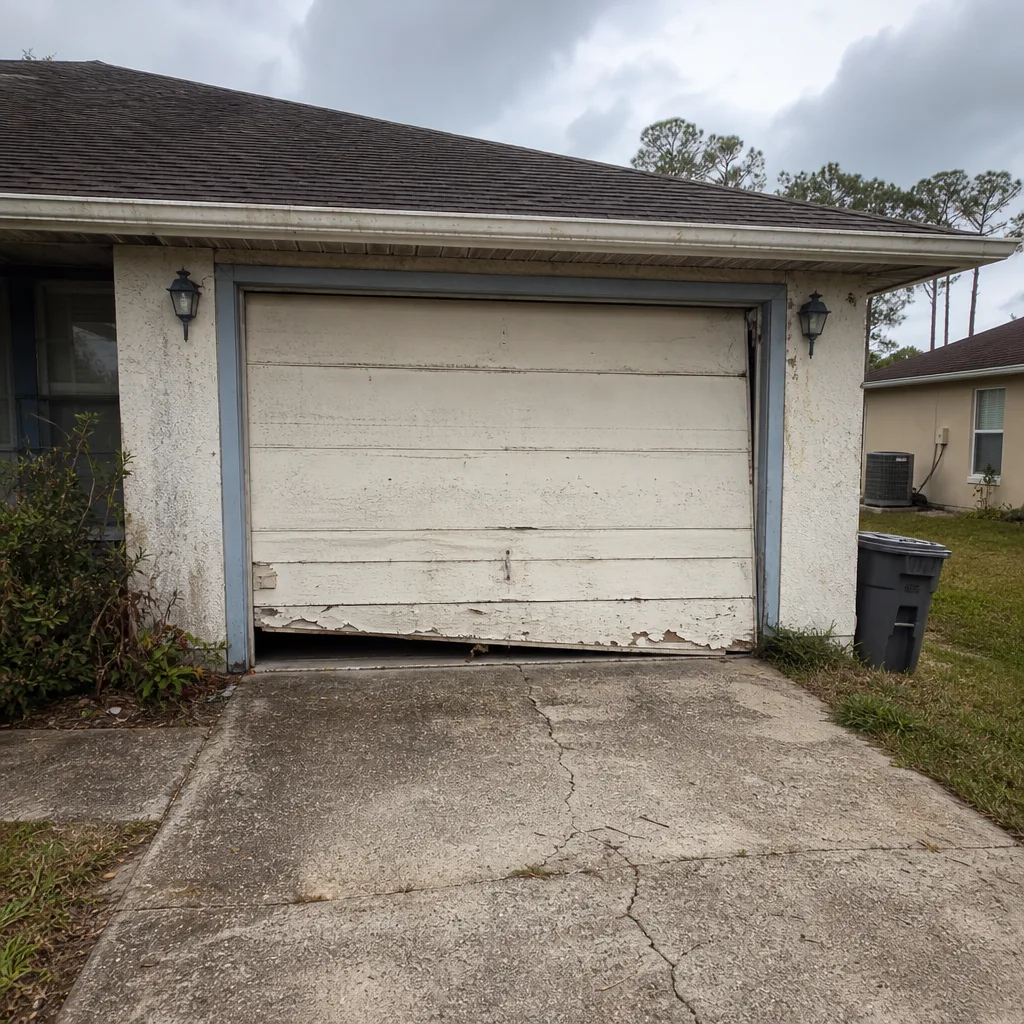 Before
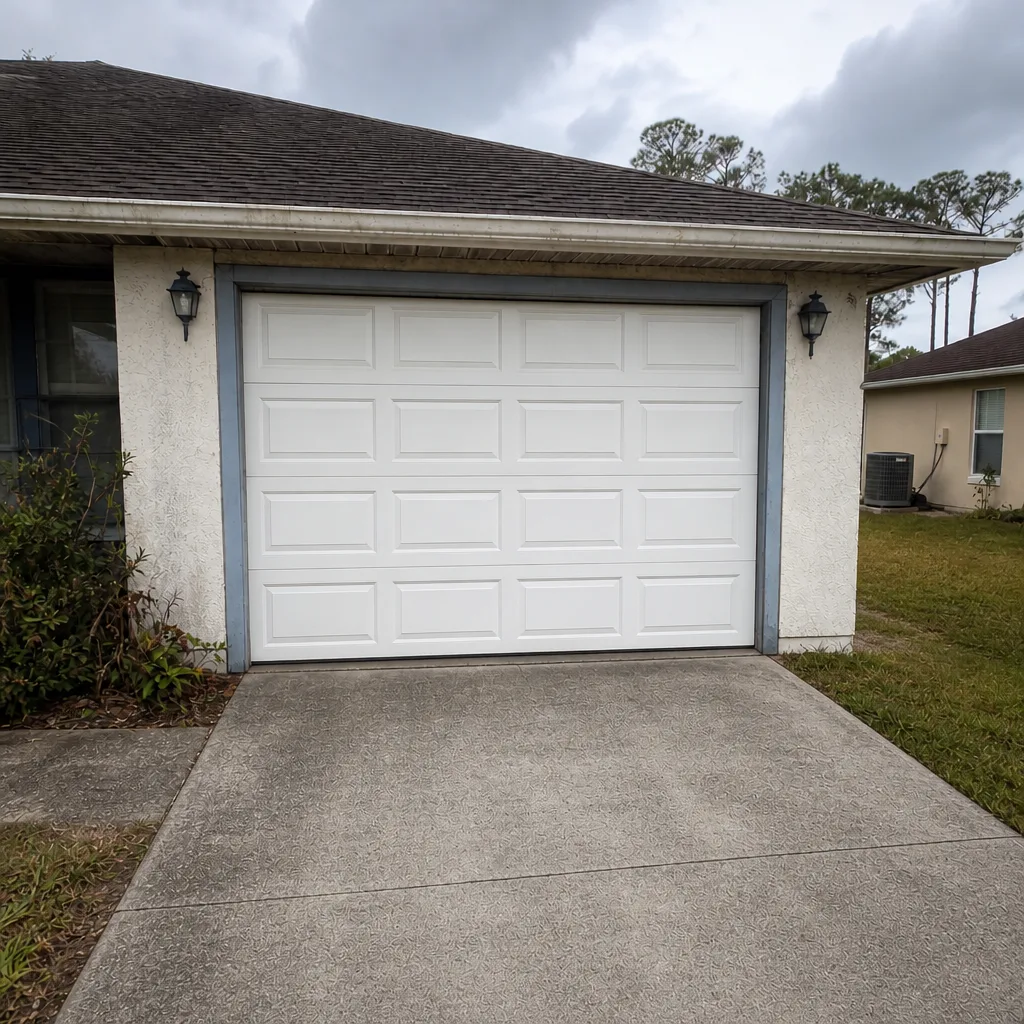 After
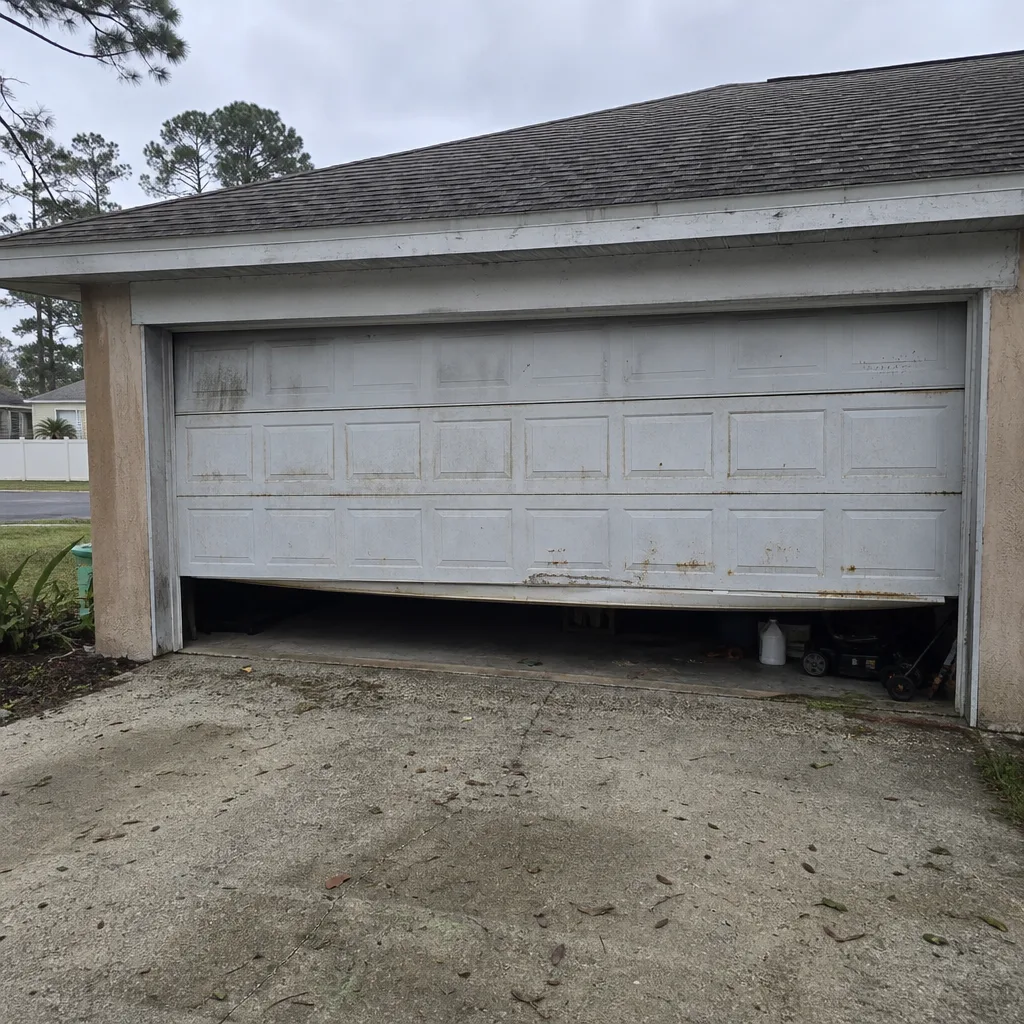 Before
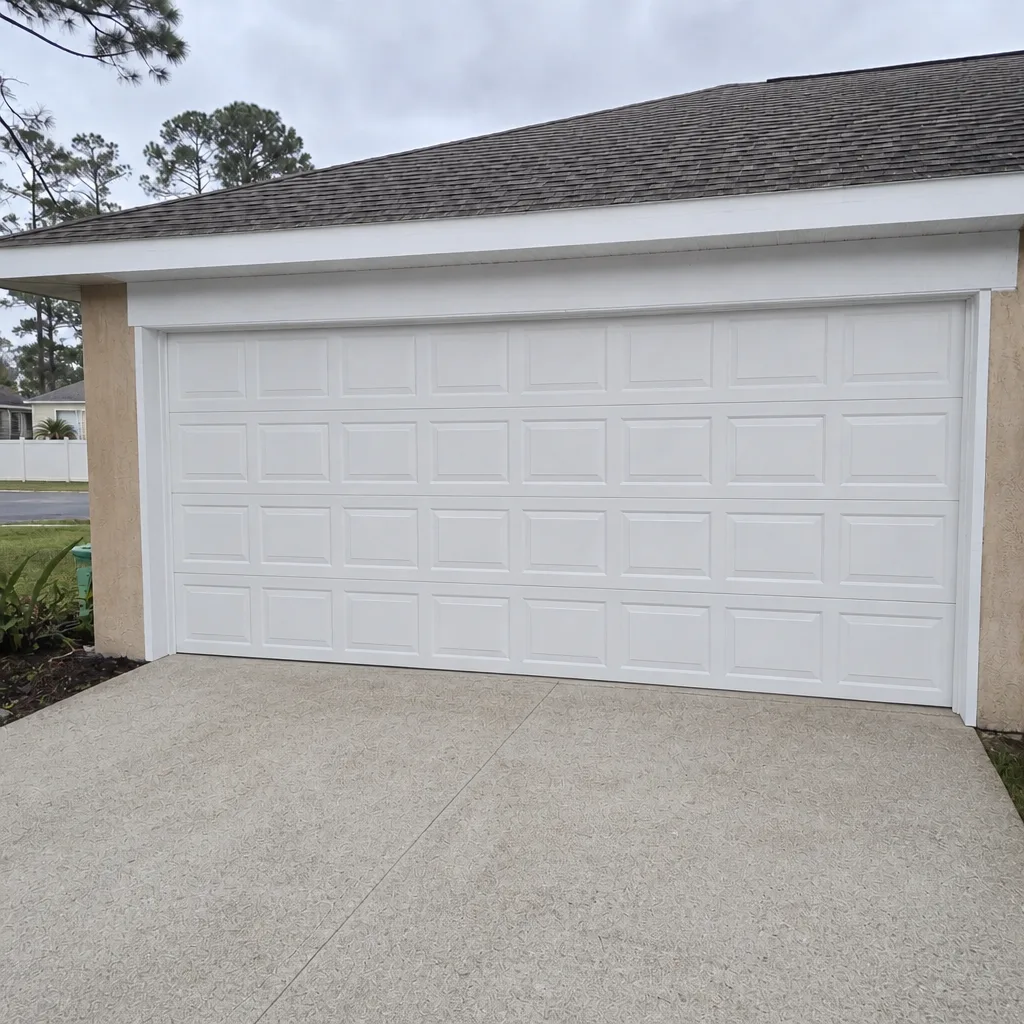 After
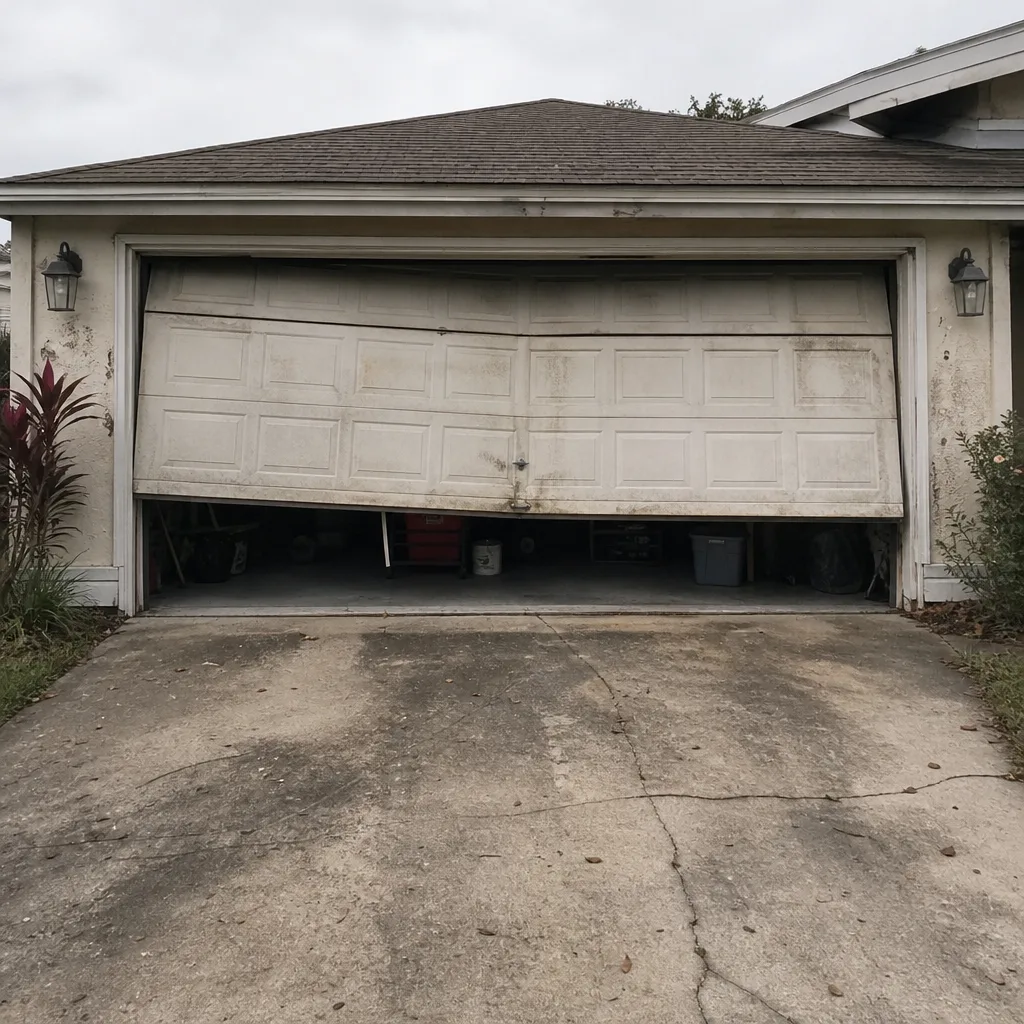 Before
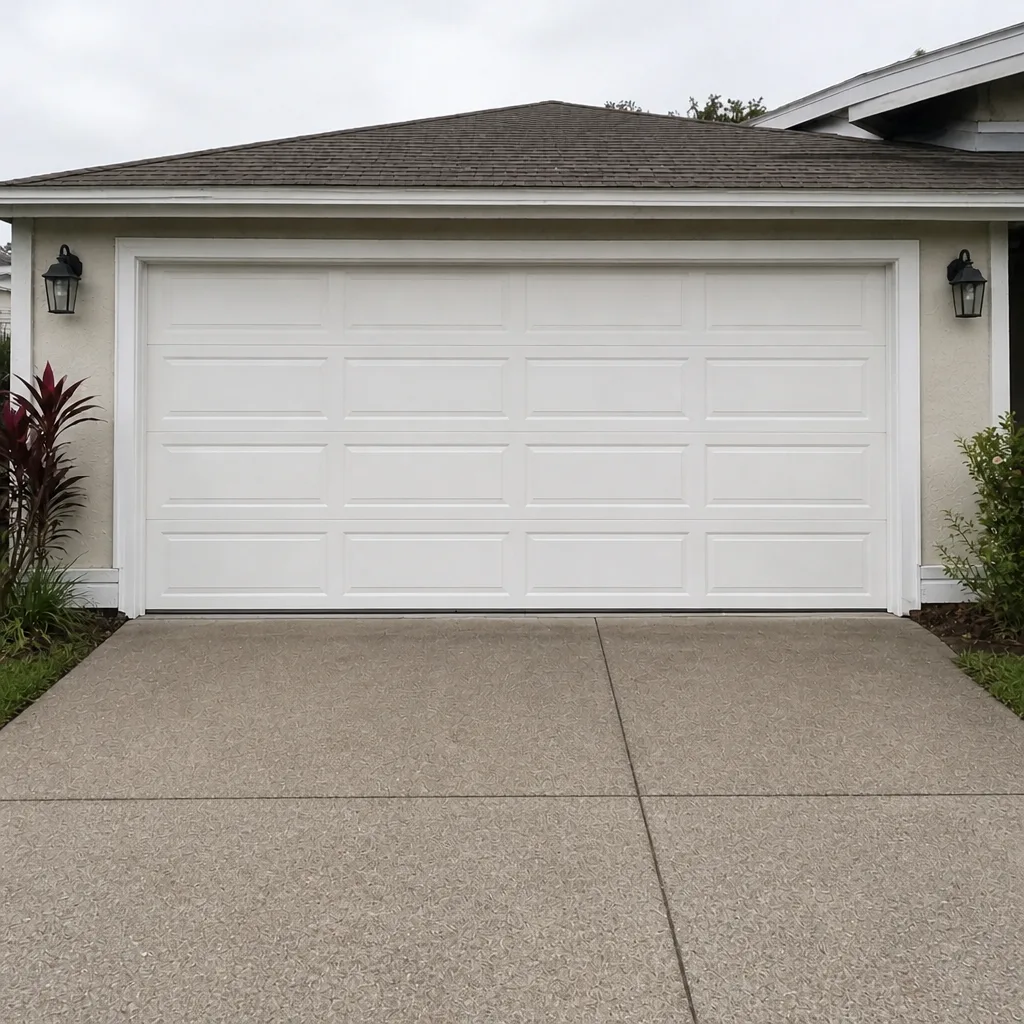 After
When to Call a Professional
You should call a technician if you find anything on the “not safe” list above: a rusty or broken spring, a frayed cable, a bent track, a door that’s hard to lift by hand, an opener that reverses without an obstruction, or a door that fails the photo-eye test after cleaning. Also call if your door makes a new noise, especially a bang, a snap, or a grinding sound, because those are the last warning before a failure. If your door is a Wayne Dalton with the torque-tube system, or a Clopay or Amarr door with unusual hardware, call rather than buying a replacement guess. Our technicians have up to experience with the brands in your neighborhood, and the estimate is free. Charter Garage Door Repair offers free estimates in Palm Coast, call (866) 984-8329. We answer 24/7. Fast dispatch from 7am to 7pm, Sunday through Friday, and closed Saturday. If a call comes in outside dispatch hours, it’s booked into the next opening, Sunday through Friday, 7am to 7pm.
Frequently Asked Questions
Every three months is the right schedule in Palm Coast, because the humidity makes hardware corrode and dry out faster than in drier climates. Use white lithium grease on hinges and silicone spray on metal rollers and the torsion spring. Never lubricate the tracks. If you’ve never lubricated the door, start with a quarterly pass and note the date so you stay on schedule.
No. Torsion springs are wound to hundreds of pounds of force and cause serious injury every year when homeowners try to replace or adjust them without training. A trained technician has the right winding bars and the experience to know when a spring has already lost its temper. Any work on springs or cables should go to a professional. Call (866) 984-8329 for an estimate, it’s free.
White lithium grease for hinges and pivot points, and a silicone-based spray for metal rollers and the spring. Avoid standard WD-40 as a long-term lubricant; it displaces moisture but leaves a film that attracts grit and doesn’t stop corrosion over time. Avoid oil on tracks entirely, since oil collects dust and causes binding.
Look for rust spotting, pitting, and any visible gaps in the coil. A spring with heavy rust is being eaten from the inside out and can snap without warning. If your door suddenly feels heavy to lift by hand, or you hear a bang, the spring may already have broken. Stop using the door and call for a diagnosis. Estimates are free at (866) 984-8329.
Cost depends on the specific repair, the door type, and the brand, so a written estimate is where the real number comes from. Small hardware replacements, roller swaps, and seal replacements are usually the lower end; spring and cable work runs higher because of the safety equipment and labor required. The estimate is free and the price is quoted and agreed before any work starts, so there’s no surprise invoice. Call (866) 984-8329 for an exact quote.
Yes, and any time the door behaves strangely. Palm Coast storms blow debris and leaves onto the photo-eye lenses, which sit a few inches off the floor on each side of the door. A dirty or misaligned sensor makes the door reverse on the way down or refuse to close at all. The test takes two minutes and involves waving a broom handle through the beam. If a sensor fails after cleaning, it’s an opener diagnosis.
No, the written estimate is the price. A technician diagnoses the door on site, quotes the work in writing, and gets your agreement before any repair starts. If the diagnosis reveals a bigger problem than the checklist suggested, the new quote is written and agreed the same way. Call (866) 984-8329 for a free estimate.
The Bottom Line
A garage door maintenance checklist that works in Palm Coast is built around humidity and storms, not the general advice written for a colder climate. The monthly visual inspection catches corrosion on springs and hardware before it turns into a snap. The quarterly lubrication schedule, done with white lithium and silicone rather than WD-40, keeps the moving parts protected. The annual balance test and seal replacement handle the slower wear. And the safety test after every storm is what keeps the door from closing on a person. Anything involving springs, cables, or opener electrical work is a call to a technician. Everything else is on you, and ten minutes a month is the difference between a door that lasts and one that fails on the worst morning.
If you’re not sure where your door stands, we’re happy to look. Charter Garage Door Repair handles repair, openers, and installation for every major brand, so a maintenance inspection won’t turn into a referral to a second company. For Palm Coast homeowners, call (866) 984-8329 for a free estimate. We answer 24/7. Fast dispatch from 7am to 7pm, Sunday through Friday, closed Saturday. If you leave a message outside dispatch hours, we book your call into the next opening.
Written by the team at Charter Garage Door Repair.