
Last updated November 15, 2026
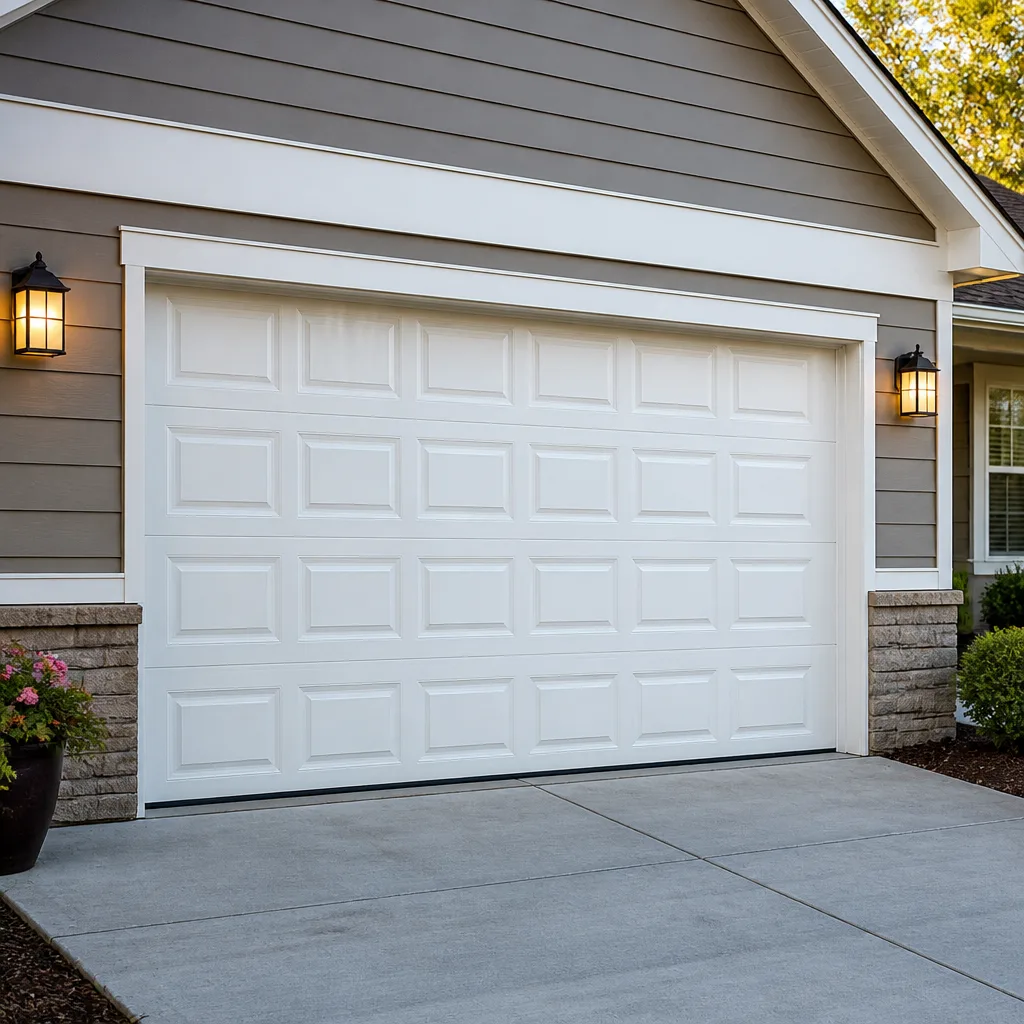 Raised-panel steel
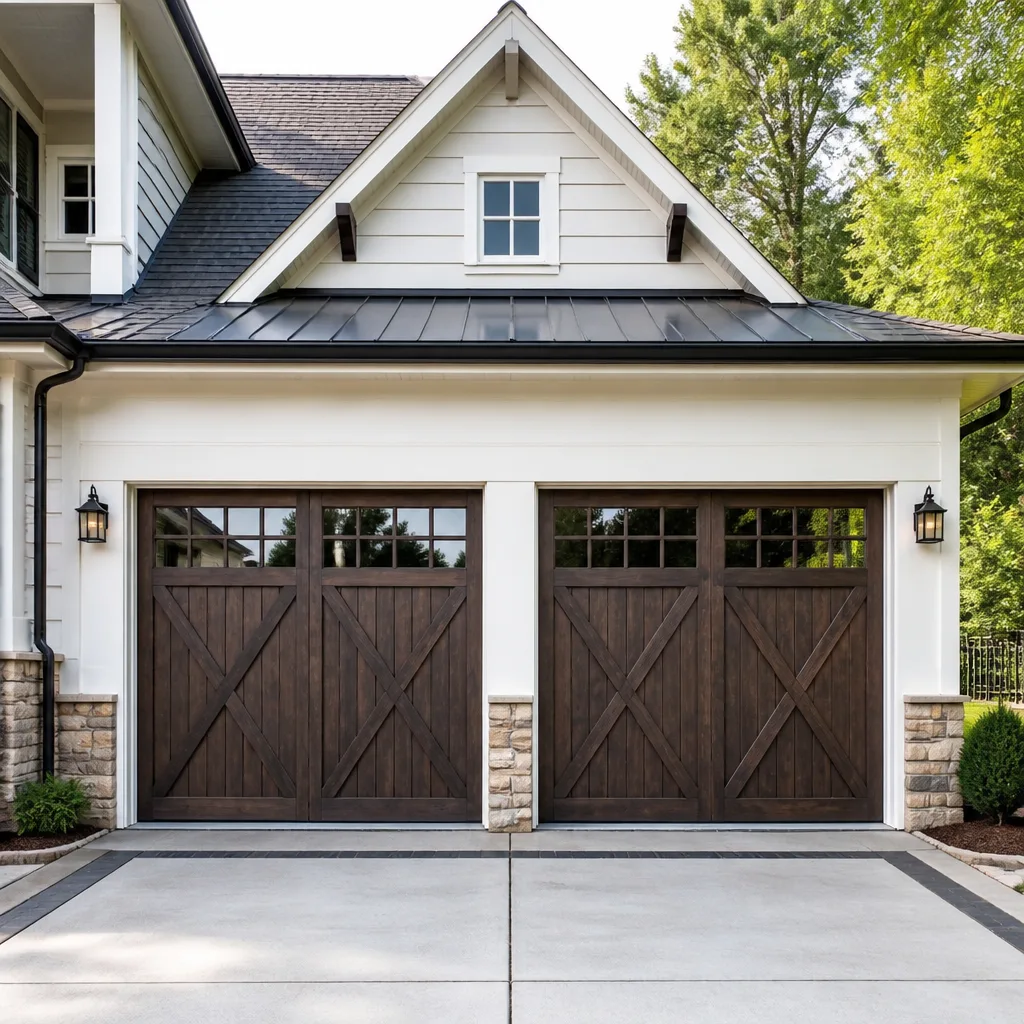 Carriage house
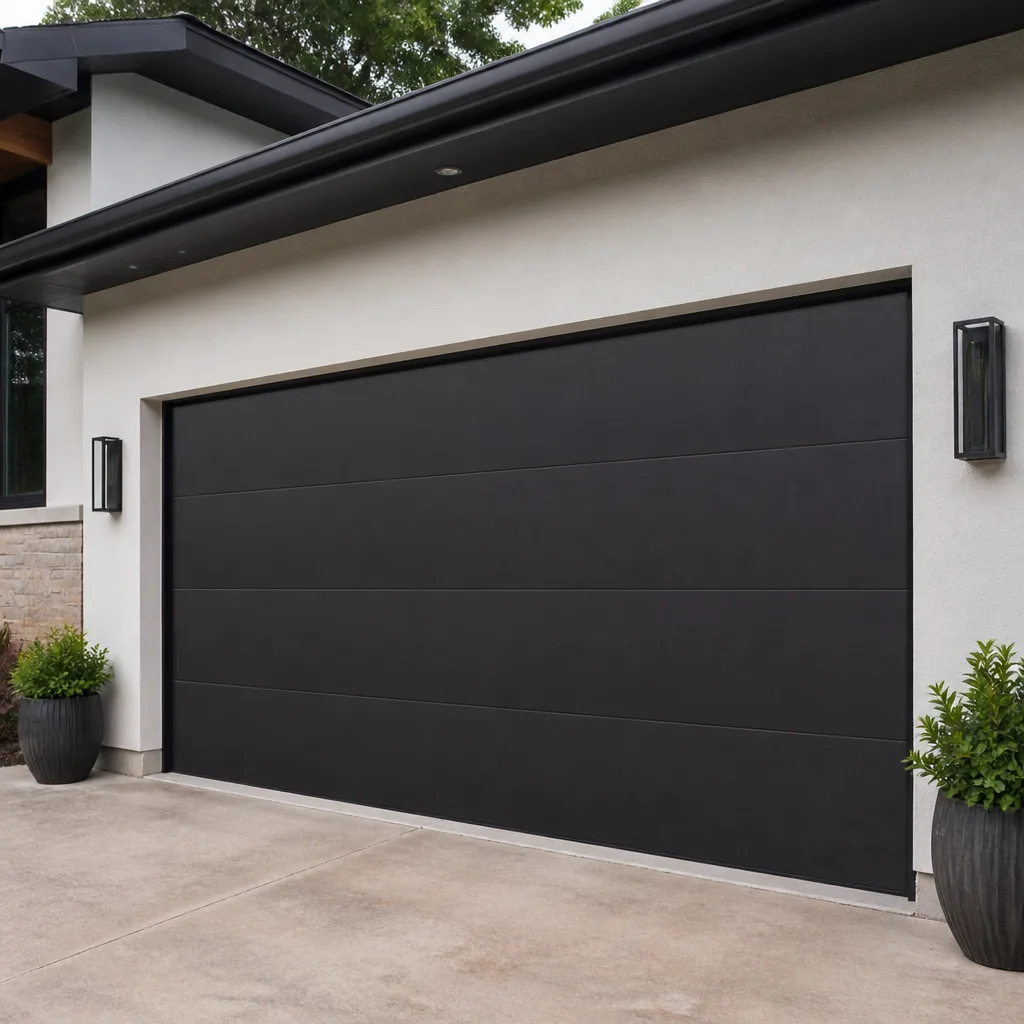 Modern flush
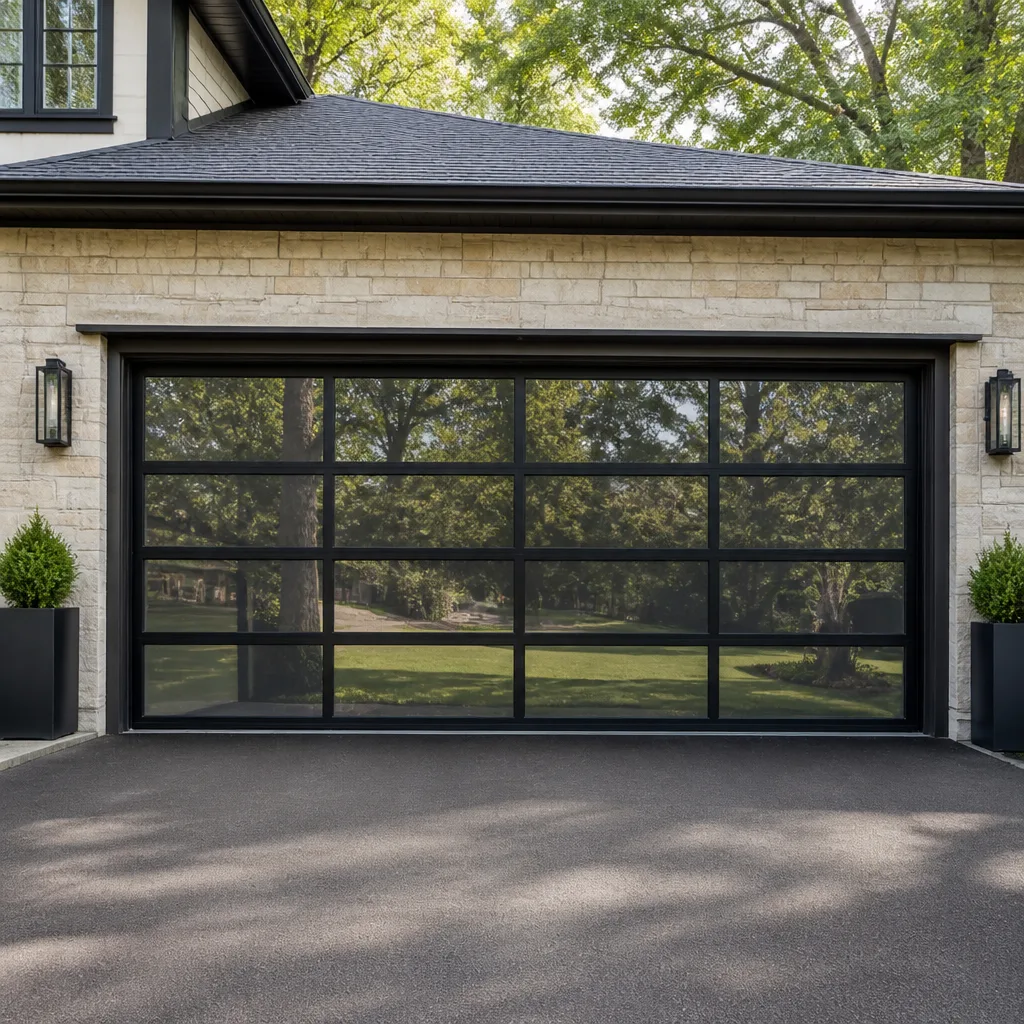 Full-view glass
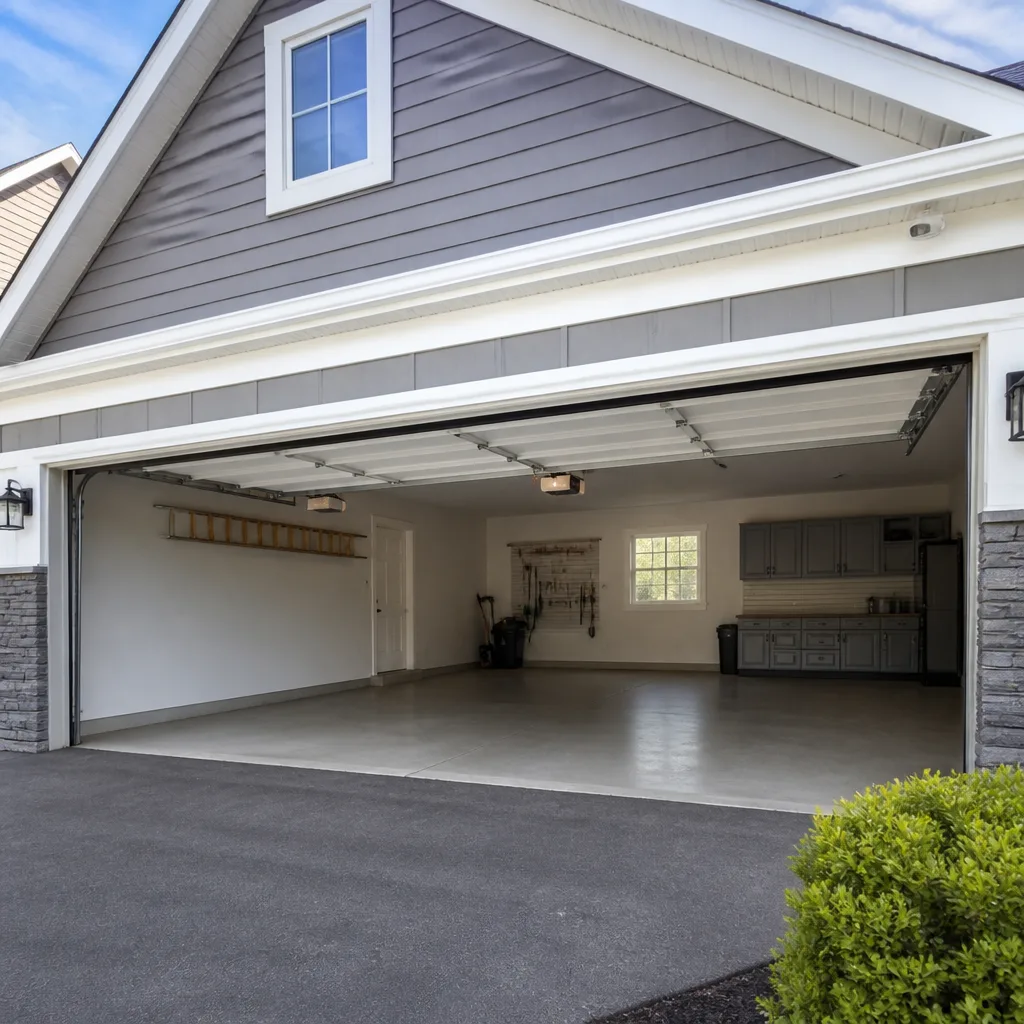 LiftMaster openers
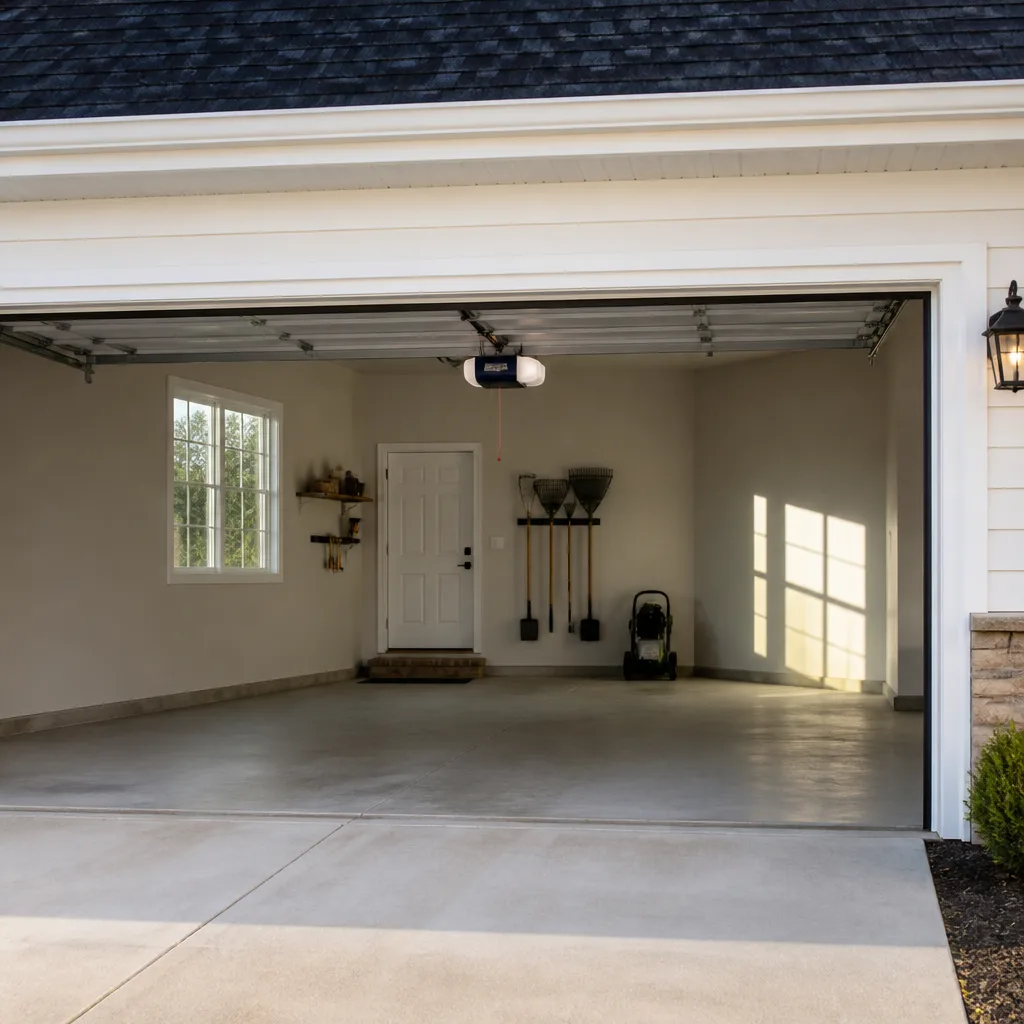 Chamberlain openers
Full 25-point door and opener safety check with every visit - springs, cables, rollers, tracks, and your LiftMaster or Chamberlain opener included
You get a price before we start. It does not change when the pro arrives.
Get your free estimateGarage Door Repair Troubleshooting in Palm Coast: Common Problems and How to Fix Them
A door that reverses before it closes isn’t broken. It’s doing exactly what it was built to do: the safety system caught something and sent the door back up. Homeowners in Palm Coast spend entire afternoons chasing that symptom – wiping the lenses, adjusting the travel limits, cursing the remote – when the actual fault is a misaligned track or a worn roller that trips the beam on the way down. Chasing the symptom wastes time and usually leads to a second problem. What works is knowing which of four categories your failure belongs to: mechanical, electrical, sensor, or balance. By the end of this guide, you’ll be able to place almost any garage door problem into one of those four buckets, understand what each one means, and know which handful of fixes are genuinely safe to try yourself and which ones need a trained technician standing there in person.
Quick Answer
Garage door troubleshooting starts with categorization: mechanical failures (springs, cables, rollers, tracks), electrical failures (openers, remotes, wiring, power), sensor failures (photo-eye beams, limit switches), and balance failures (the door can’t hold its own weight). Test balance first with the manual release – a door that drifts down or won’t stay halfway is a spring problem, not an opener problem. Reversing doors, grinding rollers, and slow movement each point to two or more possible causes, and the category tells you which one.
Styles & brands we work with
- Raised-panel steel
- Carriage house
- Modern flush
- Full-view glass
- LiftMaster openers
- Chamberlain openers
Table of Contents
- The Four Categories Every Garage Door Problem Falls Into
- The 60-Second Balance Test That Tells You the Most
- Why Your Door Reverses Before Closing (and Why It’s Usually Not the Sensor)
- Grinding, Squeaking, and Rumbling: What Each Noise Means
- Slow, Stalling, or Jerky Movement: Mechanical vs. Electrical
- Remotes, Keypads, and Openers That Stop Responding
- How Palm Coast’s Climate Affects Springs, Rollers, and Weatherstripping
- What’s Safe to Fix Yourself and What Isn’t
The Four Categories Every Garage Door Problem Falls Into
Every garage door failure, no matter how it looks from the driveway, traces back to one of four systems. Get the category right and troubleshooting becomes a short list instead of a shotgun approach. Here’s how they break down.
Mechanical
Anything physical that moves or holds the door. Springs, cables, rollers, hinges, tracks, bearing plates, drums. If something is grinding, dragging, visibly bent, or has snapped, you’re in mechanical territory. These problems usually announce themselves with noise or visible damage.
Electrical
The opener, its circuit board, the motor, the capacitor, wiring, and anything remote-controlled. Electrical failures show up as silence – the door doesn’t move at all when you press the button – or as odd behavior like the opener clicking without running, or a light that flashes in a pattern.
Sensor
The safety reversing system. Photo-eye beams mounted near the floor, the limit switches inside the opener that tell it where open and closed are, and the force-sensing logic in the opener’s board. Sensor problems are the source of most random reversing, and they’re often misdiagnosed as mechanical.
Balance
Whether the door’s weight is properly counteracted by the torsion or extension springs. A door that goes out of balance is a door whose springs are wearing or have failed. Balance failures mimic opener failures until you disconnect the opener and test the door by hand – which is the first thing a technician does, and the first thing you should do too.
In our experience, roughly two out of every three “my opener is broken” calls turn out to be a balance or mechanical problem that a testing sequence reveals in minutes. Before you spend anything, rule out the door itself. Our garage door repair team walks through that same test on every visit.
The 60-Second Balance Test That Tells You the Most
Before touching the opener, before calling anyone, do the balance test. It’s the single most informative check you can run on a garage door, and it takes under a minute.
- Close the door fully and disconnect the opener using the manual release cord (usually a red handle hanging from the trolley).
- Lift the door by hand to about halfway open and let go.
- Watch what it does for five seconds.
Here’s what the result tells you:
- It stays put. The springs are doing their job. Your problem is with the opener or a moving part, not the balance.
- It drifts down slowly. The springs have lost tension. Expect a torsion or extension spring replacement. It’ll get worse until the door won’t open at all.
- It drops fast. The spring has already failed. Don’t run the opener. It’ll strain the motor and can burn out the gear assembly.
- It rises on its own. The spring is over-tensioned, which is a setup problem. Call a pro to rebalance.
Reconnect the opener by pulling the release cord again after you’ve moved the trolley to align with the door bracket. This test is completely safe. The next one – looking at the spring itself – is not, and we’ll get to that.
Why Your Door Reverses Before Closing (and Why It’s Usually Not the Sensor)
The most common assumption is that a reversing door means a dirty photo-eye. Sometimes it is. But if you’ve wiped both lenses and the door still reverses, stop wiping and start diagnosing.
Check the sensors first (5 minutes)
- Are both indicator lights on the sensors solid? A blinking or dead light on either unit means the beam isn’t reaching its partner.
- Is anything in the path? A broom handle, a bicycle wheel, a fold of weatherstripping. Look at floor level from the side.
- Are they aimed at each other? A shift in the track or a bumped mounting bracket is enough to move them out of alignment.
- Is the sun hitting one of them? Direct late-afternoon sun into a receiving sensor mimics a blocked beam. East and west-facing garages in Palm Coast deal with this more than most homeowners realize.
If the sensors are clean and aligned, the problem is elsewhere
The other three culprits, in order of likelihood:
- Limit settings drifting. The opener thinks the closed position is where the door is meeting resistance, so it reverses. Relearn the travel limits from the opener’s manual.
- Force sensitivity set too low. The opener interprets normal resistance (a stiff roller, a dry hinge) as an obstruction and backs off. If you’ve recently greased nothing, this is the one.
- A worn roller or bent track. Physical resistance on the way down that only kicks in at the bottom – right where the safety logic is most sensitive.
If none of these resolves it, we need to see the door. Our technicians cover Palm Coast and the surrounding area for exactly this kind of intermittent fault. Call (866) 984-8329. We answer 24/7. Fast dispatch from 7am to 7pm, Sunday through Friday.
Grinding, Squeaking, and Rumbling: What Each Noise Means
Noises are the garage door telling you exactly which component is failing. Match the sound to the source and you’ve narrowed four possible problems down to one.
Grinding
Metal on metal, usually at the door’s edges or under the motor housing. Either a worn roller (the bearing has failed and the wheel is grinding on the track) or a dry hinge. A quick spray of white lithium grease on the hinges and rollers is safe and often helps. If the grinding continues after greasing, it’s a roller or track alignment issue.
Squeaking
Almost always dry metal. Hinges, rollers, or the torsion spring’s coils. Lubricate the hinges and rollers (never the spring’s coils – that’s not a DIY spot). If the squeal persists, a worn bearing plate or a rough spot on the torsion tube is the likely source.
Rumbling or banging
The big one. A loud rumble or bang on opening usually means a broken torsion spring or a snapped cable. Stop running the door. Those parts hold the door’s entire weight, and using the door with them compromised puts enormous strain on everything else.
Popping
A single pop on opening often points to a hinge that has slipped its track or a loosened lag bolt at the wall bracket. Usually cosmetic and safe to diagnose, but worth addressing before it grows.
Bottom line: grinding and squeaking can be addressed at home with lubrication. Rumbling, banging, and any noise paired with a door that won’t stay up needs a technician. Don’t test the theory.
Slow, Stalling, or Jerky Movement: Mechanical vs. Electrical
A door that moves slowly or hesitates isn’t automatically an opener problem. Put the symptom in the right bucket first.
Mechanical causes of slow movement
- Springs are wearing down – the opener has to push the door, not just guide it.
- Tracks are out of alignment from a ball peen strike or a heat-bent rail.
- Rollers are worn flat, creating a bumpy ride.
- Weatherstripping is dragging on the door as it opens, especially on doors that haven’t been touched in a while.
Electrical causes of slow movement
- The opener’s capacitor is failing – common on openers past their eighth year.
- The motor is underpowered for the door’s actual weight (a heavier or insulated door on an opener sized for a basic panel).
- The opener’s board is losing its limit memory – a sign of logic board failure.
Here’s how to tell them apart without calling anyone: disconnect the door from the opener with the manual release and move the door by hand. If it moves easily through the full travel, the door is fine and the opener is the problem. If it drags or feels heavy, the door is the problem and the opener is working harder than it should.
If a LiftMaster or Chamberlain opener is running slow, we diagnose by brand. Our garage door opener repair work covers both of those platforms along with legacy Genie, Craftsman, and Raynor units. If it’s on your home, we work on it.
Remotes, Keypads, and Openers That Stop Responding
When the wall button works but the remote doesn’t, or nothing works at all, the triage sequence is short. Work through these in order and you’ll land on the culprit.
- Test the wall button. If the wall button opens the door, the opener is fine and the problem is the remote. If the wall button doesn’t work, jump to step 4.
- Battery. The most-missed cause. A dying battery can send intermittent signals that look like a failing opener.
- Re-pair the remote. If it’s a newer LiftMaster or Chamberlain with Wi-Fi or MyQ, re-pairing from the app is the usual fix. Older Craftsman and Genie units use a learn button on the opener’s panel.
- Check the outlet and breaker. An opener that’s lost power is obviously dead, but a tripped GFCI outlet (common in garages) can leave the opener dark while the rest of the garage works.
- Wiring at the wall button. Low-voltage wire runs from the button to the opener. Loose connections at either end will kill the button without killing the opener.
If steps 1 through 5 don’t resolve it, the board or the radio receiver in the opener has likely failed. LiftMaster and Chamberlain boards are diagnosable and often replaceable; older mechanical openers sometimes aren’t worth the swap. We’ll tell you honestly which side of that line you’re on.
For a Palm Coast homeowner with a five-year-old opener, that’s worth understanding before you buy a new one. Our Charter Garage Door Repair team reads the board before recommending anything.
How Palm Coast’s Climate Affects Springs, Rollers, and Weatherstripping
Garage doors here work differently than they do in dry, cool climates, and it changes the timing and pattern of repairs. Palm Coast sits in a warm, humid environment where the door is exposed to year-round warmth, high moisture, and the swing between an air-conditioned home and an unconditioned garage.
Humidity and springs
Humidity accelerates corrosion on extension spring hooks and on the cables that run through them. Surface rust doesn’t kill a spring, but it does invite the “hook break” failure that snaps the cable. Torsion springs, oil-tempered and sealed, tolerate humidity better but still shorten their cycle life when the metal expands and contracts through the warm season. In our experience, extension spring assemblies here tend to show their age earlier than in cooler, drier climates.
Heat and rollers
Nylon rollers can soften and deform in the heat of a garage that gets direct sun all afternoon. That’s exactly the pattern that creates dragging on the upper track in summer and smooth operation in winter. Steel rollers last longer here but make more noise. If your door binds only in the warm months, your rollers are telling you something.
Weatherstripping and seals
The rubber seal at the bottom of the door is the fastest-wearing piece in the entire system in Florida. Heat, moisture, and repeated contact with the concrete slab all attack it. A seal that’s gone stiff will drag on the door, trip the reversing safety, and open gaps at floor level. It’s a genuinely easy DIY replacement on a Clopay or Amarr door, both of which use standard seal profiles.
Heat expansion on wood doors
If you’ve got a wood-paneled or overlay door, the summer heat works the panels, and the bottom section can warp enough to shift the entire door’s alignment. Expect to check tracks and hinges once a year if you have a wood door. Non-wood and steel doors hold alignment longer.
If you’ve got a Wayne Dalton door with the proprietary torque-tube spring, that’s a different animal. Many handymen decline these jobs because the tube assembly isn’t standard. We don’t. Palm Coast homes have plenty of them, and they’re a normal repair for a technician trained on the brand.
What’s Safe to Fix Yourself and What Isn’t
Here’s the safety line. Some garage door problems are genuinely safe for a homeowner with basic tools. Others carry a real risk of serious injury, and no amount of video tutorial makes them safe. The distinction matters.
Safe for a homeowner
- Replacing the rubber weatherseal at the bottom of the door.
- Lubricating hinges, rollers, and the opener’s rail with white lithium grease.
- Changing remote batteries and re-pairing remotes or keypads.
- Cleaning the photo-eye lenses and aligning the mounting brackets.
- Resetting the opener’s travel limits per the manufacturer’s manual.
- Snugging a loose bolt at the door’s wall bracket or hinge plate (with the door closed and disconnected).
Not safe – call a technician
- Touching the torsion spring or its winding cones. Torsion springs are wound under enough tension to break bones. There is no safe way for a homeowner to adjust, unwind, or replace a torsion spring. Not with a vise-grip, not with a winding bar, not with a YouTube walkthrough.
- Removing or adjusting the cable drums. The cables are what hold the spring’s tension in check. Every cable adjustment carries spring-tension risk.
- Extension spring repair. The spring hooks and safety cables are under constant load. Loosening either without relieving the spring’s energy is dangerous.
- Realigning a track that’s been bent. Tracks hold the door’s weight in balance. Forcing a bent track back by hand is a way to make it worse or get hurt.
- Replacing an opener’s motor or board. Electrical system work inside an energized opener carries shock and fire risk. A licensed technician has the training and the meter.
Water heaters, electrical panels, and garage door springs share one thing in common: they’re systems where the energy is stored, not visible. Respect that and you avoid the calls that turn an inexpensive repair into a hospital visit. Our technicians have up to experience and we’d rather walk you through the safe checks than have you attempt the others.
Common Mistakes to Avoid
- Running a door with a broken spring. Continuing to operate an opener against a door whose spring has failed burns out the motor, strips the plastic gear, and can snap a cable. The repair goes from one spring to a gear set and two cables – stop when the door won’t hold itself up.
- Adjusting the force sensitivity to make a door close. Raising the force limit makes the door close today. It also removes the safety margin that prevents injury, and it hides the actual problem – usually a dragging seal or worn roller that Palm Coast’s heat has stiffened.
- Spraying the torsion spring’s coils with lubricant. Every other metal-on-metal contact in the system gets grease. The torsion spring is the exception – oils attract dust, and the winding cones need their friction to stay seated. Lubrication there is a shortcut to a slipping spring.
- Assuming a reversing door means a bad photo-eye. Reversing is a symptom, not a diagnosis. Misaligned tracks, drifted limits, and low force settings are just as common in Palm Coast, and each is fixed differently.
- Bending a track back with pliers. A track has to stay exactly parallel for the rollers to travel smoothly. A “straightened” track is usually worse than the bent one. A replacement track section is cheap; a bent door panel isn’t.
- Ignoring the balance test. Homeowners jump straight to the opener when the door stops acting right. The balance test is free, takes a minute, and eliminates half the possibilities. Skip it and you’ll chase the wrong repair.
- Buying a new opener before checking the door. In our experience, a substantial share of “the opener is weak” complaints are worn springs that the opener has been compensating for. A new opener on a worn-out door fails faster than the old one did.
When to Call a Professional
Call a technician when the problem involves stored energy or the electrical system. Specifically: any door that won’t hold itself up (failed spring), any door that won’t stop reversing after sensors are clean and aligned, any cable that’s slack or visibly off its drum, and any opener that clicks without moving or is silent from the wall button. Call us when you’re not sure. Diagnosing over the phone costs nothing, and so does a written estimate. For Palm Coast homeowners, our team covers that diagnosis and the repair on the same visit in most cases. If the door has a visibly snapped spring or a cable hanging loose, stop running it and call (866) 984-8329. We answer 24/7. Fast dispatch from 7am to 7pm, Sunday through Friday.
See the difference
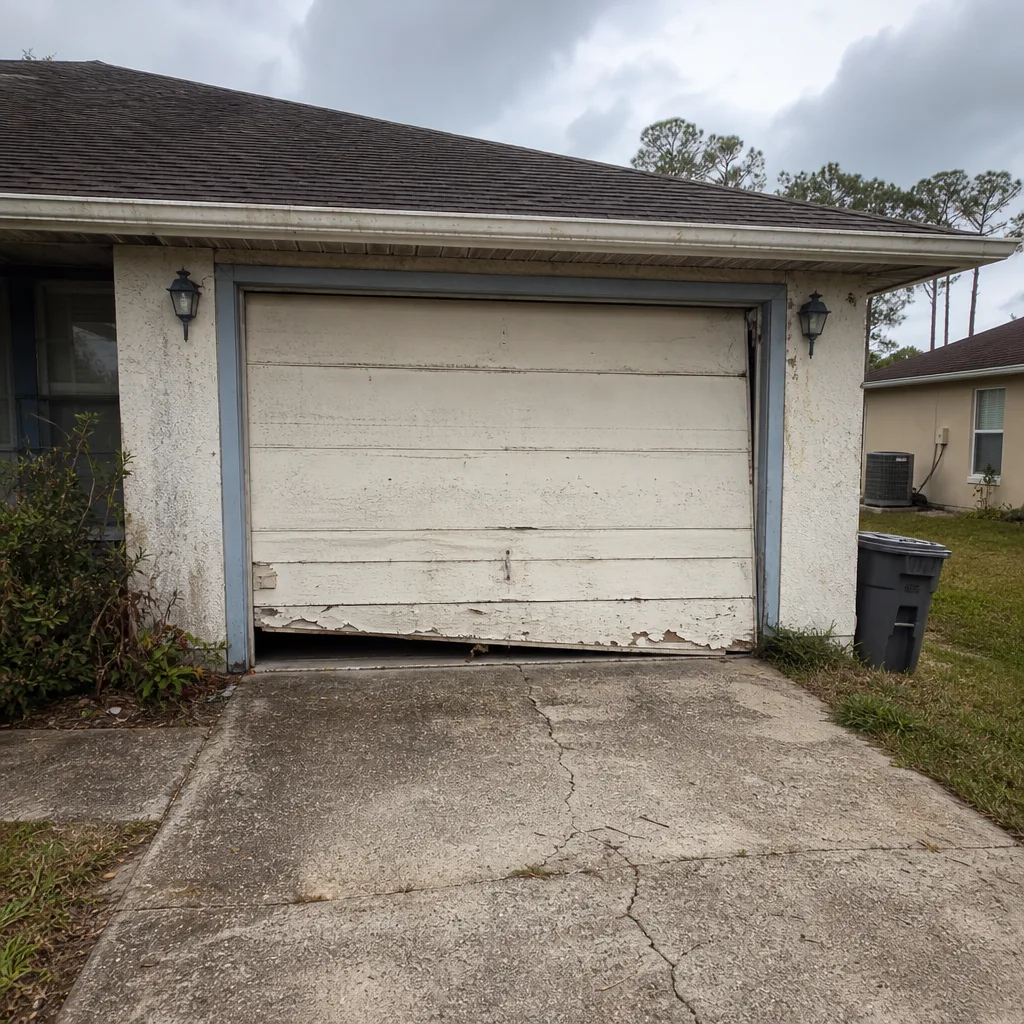 Before
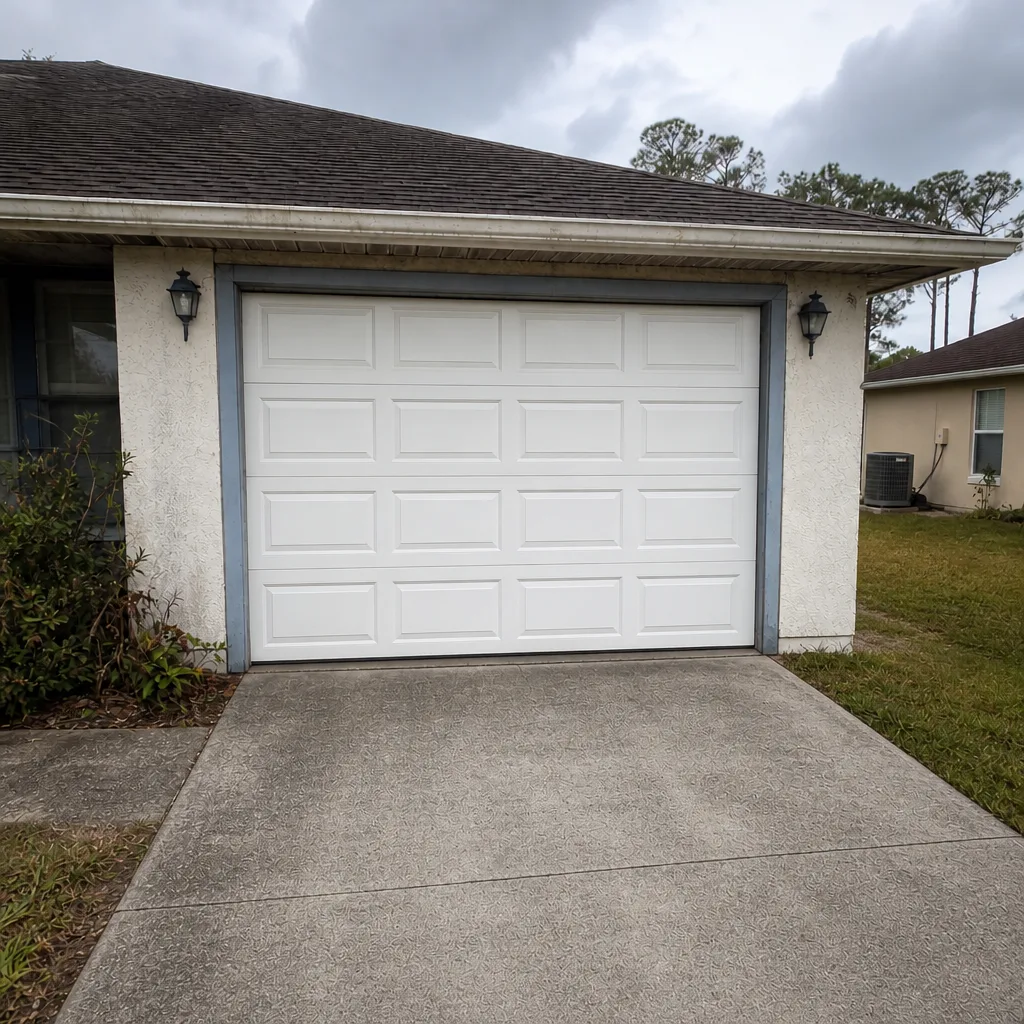 After
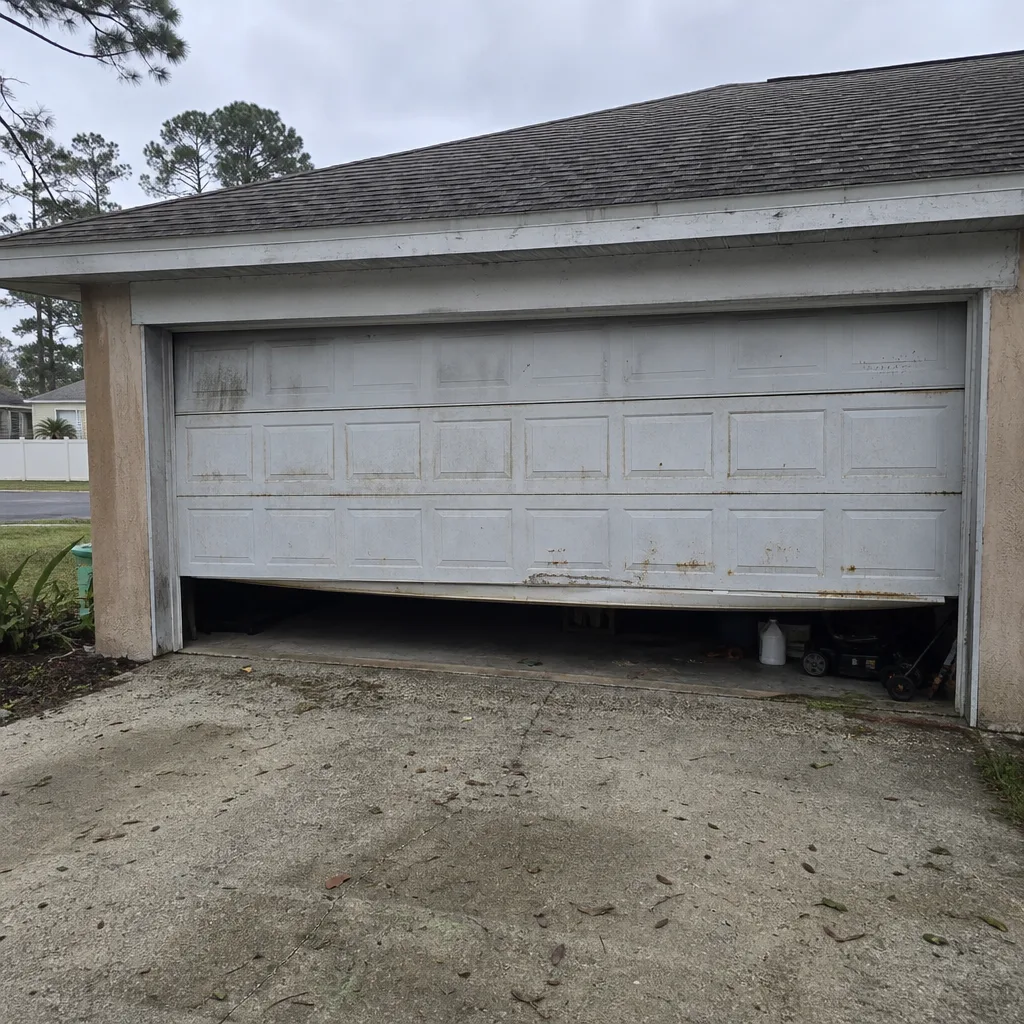 Before
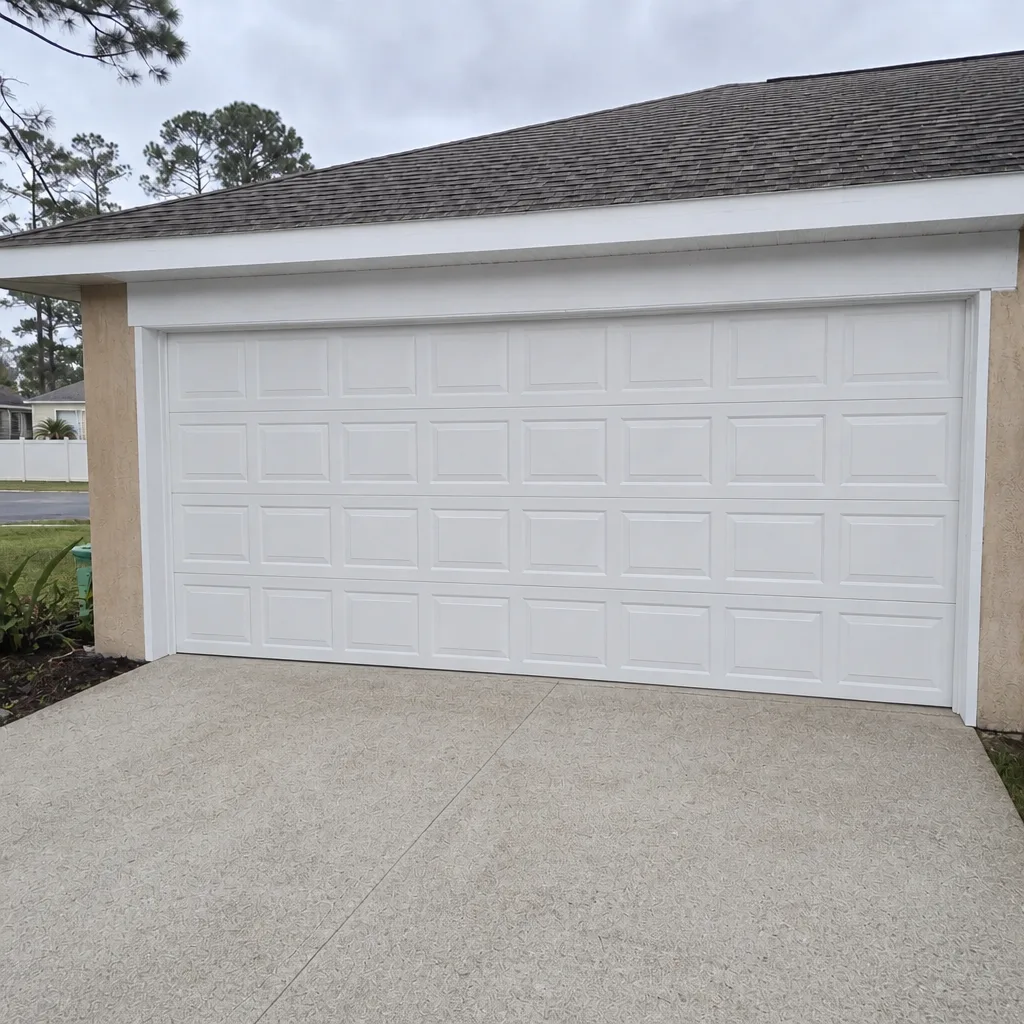 After
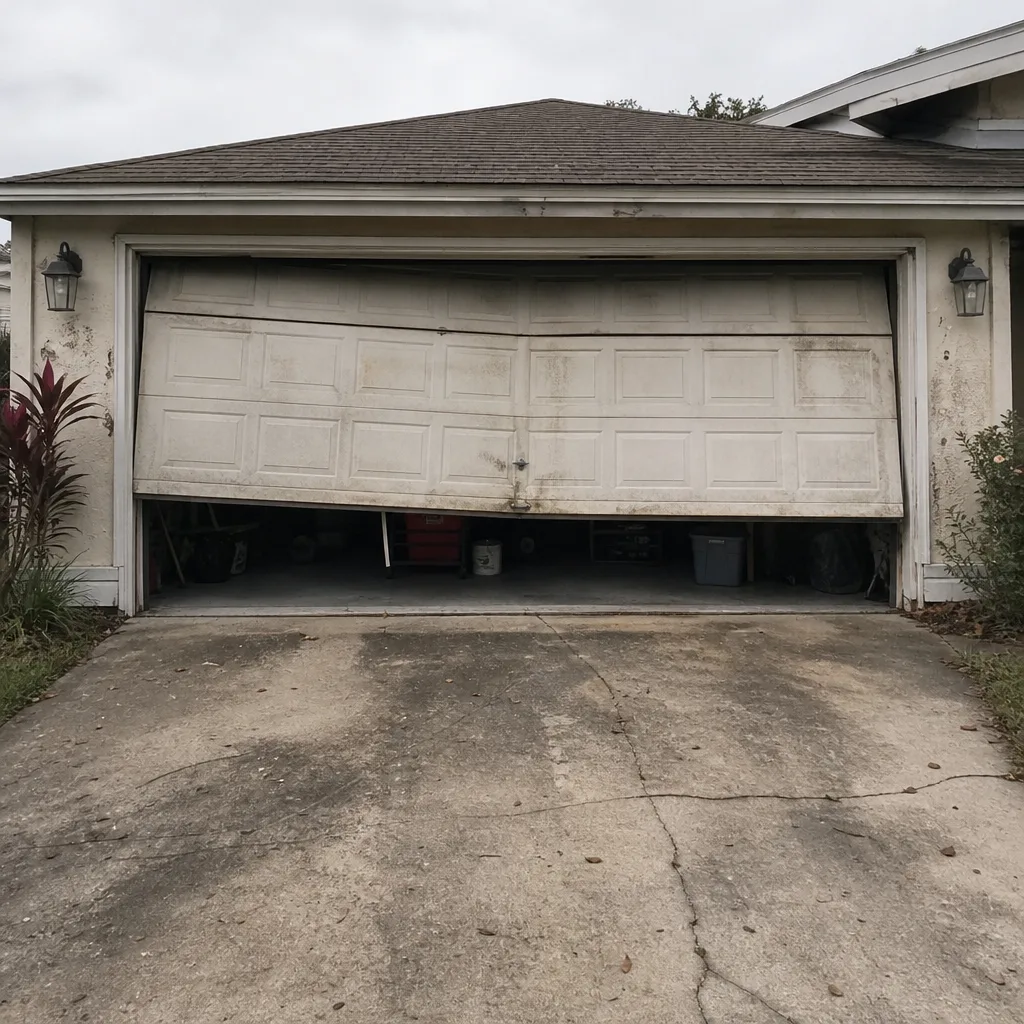 Before
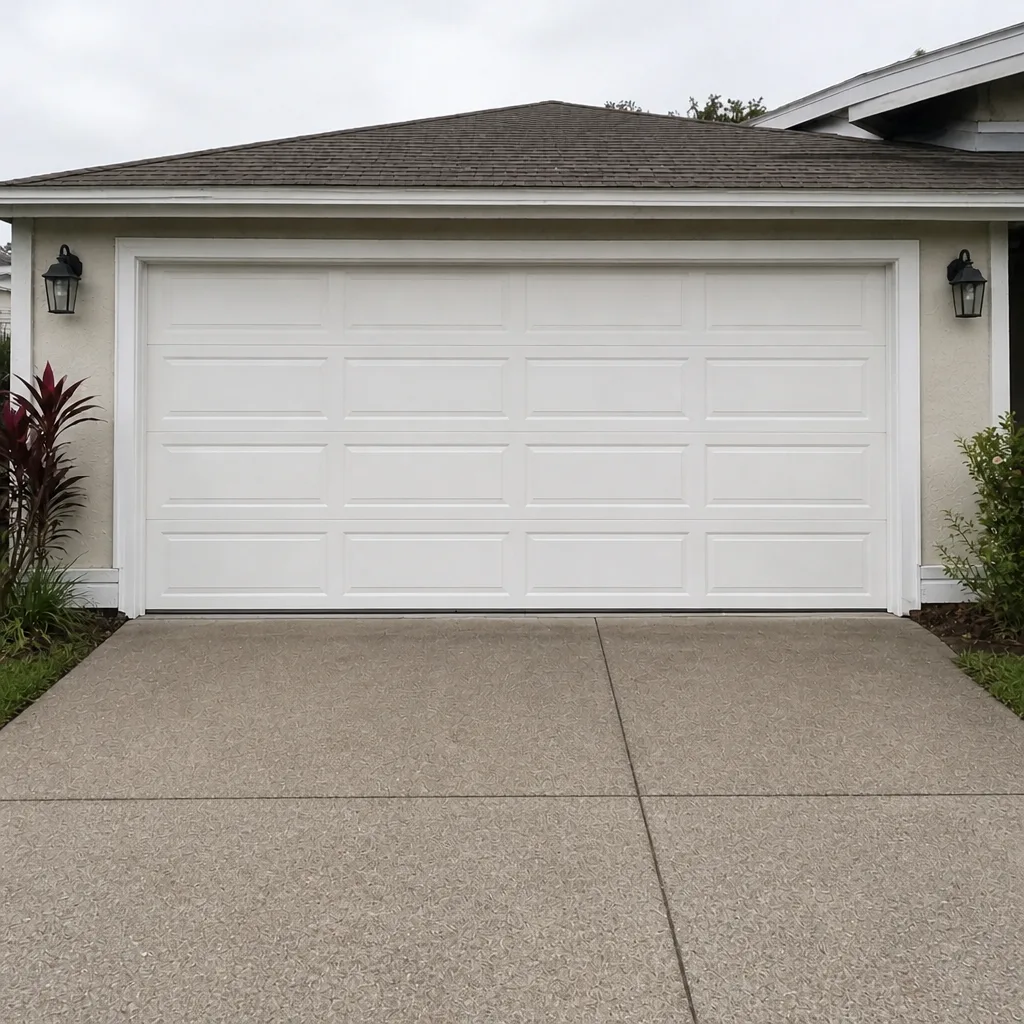 After
Frequently Asked Questions
Your door reverses because the safety system is doing its job: something is preventing the door from fully closing. Start with the photo-eye sensors (clean and aligned), then the travel limits, then the force sensitivity setting, then physical resistance from a worn roller or dragging weatherseal. If all of those check out, a technician should trace the wiring and the opener’s internal limits. Call (866) 984-8329 for a quick phone diagnosis – estimates are free.
Run the balance test: disconnect the opener with the manual release, lift the door halfway, and let go. If it stays up, the springs are fine and the problem is with the opener. If it drops, the spring has failed. Never touch the spring itself – that’s the technician’s job. Our technicians have up to experience with springs and openers together, and they’ll do this test on the first visit.
Some things are, and some aren’t. Weatherseal replacement, lubrication, remote pairing, sensor cleaning, and limit resets are all safe for a careful homeowner. Torsion or extension spring repair, cable work, and any internal opener repair are not, because the stored energy in those parts can cause serious injury. If a repair touches the springs or the opener’s wiring, call us at (866) 984-8329 for a free estimate.
Summer heat softens nylon rollers and expands the door and track slightly, which creates resistance that wasn’t there in cooler weather. The grinding is usually a worn roller or a dry hinge, and a spray of white lithium grease on hinges and rollers often quiets it. If grinding continues after lubricating, a roller or track alignment issue is the likely cause – worth a look from a technician. Call (866) 984-8329 for an exact quote – estimates are free.
Yes. We work on what you already have, including older Craftsman and Genie units, and current LiftMaster and Chamberlain systems. When the opener is failing, we diagnose by brand and its behavior pattern rather than guessing. For Palm Coast callers with legacy equipment, we’ll tell you honestly whether repair or replacement is the better use of your money. Call (866) 984-8329 for a free estimate.
No, not after the written estimate. We quote the price for the job before any work starts, and that’s what you pay. If we find a second issue during the repair, we stop, quote it separately, and you decide before we go further. That’s the standard for every Palm Coast job we take.
The Bottom Line
Garage door troubleshooting comes down to four categories – mechanical, electrical, sensor, balance – and the fastest path to the right fix is figuring out which one you’re in before you touch anything. Run the balance test first. If the door stays up halfway, you’re looking at an opener or a moving part, and lubrication, sensor cleaning, and remote pairing are safe to try. If the door drops, the spring has failed and that’s a technician’s job, no exceptions. Palm Coast’s warm, humid climate accelerates wear on seals, rollers, and extension springs, so expect a different repair calendar here than you’d have in cooler parts of the country. When you’re not sure, call. A phone diagnosis is free and usually settles it in two minutes.
When a single problem turns out to be two, you shouldn’t have to call a second company. From a broken spring to a full new door, one call covers repair, openers, and installation. Call (866) 984-8329 for a free estimate. We answer 24/7. Fast dispatch from 7am to 7pm, Sunday through Friday.
Written by the team at Charter Garage Door Repair.