
Last updated November 15, 2026
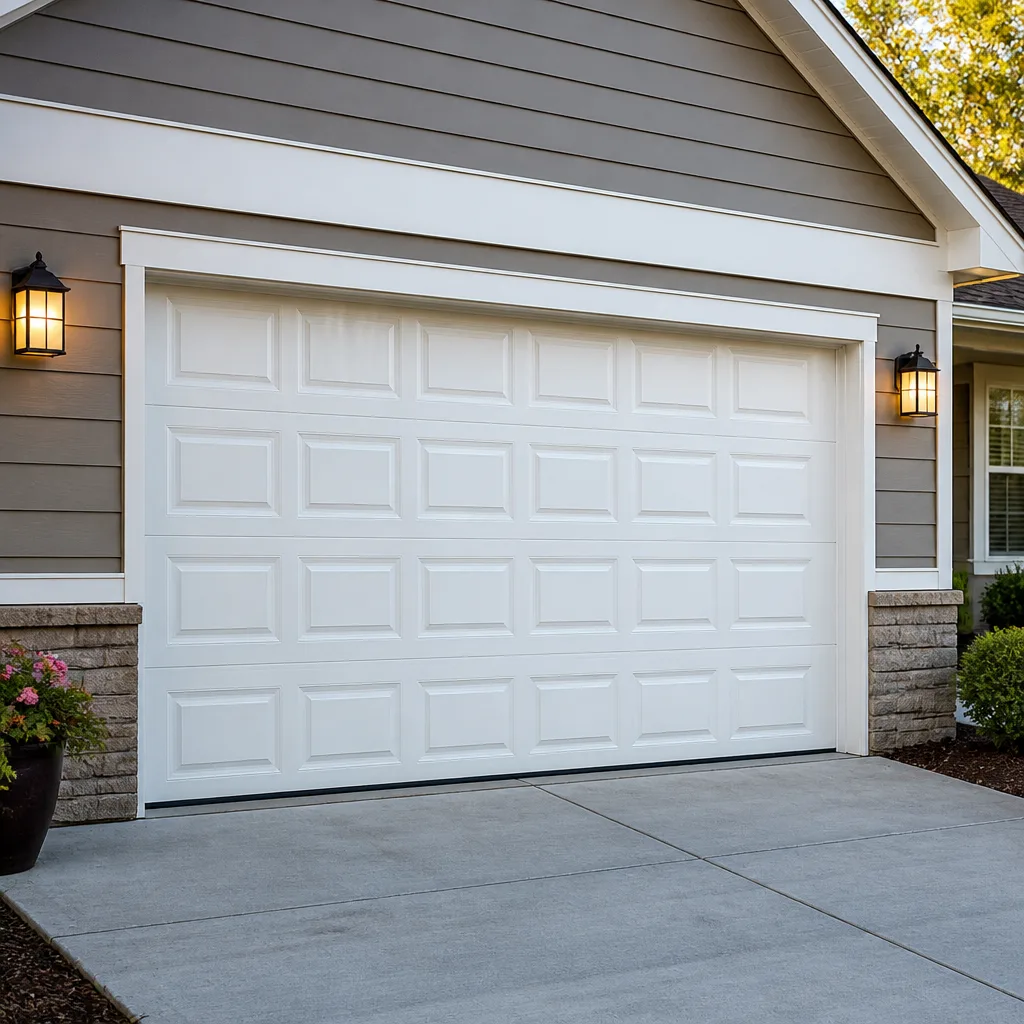 Raised-panel steel
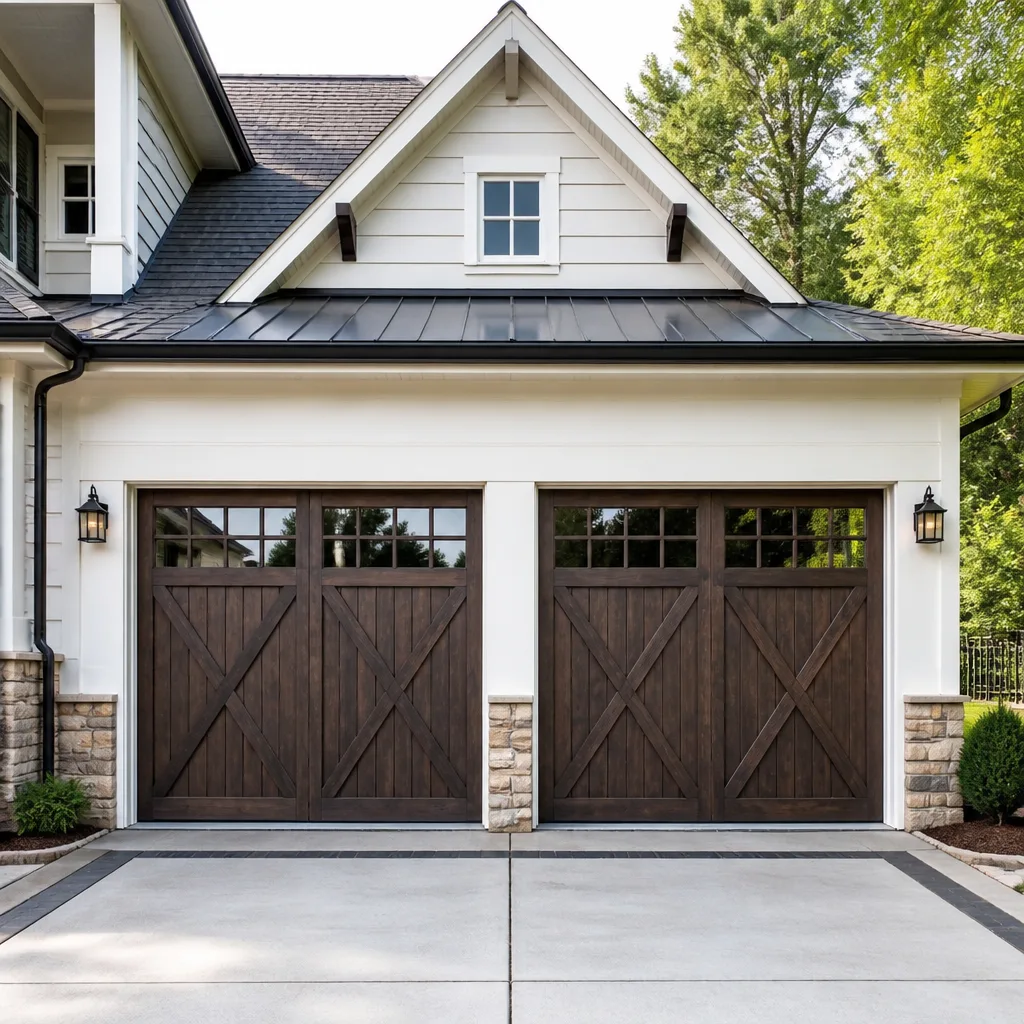 Carriage house
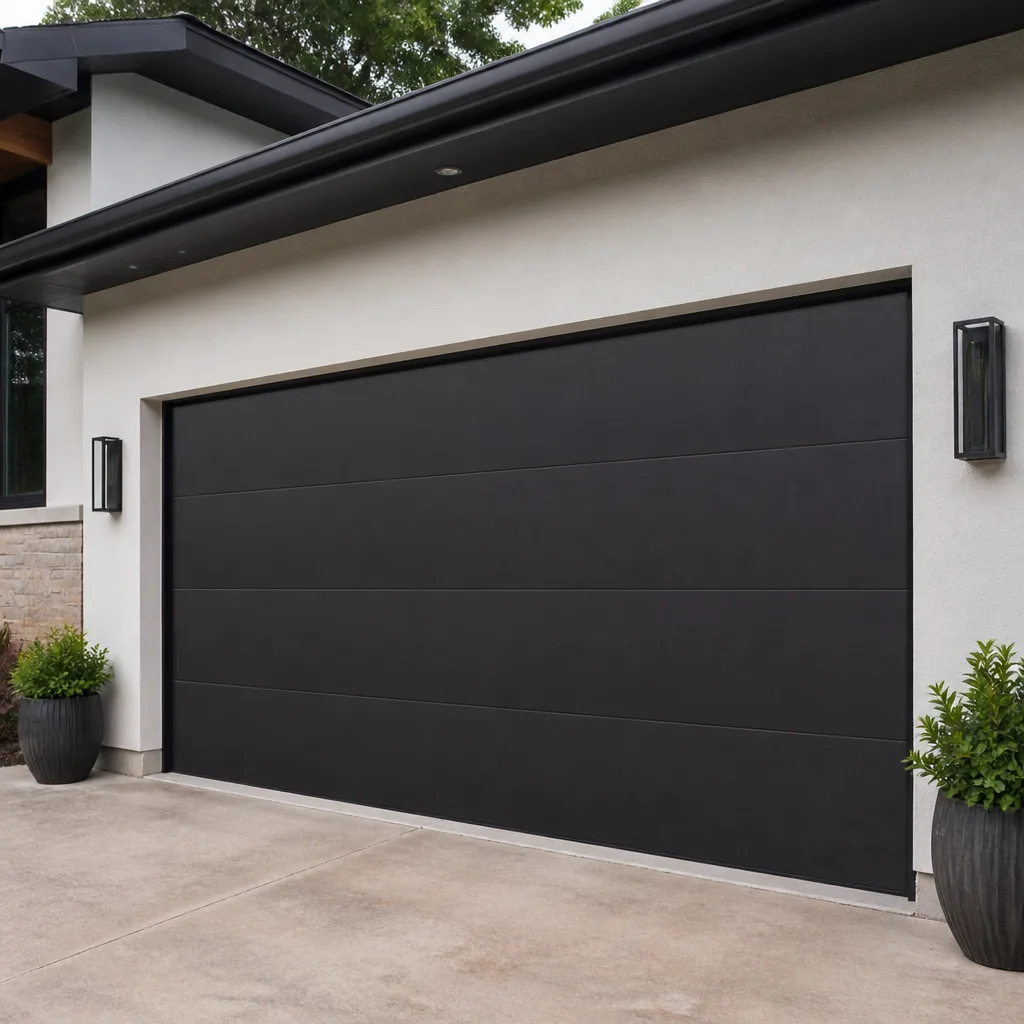 Modern flush
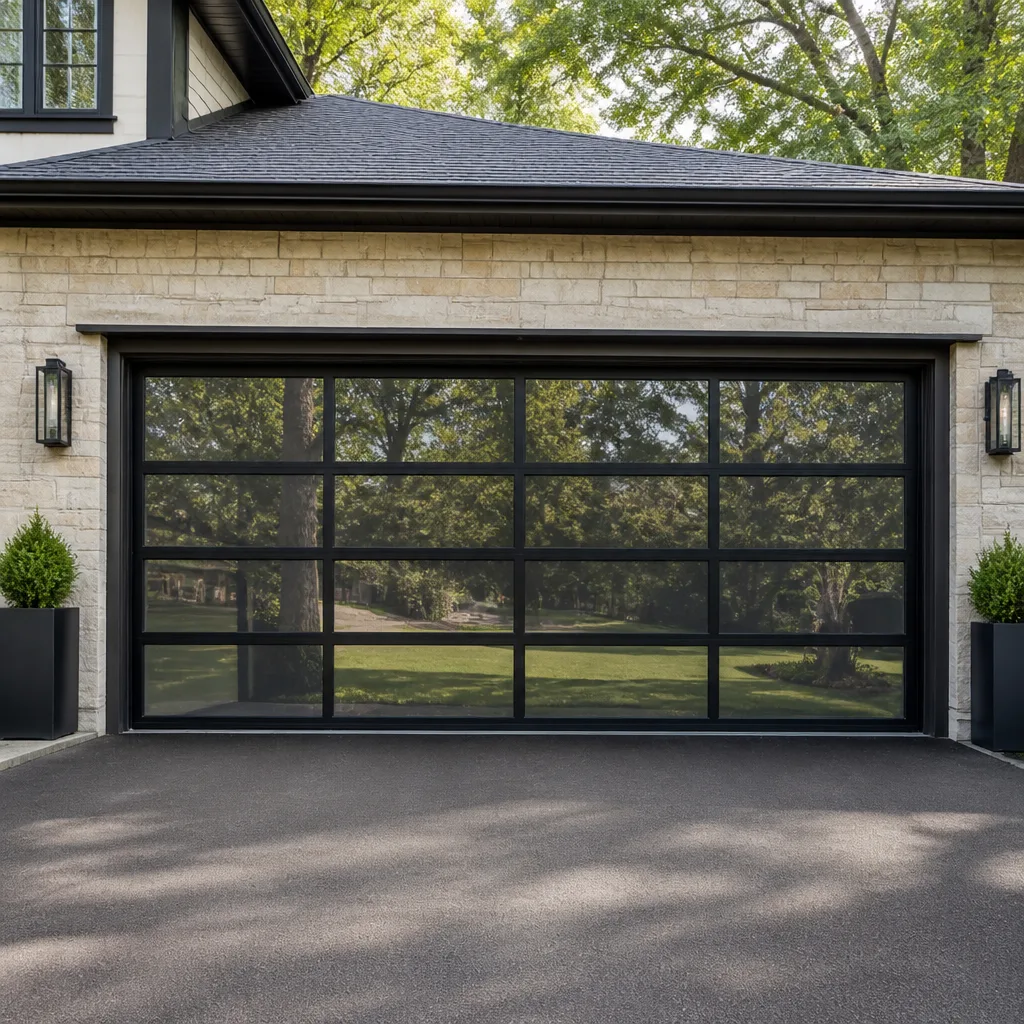 Full-view glass
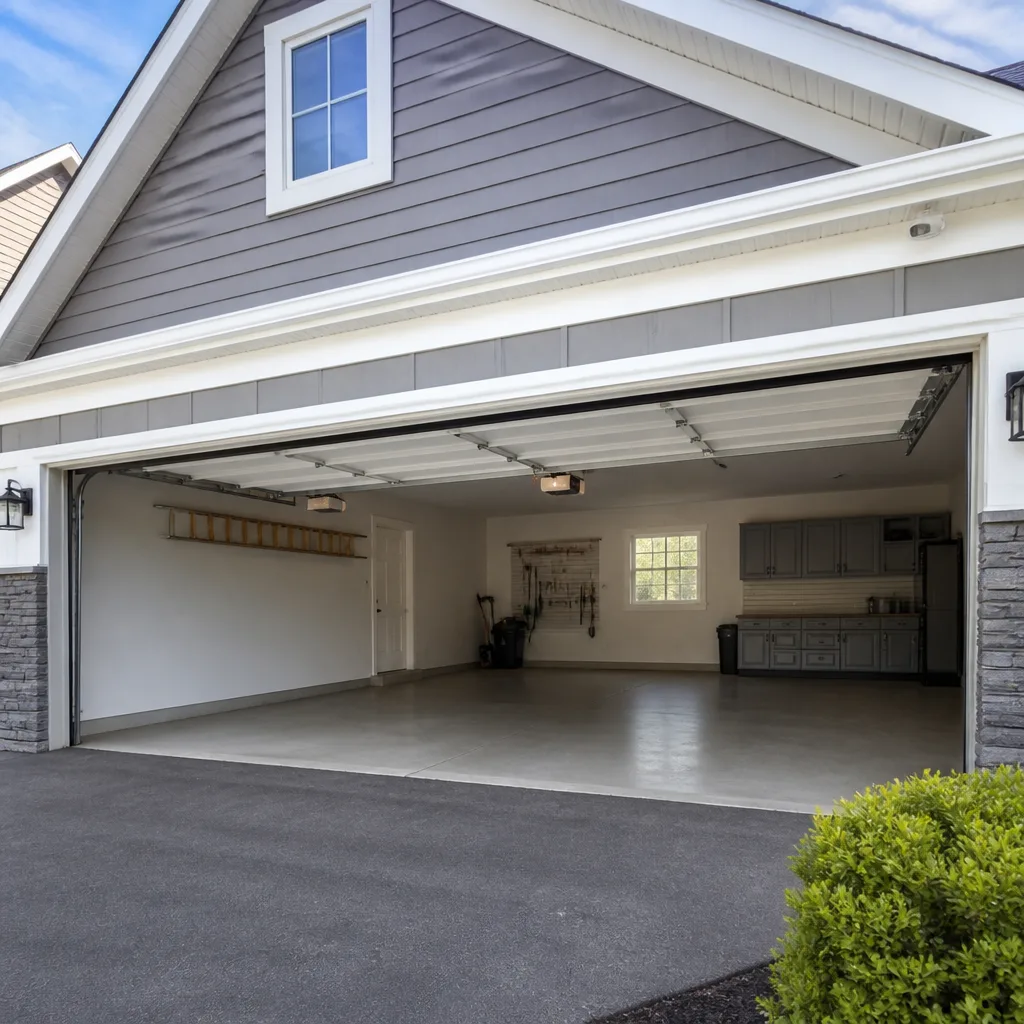 LiftMaster openers
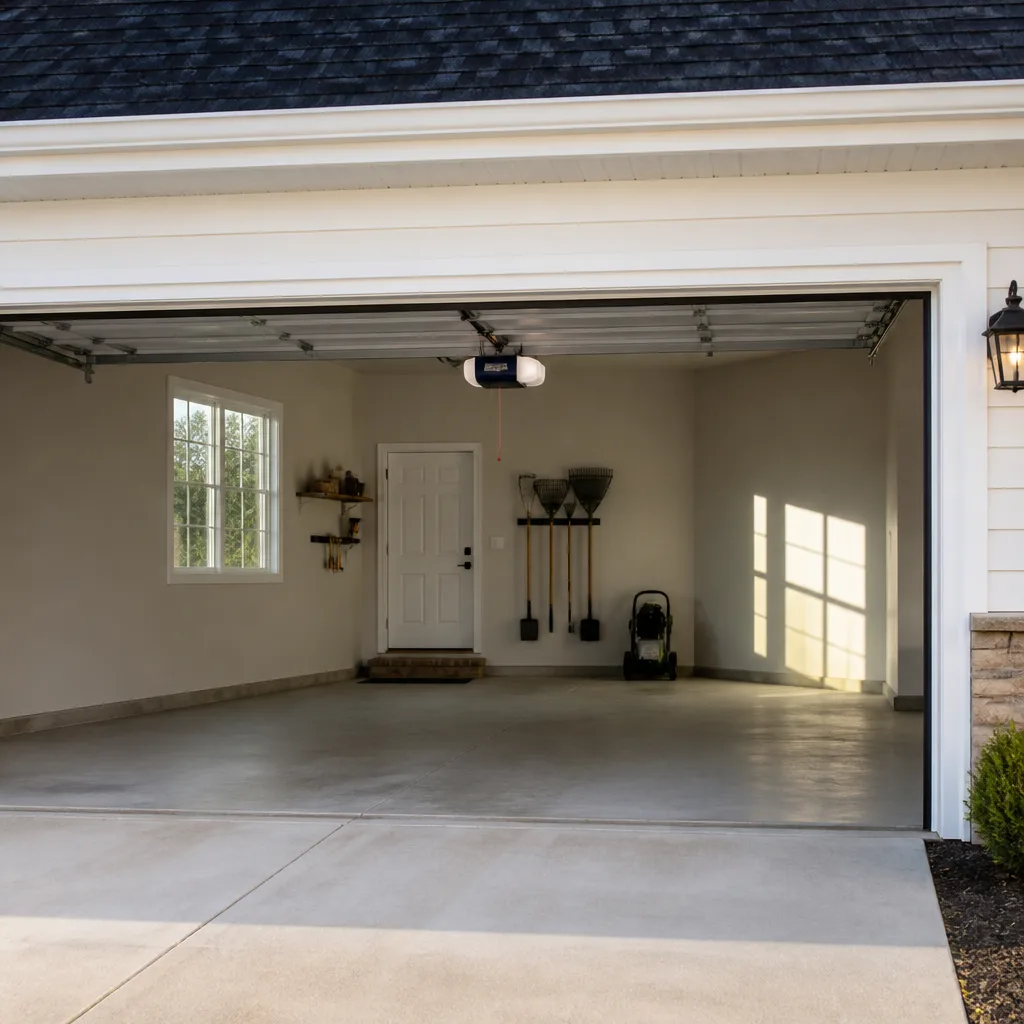 Chamberlain openers
Full 25-point door and opener safety check with every visit - springs, cables, rollers, tracks, and your LiftMaster or Chamberlain opener included
You get a price before we start. It does not change when the pro arrives.
Get your free estimateHow to Hire a Garage Door Contractor in Palm Coast: A Step-by-Step Guide
Most homeowners hire a garage door contractor the same way they hire a landscaper: they call the first number that answers and hope for the best. That works fine until the first repair turns into a second problem, and the person who took the job stops returning calls. Hiring well in Palm Coast means screening for accountability, not just a low number. After a storm rolls through Flagler County, the market floods with out-of-area crews who don’t know Florida’s wind-load requirements, and telling them apart from a contractor who’ll still be reachable in six months takes a few specific questions. This guide walks you through those questions, the license check that takes under a minute, and the red flags that show up here more than anywhere else.
Quick Answer
To hire a garage door contractor in Palm Coast, verify the contractor’s state license and insurance before anything else, ask for a written scope of work instead of a verbal quote, and confirm they service the brand already on your home rather than steering you toward a replacement. A contractor who works on multiple brands, puts the price in writing before work starts, and can explain how they’ll handle a second problem mid-job is the one worth hiring. Price matters, but accountability matters more.
Styles & brands we work with
- Raised-panel steel
- Carriage house
- Modern flush
- Full-view glass
- LiftMaster openers
- Chamberlain openers
Table of Contents
- Why Hiring in Palm Coast Is Different
- Step 1: Verify the License and Insurance
- Step 2: Get a Written Scope of Work, Not a Verbal Quote
- Step 3: Multi-Brand Specialist or Brand-Tied Dealer?
- Step 4: The Questions That Reveal How a Contractor Actually Works
- Step 5: Spot the Post-Storm Contractor Surge
- Repair vs. Replacement: How to Decide
- What the Hiring Process Should Cost You
Why Hiring in Palm Coast Is Different
Garage door work in Palm Coast runs into a set of local conditions that don’t apply in most of the country. The housing stock here skews toward homes built in the 1990s through the 2000s, many in planned communities like Palm Coast’s older sections off Palm Coast Parkway and the neighborhoods around Town Center. That means a large share of the doors in town are now at the age where springs, rollers, and openers start failing on a schedule, often within a few years of each other. A contractor who works here regularly sees the same Clopay and Amarr residential doors over and over and knows how they behave as they age.
The bigger local factor is wind. Florida’s building code treats garage doors as a structural opening, not a decoration. In many parts of the state, including this one, a replacement door has to meet specific wind-load and impact requirements, and that has consequences for how the job is scoped and permitted. A contractor who has never pulled a permit in Flagler County may not know what the local building department expects, and the homeowner ends up holding the problem. That’s why the license check and the written scope come before price in this guide. If you want the background on our own service lines first, Charter Garage Door Repair lays out repair, opener work, and installation in one place.
The mild winters here also shape the work. Doors don’t sit under snow load or go through freeze-thaw cycles, so the wear pattern is different from northern markets. What fails here tends to be springs fatiguing from use cycles, opener gears wearing out, and hardware loosening from heat expansion over long summers. A contractor who tells you your door failed because of frost or ice is describing a different climate.
Step 1: Verify the License and Insurance
Before you discuss price, before you let anyone on a ladder, verify that the contractor is licensed and insured in Florida. Garage door installation and the structural work around it fall under Florida’s licensed contractor framework, and a legitimate contractor can produce a state license number on request. You can check that number through the state’s contractor licensing database in about a minute. If a contractor hesitates, changes the subject, or says the license is “in the office,” that’s your answer.
- Ask for the license number in writing – by text or email, so you have a record.
- Look it up yourself on Florida’s contractor licensing database. Confirm the name matches the person or company quoting you.
- Ask for a certificate of insurance showing both general liability and workers’ compensation. Call the insurer’s number on the certificate if you want to confirm it’s current.
- Confirm the license covers the scope – repair, opener work, and installation are related but not identical, and a contractor should be clear about what they’re licensed to do.
- Ask whether a permit is required for your job, and who pulls it. For a full door replacement, the answer is often yes. The contractor should tell you to confirm with the City of Palm Coast building department rather than guess.
This step takes less time than reading a Yelp review and tells you far more. An unlicensed contractor working on a garage door is a liability problem you’ll inherit if something goes wrong.
Step 2: Get a Written Scope of Work, Not a Verbal Quote
A verbal quote is a conversation. A written scope of work is a commitment. The gap between the two is where most homeowner disputes begin, which is why we tell every customer the price is quoted and agreed before any work starts. Insist on a written document, and read it for these elements:
- The exact work being done. “Fix garage door” is not a scope. “Replace both torsion springs, replace four rollers, adjust tracks and balance door” is.
- Parts and brands named. If the contractor plans to install a LiftMaster or Chamberlain opener, the scope should say so, with the model.
- The price, itemized. Labor and parts broken out, and whether the number is a fixed price or an estimate subject to change.
- What happens if they find a second problem. This is the clause that matters most. A good scope says the contractor will stop, explain what they found, and get your approval before doing more work and charging more.
- Permit responsibility if one is needed, and who pays for it.
- Cleanup and haul-away of the old door or parts.
- Any warranty on labor and parts, in writing.
If a contractor won’t put their scope in writing, they’re telling you something. Take them at their word and call someone else.
Step 3: Multi-Brand Specialist or Brand-Tied Dealer?
This is the decision most homeowners don’t realize they’re making. A brand-tied dealer sells and services one manufacturer’s products. That’s not automatically bad, but it creates an incentive: when your existing door needs a mid-sized repair, a single-brand dealer has a reason to steer you toward a full replacement with their brand instead. A multi-brand specialist works on whatever is already on your home and has no incentive to push one manufacturer over another.
For a repair, the multi-brand approach wins almost every time. Most garage door brands use similar mechanical principles, but the details differ. A Wayne Dalton door with a proprietary torque-tube spring system, for instance, is a job many general handymen decline because they don’t know the system. A contractor who knows Clopay, Amarr, LiftMaster, Chamberlain, Genie, and Wayne Dalton diagnoses by how the specific brand behaves, not by guesswork. On the opener side, that means recognizing the difference between a smart Wi-Fi LiftMaster unit and a legacy mechanical Craftsman drive, because the failure modes are different.
For a full new installation, a brand-tied dealer can make sense if you specifically want their product and their warranty. But ask them directly: If I don’t want to replace, will you repair what I have? A contractor who says yes and means it is the one to keep. A contractor who talks only in replacement terms has told you what they’re selling. Our own approach is built around working on what you already have, from a broken spring to a full new door, and we can only speak for the brands we’re certified on.
Step 4: The Questions That Reveal How a Contractor Actually Works
You can learn more from four well-chosen questions than from an hour of sales talk. Ask these before you agree to anything, and listen for whether the answer is specific.
- “Do you keep common parts on hand, or order them after the job starts?” A contractor who orders springs, rollers, or opener parts only after diagnosing means your door may sit open or stuck for days. Contractors who regularly work in Palm Coast tend to know which parts they’ll need for common residential doors and plan accordingly. Ask how long a typical repair takes once diagnosed.
- “What happens if you open it up and find a second problem?” The right answer is that they stop, show you what they found, explain the options, and get your approval before proceeding. The wrong answer is that they’ll “take care of it.”
- “Are you certified on my brand, and which brands do you work on?” A contractor who lists specific brands and knows how each one fails is a specialist. A contractor who says “all of them” without specifics is guessing.
- “Will the price I’m quoted today be the price I pay?” The honest answer is that the written estimate sets the price, and any change gets approved before work continues. Push back on vague answers here.
Ask these questions and you’ll know within five minutes whether the contractor is worth hiring. When you’re ready to talk through a repair, garage door repair is where we start every job: diagnose first, then quote.
Step 5: Spot the Post-Storm Contractor Surge
After a storm passes through Flagler County, out-of-area crews arrive offering quick garage door fixes. Some are legitimate. Many aren’t. The tell is almost always the same: they can’t tell you anything specific about how work gets done in Palm Coast, because they’ve never done it here. Watch for these signs.
- No verifiable state license. A license number you can’t look up is a license that doesn’t exist.
- Cash only, no written quote. Legitimate contractors put the scope and price in writing and take normal payment methods.
- Pressure to sign today. “This price is only good if you decide right now” is a sales tactic, not a service.
- No local knowledge. If they can’t discuss wind-load requirements, permit needs, or which local brands dominate the neighborhood, they’re not from here.
- Unmarked vehicles, no business address, phone number that goes to a call center. All signs you may not be able to reach them once the job is done.
- No discussion of a second-problem protocol. Storm work often uncovers damage that wasn’t visible at first. A contractor who won’t talk about what happens next is a contractor who’ll disappear when it does.
The test is simple: ask a storm-arrival contractor to explain, on the spot, how they’d handle a replacement that needs a permit in Palm Coast. If they can answer cleanly, they may be fine. If they can’t, thank them and call someone who works here.
Repair vs. Replacement: How to Decide
Most garage doors fail in ways that can be repaired. A broken spring, a worn opener gear, a bent track, or a door that’s come off its rollers are all fixable, and a good contractor will tell you so. The decision tips toward replacement when the door panel itself is structurally damaged, when the door is far past its service life and multiple components are failing at once, or when you want to upgrade to a wind-rated door that meets current requirements.
Here’s how to tell the difference before you call anyone:
- Repair territory: the door opens and closes but makes noise, runs rough, or stops partway. One component has failed. The panels and structure are sound.
- Replacement territory: a panel is crushed or dented through, the door has come off its tracks in a way that bent the framing, or the door is so old that a repair would cost a large fraction of a new door.
- Ask the contractor directly: “If this were your door, would you repair or replace it, and why?” A good contractor gives you a specific reason, not a sales pitch.
Whichever way you go, the price should come in a written estimate before work begins, and if the job reveals something unexpected, the contractor should stop and re-quote with your approval. For a full scope of what our repair and installation work covers, garage door opener repair and door installation are handled by the same team, so you don’t get handed off to a second contractor mid-job.
What the Hiring Process Should Cost You
The hiring process itself should cost you nothing. Estimates are free, and there’s no service-call or diagnostic fee to quote your job. The only price that matters is the written estimate, and it’s set per job based on what your door actually needs. That means you can call two or three contractors, get free written quotes from each, and compare them without spending a dollar.
Compare quotes on three things, in this order: the scope of work, the contractor’s license and insurance, and the price. A quote that’s lower because it excludes a permit, skips a part you’ll need, or leaves out cleanup isn’t actually cheaper. A quote that’s higher because it includes everything and the contractor will stand behind it usually is. Calling around is free, so it’s worth doing. If you’d rather start with a conversation, we’re glad to answer questions before you commit to anything.
Be cautious with any contractor whose price changes between the phone call and the written quote. That gap tells you the real price isn’t set until they’ve committed you to the job. The written estimate is the price.
Common Mistakes to Avoid
- Hiring on price alone. The cheapest quote is usually cheap because something’s missing: the permit, a part, or the labor to do it right. Price is the third thing to compare, not the first.
- Accepting a verbal quote. A verbal price is unenforceable and easy to walk back. Get the scope and price in writing before anyone touches your door.
- Not checking the license. In a storm-surge market like Palm Coast’s, unlicensed contractors are common. Look the license number up yourself; it takes under a minute.
- Hiring a brand-tied dealer for a repair. A single-brand dealer has an incentive to recommend replacement. If you want to keep your existing door, a multi-brand specialist is the safer call.
- Not asking about the second-problem protocol. Repairs often uncover something else. Ask what happens if the job grows before you agree to the first price.
- Letting anyone work without a written scope. Even a small repair should be scoped. “I’ll take care of it” is not a scope; “replace both springs, adjust tracks, balance door, haul away old springs” is.
- Assuming the old door has to go. Most garage door failure here is repairable. Get a second opinion before you agree to a full replacement.
See the difference
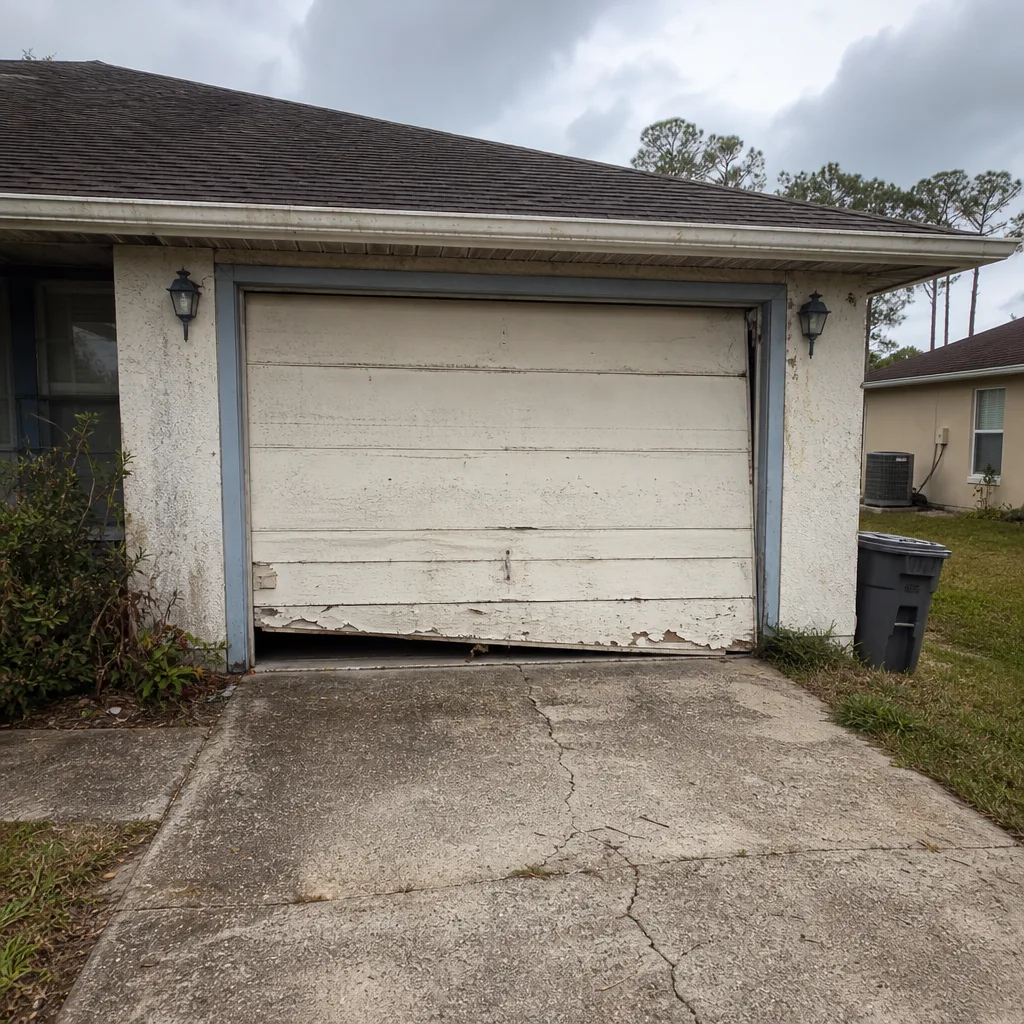 Before
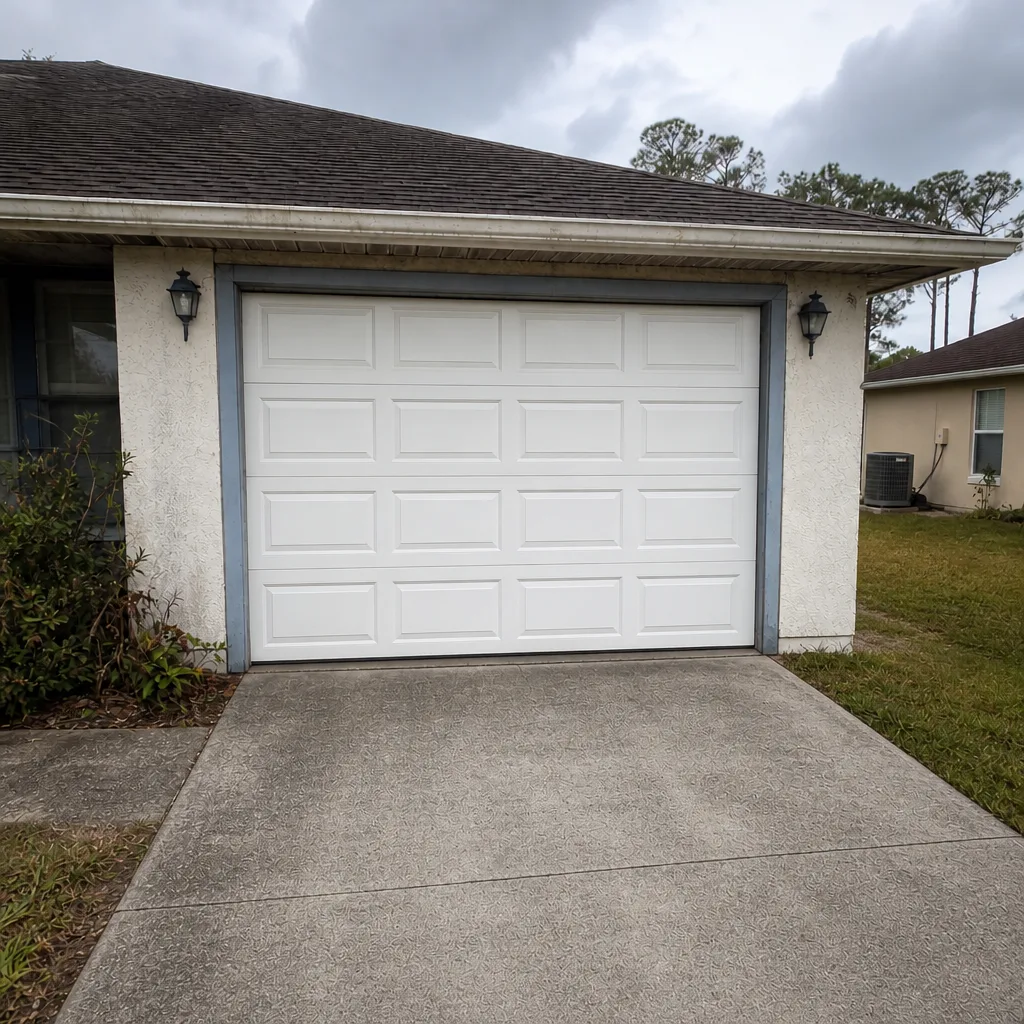 After
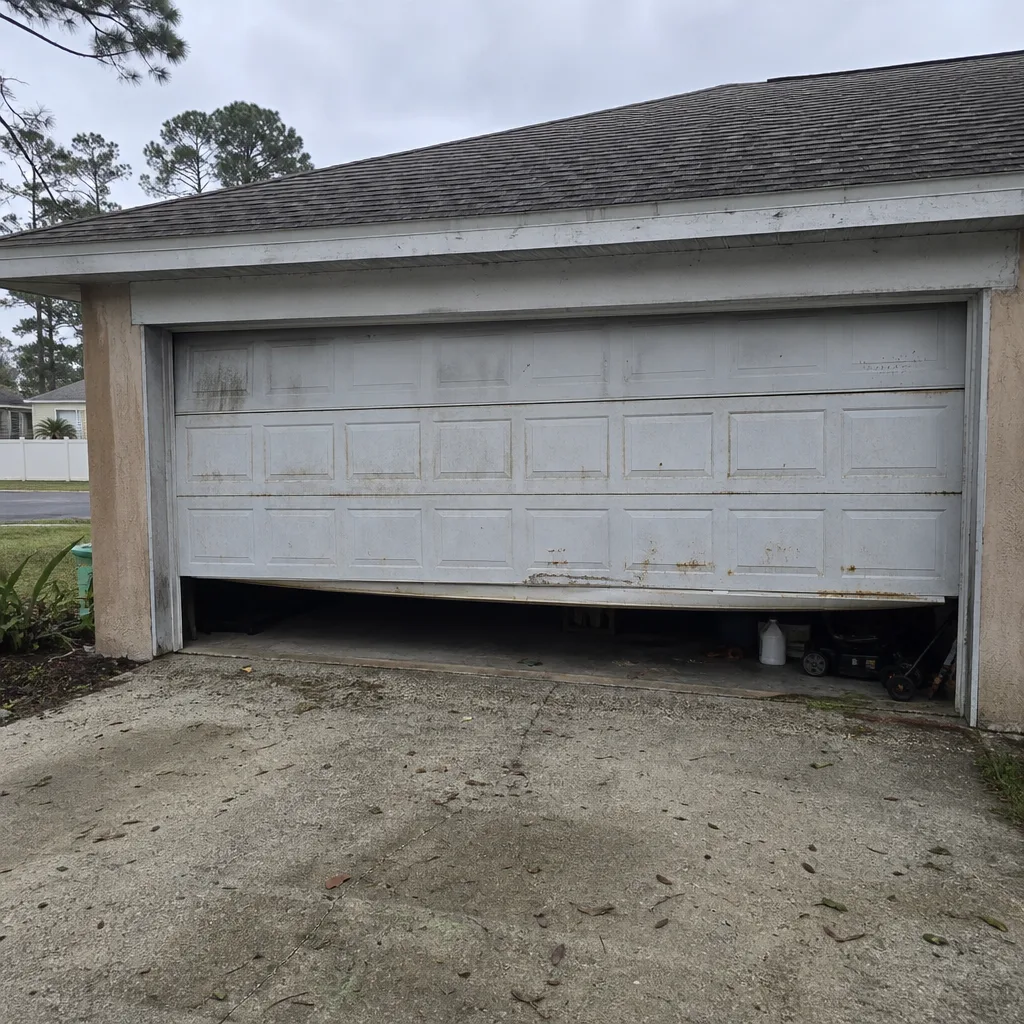 Before
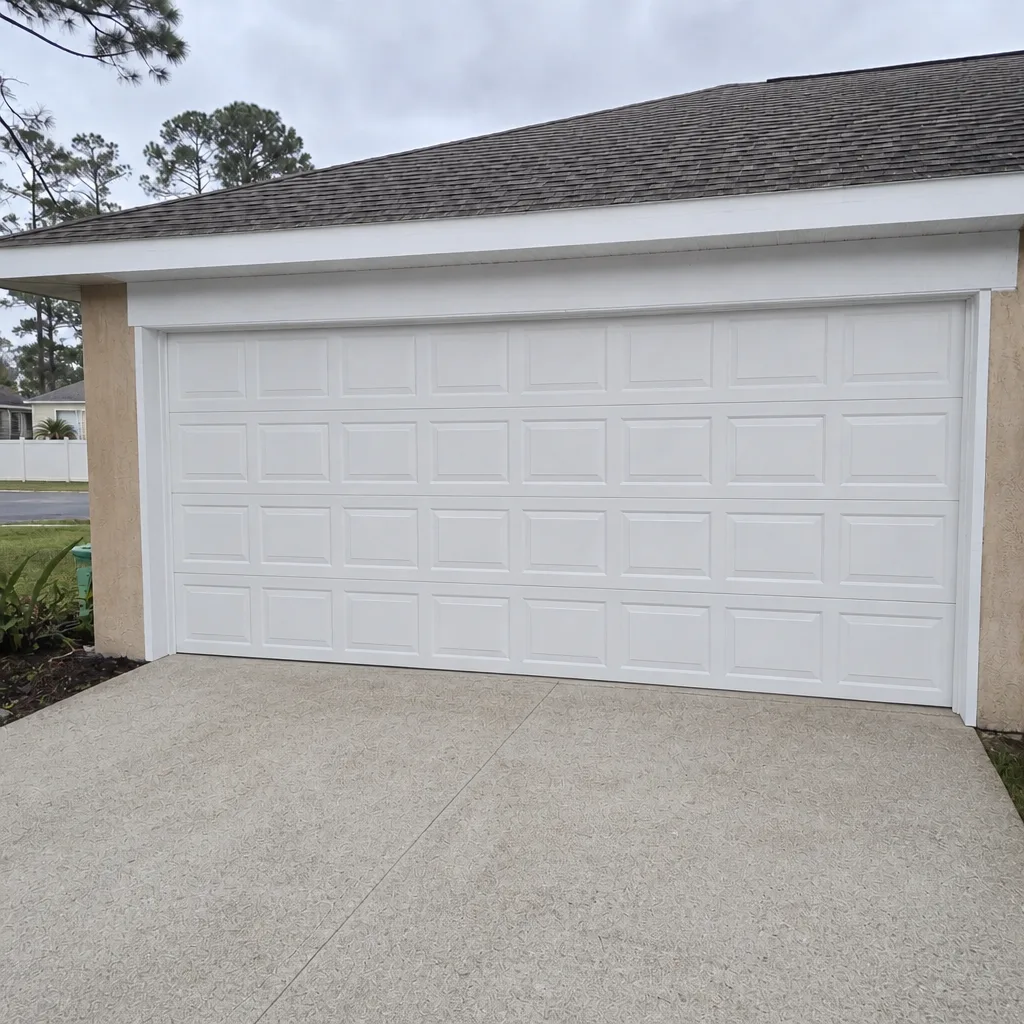 After
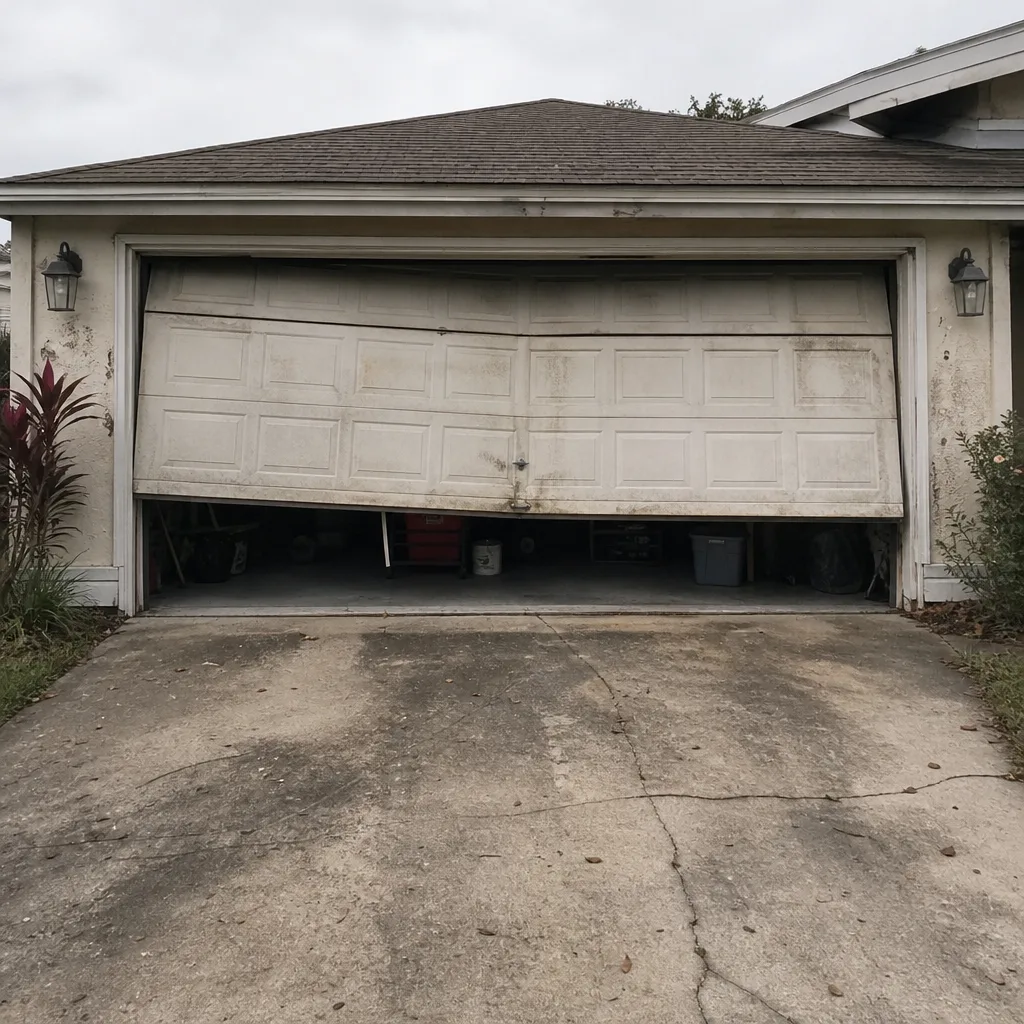 Before
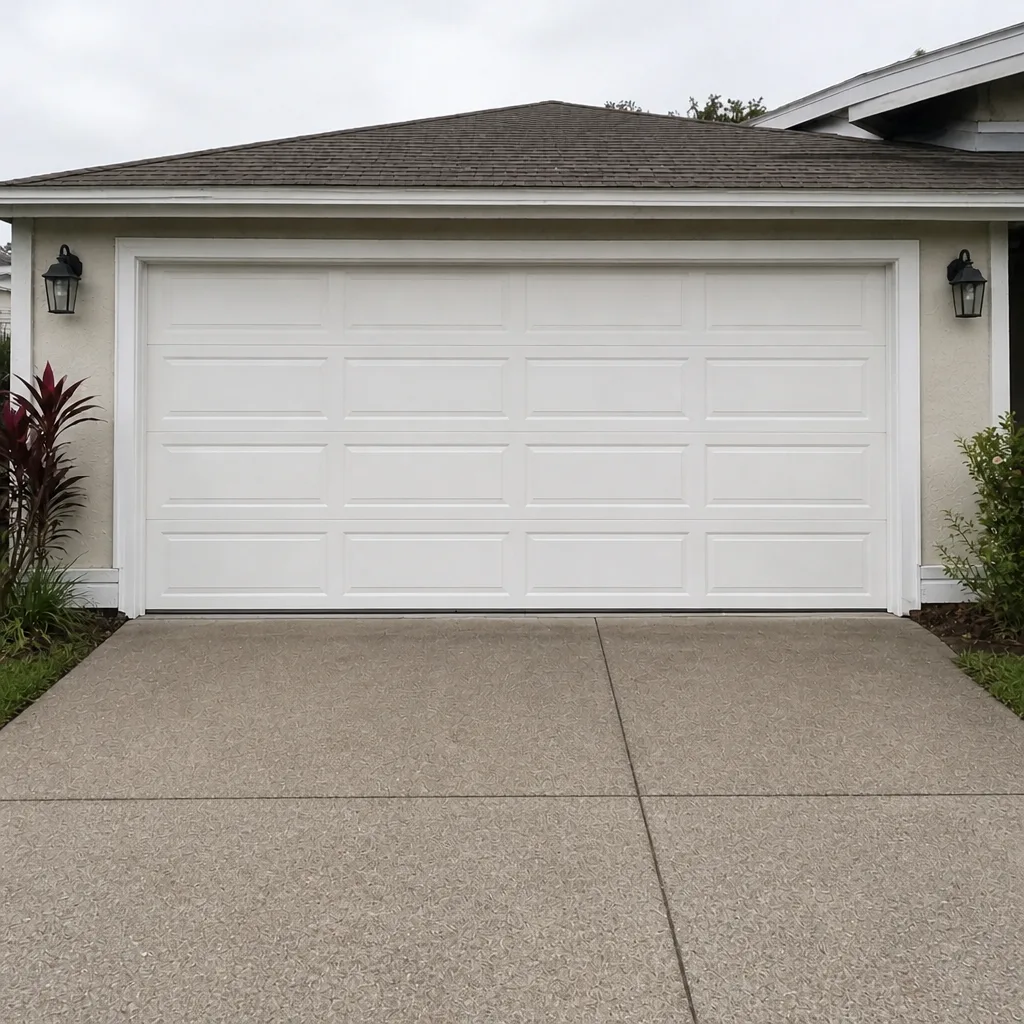 After
When to Call a Professional
Some garage door problems are genuinely dangerous, and a spring or cable failure is the clearest example. The torsion springs on a standard residential door are under high tension and can cause serious injury if handled without the right tools and training; the same goes for the cables. Do not attempt to adjust, remove, or replace these yourself. Call a trained professional. Beyond springs and cables, call us when a door comes off its tracks, when the opener runs but the door doesn’t move, when you see a bent track or a broken hinge, when the door reverses unexpectedly, or when you’re planning a new installation and want a written measure and price. For anything involving the springs or the structural support of the door, professional service is not optional. Charter Garage Door Repair offers free estimates in Palm Coast. Call (866) 984-8329. We answer 24/7. Fast dispatch from 7am to 7pm, Sunday through Friday.
Frequently Asked Questions
Ask for the license number in writing, then look it up yourself through Florida’s contractor licensing database. Confirm the name on the license matches the person or company quoting you, and ask for a certificate of insurance showing general liability and workers’ comp. If the contractor can’t produce a verifiable number, don’t hire them. Call (866) 984-8329 for an exact quote on your job. Estimates are free.
A multi-brand specialist is usually the better choice for a repair, because they work on what you already have instead of steering you toward a new door. A brand-tied dealer can make sense for a full new installation if you want their specific product and warranty. Ask any contractor directly whether they’ll repair your existing door, and listen to whether the answer is specific.
A written scope should name the exact work being done, the parts and brands being installed, an itemized price, what happens if a second problem is found, who pulls any permit, cleanup, and any warranty on labor and parts. If any of these are missing, ask for them before signing. The written estimate sets the final price.
Ask them to explain, on the spot, how they’d handle a Palm Coast replacement that needs a permit, and which brands are common on local residential doors. An out-of-area contractor won’t be able to answer specifically. Also check the license number, insist on a written quote, and be wary of anyone pressuring you to sign the same day.
Yes, because estimates are free and comparing them costs nothing. Get two or three written quotes and compare them on scope, license and insurance, and price, in that order. A lower quote that excludes a permit or a part isn’t actually cheaper. Call (866) 984-8329 for an exact quote. Estimates are free.
It shouldn’t. The written estimate is the price, and any change because of an unexpected second problem should be explained to you and approved by you before work continues. If a contractor’s price changes between the phone call and the written quote, that’s a warning sign. Call us for a written, upfront price before any work starts.
The Bottom Line
Hiring a garage door contractor in Palm Coast comes down to three checks: verify the license and insurance, insist on a written scope with the price in it, and choose a multi-brand specialist over a single-brand dealer unless you’re specifically buying their product. After a storm, the out-of-area surge makes those checks more important, not less. The contractor worth hiring is the one who knows how your specific brand fails, tells you what happens if the job grows, and puts it in writing. That’s what Palm Coast homeowners should be screening for, and it’s what we build our work around. If you’re ready to talk through your door, give us a call or reach out for a free estimate.
Call (866) 984-8329. We answer 24/7. Fast dispatch from 7am to 7pm, Sunday through Friday. Estimates are free, and the price is quoted and agreed before any work starts.
Written by the team at Charter Garage Door Repair.