
Last updated November 15, 2026
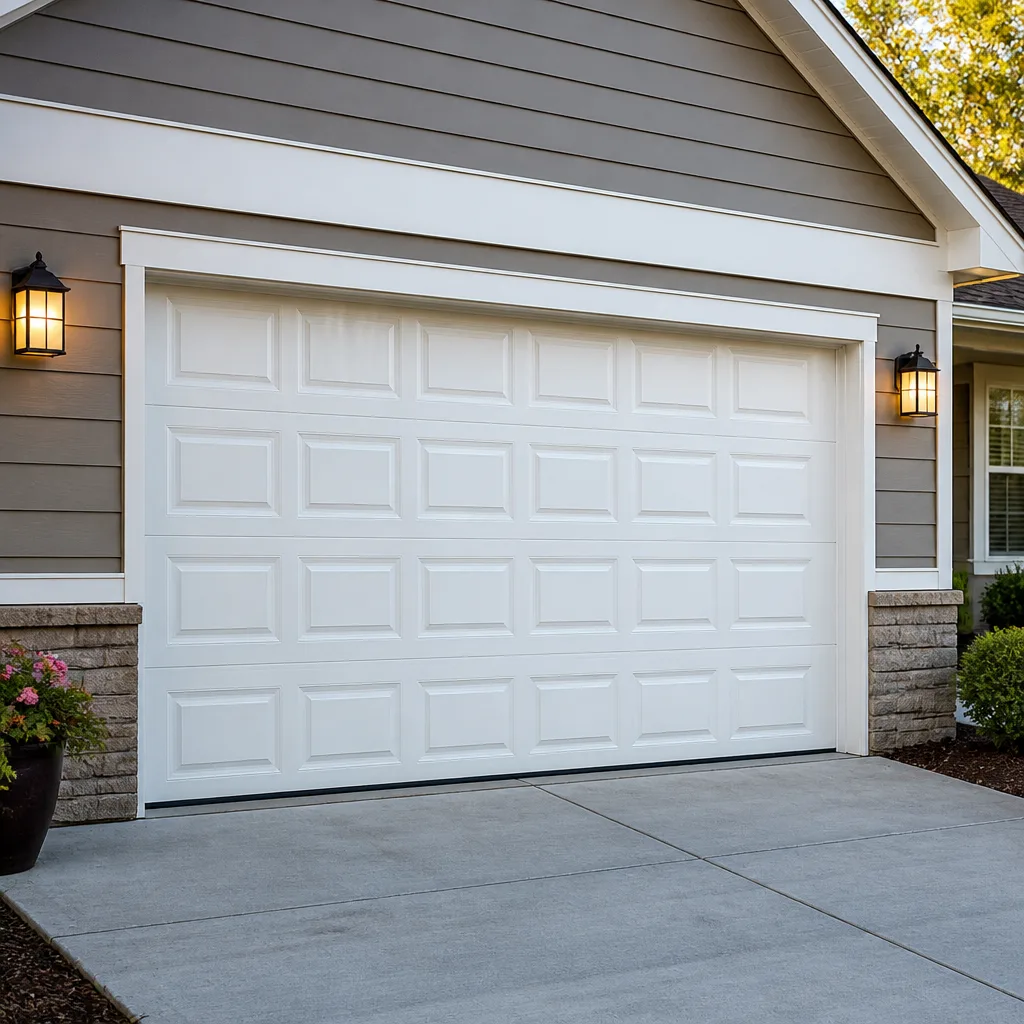 Raised-panel steel
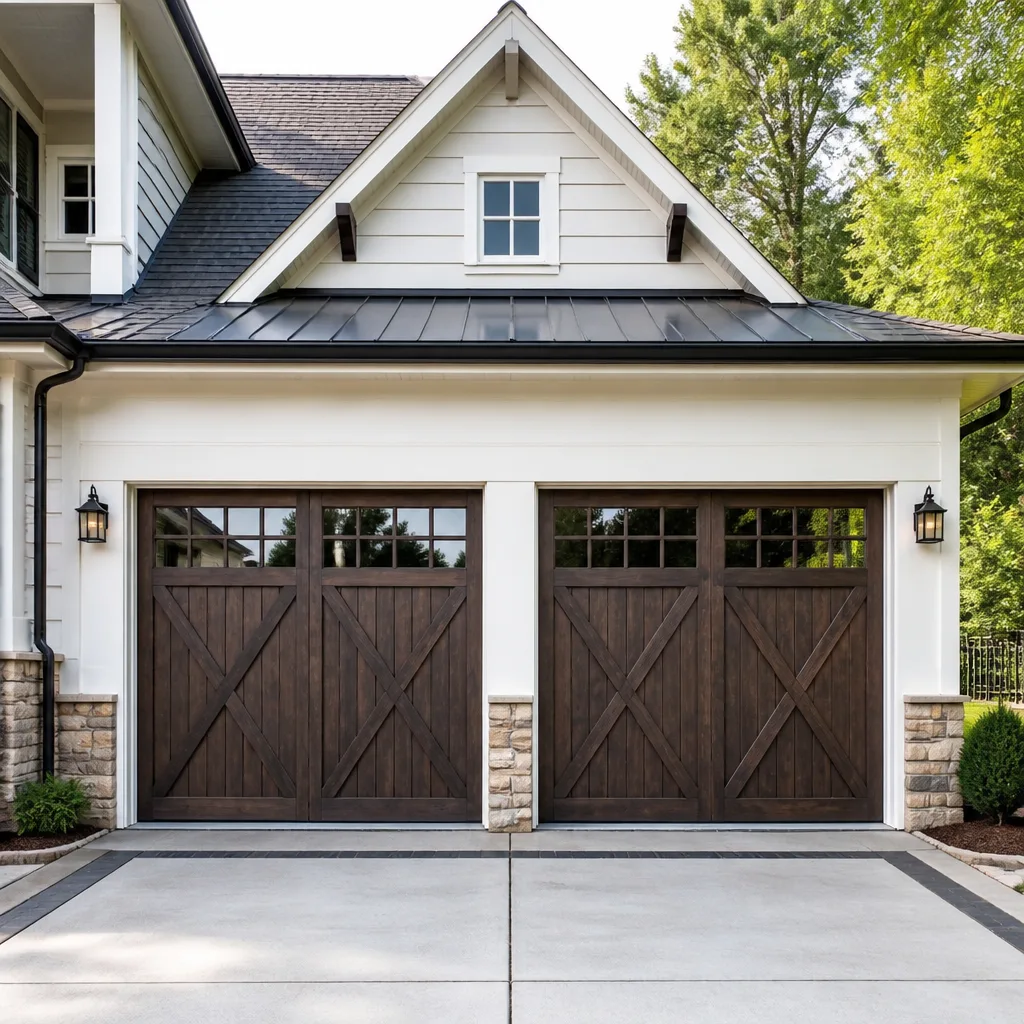 Carriage house
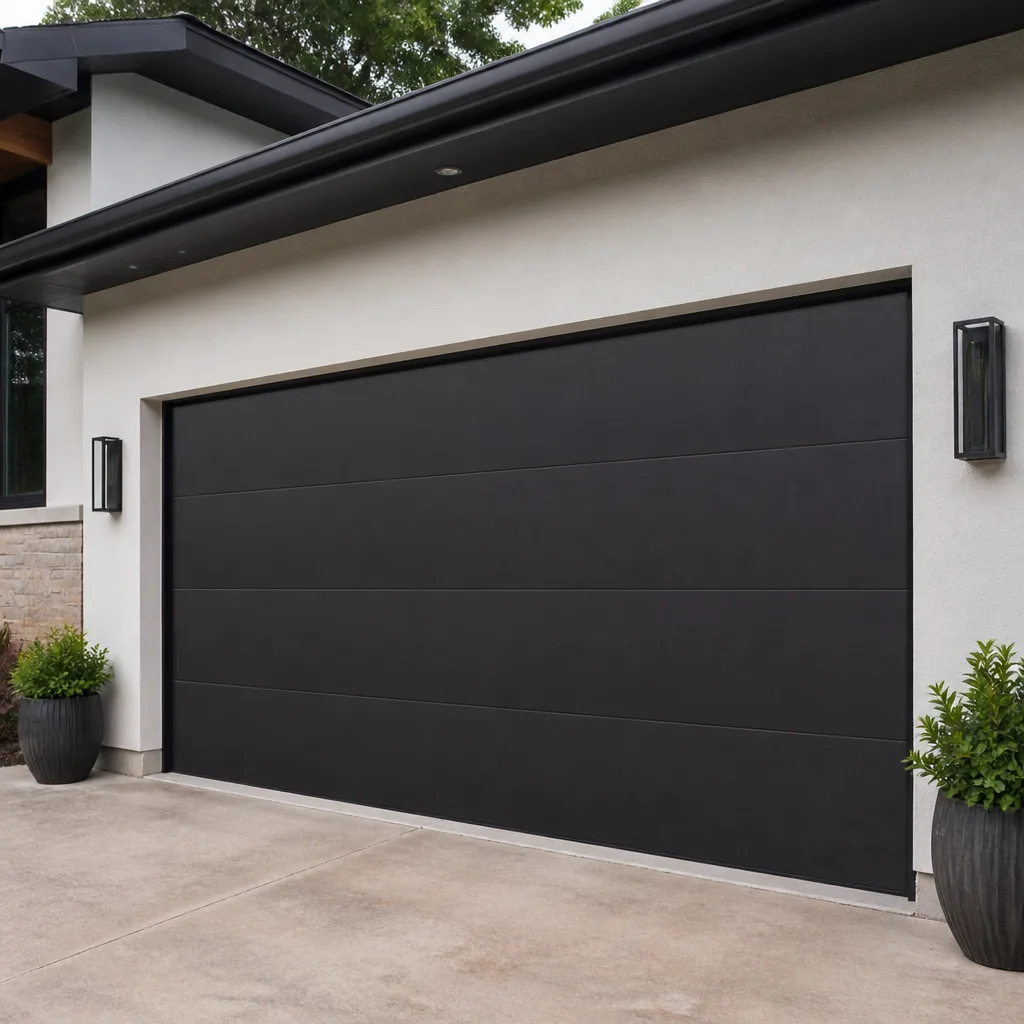 Modern flush
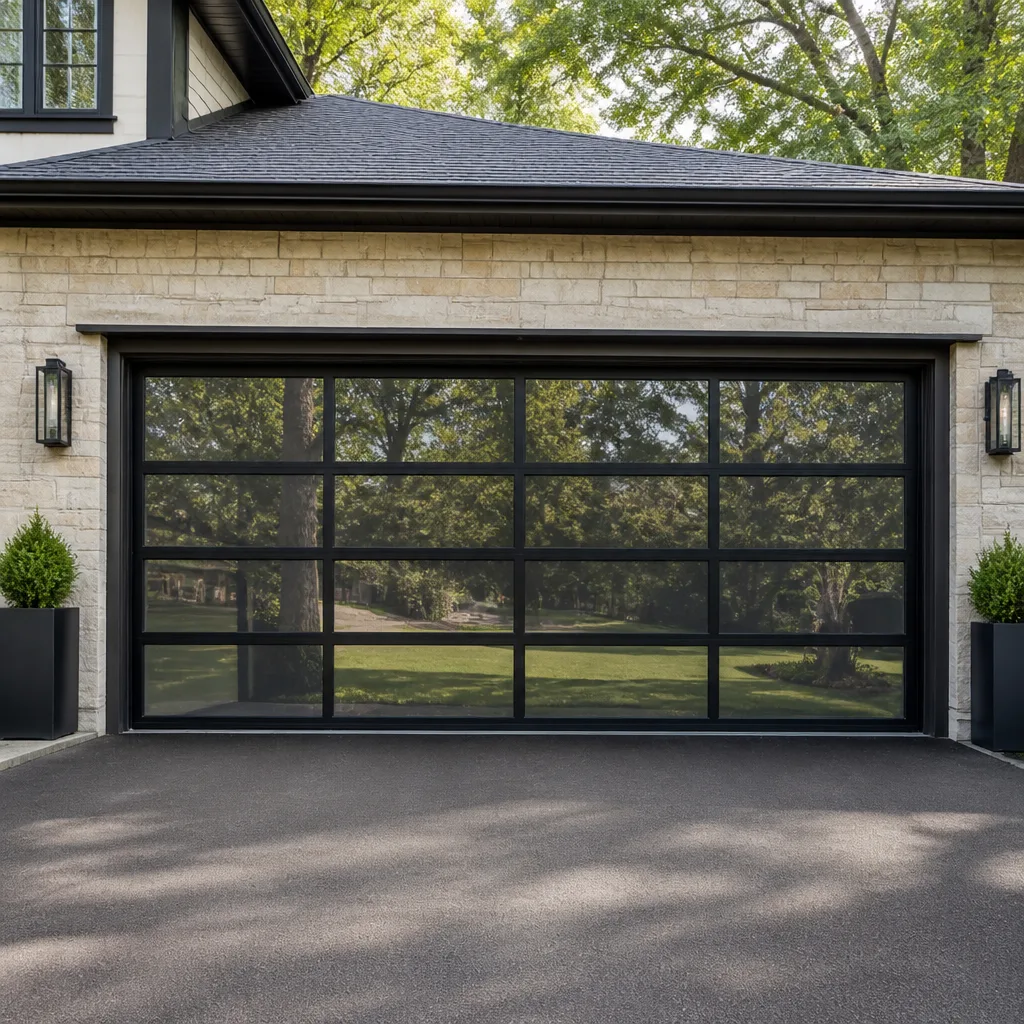 Full-view glass
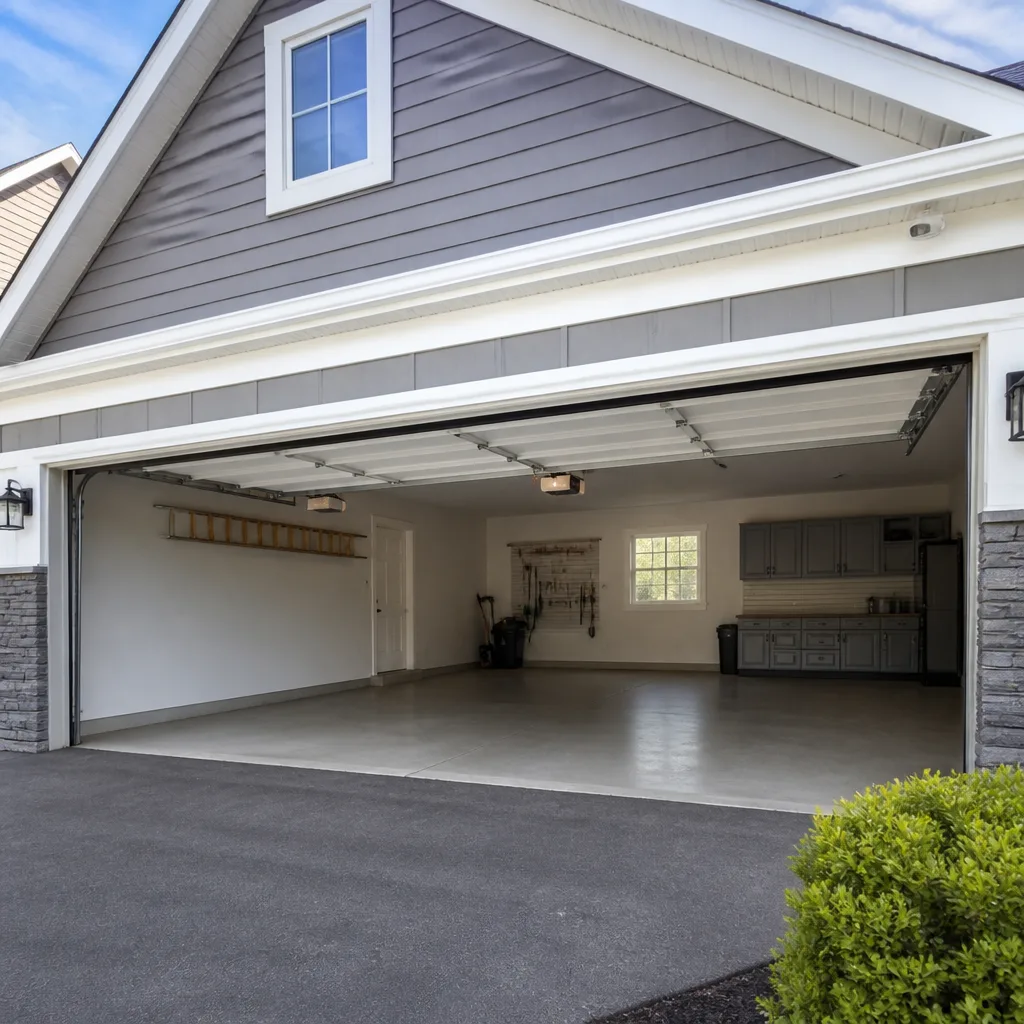 LiftMaster openers
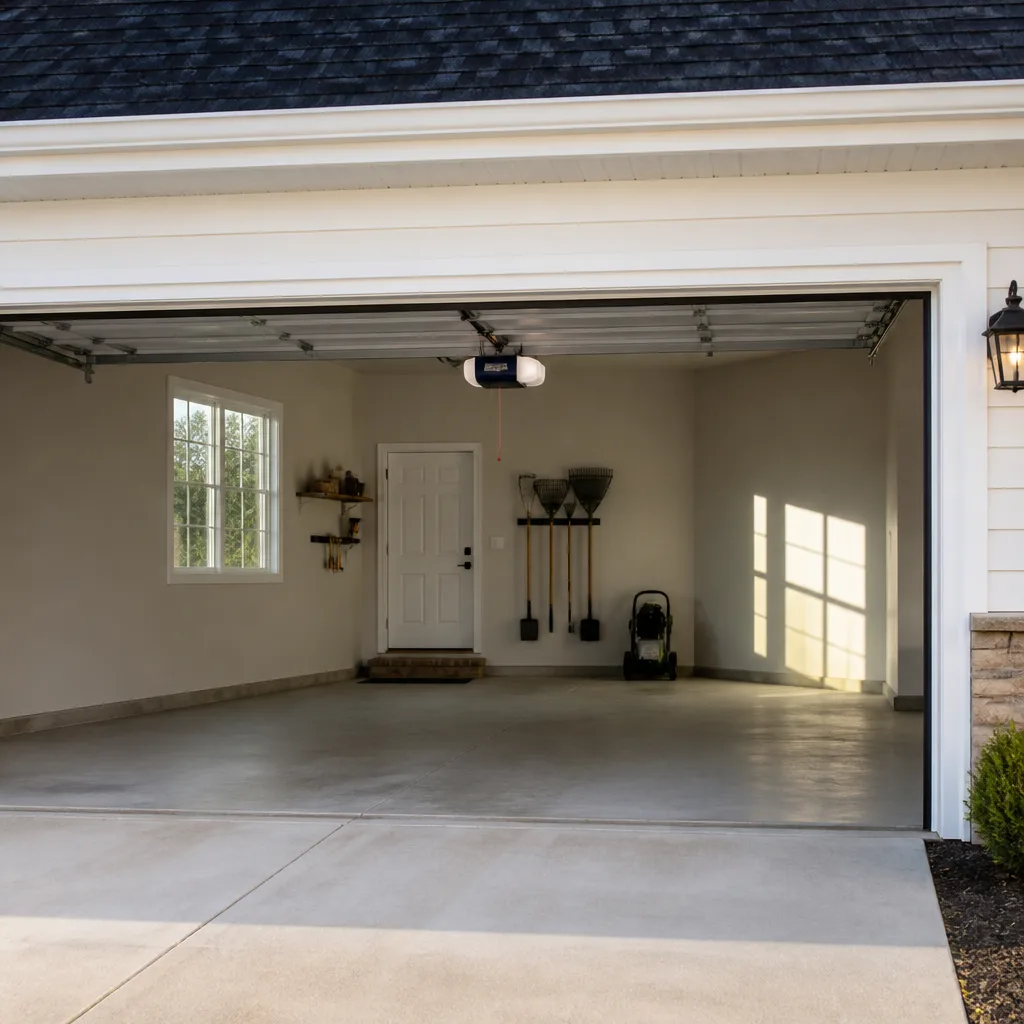 Chamberlain openers
Full 25-point door and opener safety check with every visit - springs, cables, rollers, tracks, and your LiftMaster or Chamberlain opener included
You get a price before we start. It does not change when the pro arrives.
Get your free estimateThe Complete Guide to Garage Doors in Palm Coast
Most garage doors in Palm Coast fail faster than their rated lifespan, and it’s rarely the manufacturer’s fault. It’s a climate mismatch. Doors here get installed with hardware and finishes specced for a generic American suburb, then spend years in warm, humid, storm-prone air that works on them differently than the brochure assumes. The result is rust you didn’t expect on a spring you thought was stainless, panels that swell and stick in July, and openers that strain against a door that’s quietly gone out of balance.
This guide covers what actually wears out first, which materials hold up here, how the local terrain affects alignment, and what the real cost of ownership looks like. If you want to understand your door as a system rather than a single part, this is the place to start.
Quick Answer
Garage doors in Palm Coast last longest when the hardware, finish, and material are chosen for a warm, humid, storm-exposed climate rather than a cold-weather market. Steel with a proper galvanized and powder-coated finish, or aluminum and composite in high-moisture spots, outperform cheap painted steel and unprotected hardware. Regular balance, lubrication, and weather-seal checks matter more here than in drier regions, and any structural work should align with Florida wind-load and hurricane prep expectations.
Styles & brands we work with
- Raised-panel steel
- Carriage house
- Modern flush
- Full-view glass
- LiftMaster openers
- Chamberlain openers
Table of Contents
- Why the Palm Coast Climate Shapes Garage Door Wear
- How Corrosion Attacks Springs, Tracks, and Hardware
- Flat Terrain, Slab Foundations, and Door Alignment
- Which Door Materials Perform Best in Flagler County
- The Full Lifecycle Cost of a Garage Door Here
- What Brand You Own Matters Less Than You Think
- Coordinating Garage Door Work With Wind-Load and Hurricane Prep
- A Simple Maintenance Rhythm That Works Locally
Why the Palm Coast Climate Shapes Garage Door Wear
Garage door hardware is engineered around temperature swings. Steel expands and contracts, springs carry tension differently in heat versus cold, and lubricants thin or thicken as the thermometer moves. In a market with four distinct seasons, that cycle is balanced against long cold stretches where mechanisms sit stable. Along this stretch of Flagler County, the door spends most of the year in warm, humid conditions, and that changes which parts wear first.
Warm air holds more moisture. That moisture reaches bare metal on springs, hinges, rollers, and track bolts and starts the corrosion process faster than it would in a drier climate. Humidity also affects wood-composite panels and the seals around the perimeter, which can soften, swell, or lose their grip. The wear pattern here leans toward corrosion and seal degradation rather than the cold-weather freeze issues that dominate northern guides.
A few things worth knowing:
- Summer heat softens vinyl weather seals and accelerates lubricant breakdown on rollers and hinges.
- Persistent humidity drives surface rust on unprotected springs and track hardware long before the door itself looks worn.
- Warm air in the garage increases the load on opener motors during the hottest months.
- Storm season brings wind-driven rain that finds any gap in perimeter seals.
None of this means a Palm Coast door is doomed. It means the maintenance schedule should target corrosion and seals first, not just the annual “check the balance” advice from a national checklist. If you want local help assessing what’s actually wearing, our garage door repair technicians can diagnose the specific failure pattern on your door.
How Corrosion Attacks Springs, Tracks, and Hardware
Corrosion is the single biggest cause of premature failure we see on doors in this region. It doesn’t announce itself. It starts as a dull haze on a torsion spring, a bit of orange on a hinge pin, a track bolt that turns stiff. Left alone, that same corrosion pits the spring wire, weakens the hinge plates, and eventually causes a part to snap under load instead of wearing out gradually.
The parts that suffer first tend to be the same ones every time. Springs, because the wire is under constant high tension and any surface loss matters. Hinges and rollers, because they move and their protective finish rubs away. And the vertical track bolts and brackets, which collect moisture in the threads. Galvanized and powder-coated hardware resists this far longer than plain painted steel, and stainless or oil-tempered spring wire outlasts the budget alternatives in humid air.
A practical protection routine:
- Wipe down springs and track hardware with a dry cloth every few months to remove dust and salt-free surface grime.
- Apply a garage-door-rated lubricant (not general grease) to hinges, rollers, and the spring coils to push moisture out.
- Inspect hinges and rollers for pitting or rust bloom and replace them before they fail.
- Keep the perimeter weather seal intact so humid air and wind-driven rain stay outside the garage.
Springs are under extreme tension and should never be adjusted or replaced by anyone without the proper winding tools and training. A snapped spring can cause serious injury. If your springs show rust or your door feels heavier than it used to, have a trained professional inspect them rather than attempting it yourself.
Flat Terrain, Slab Foundations, and Door Alignment
Flat coastal-plain ground comes with its own set of garage door problems. Slab foundations that sit close to grade transmit any settling movement directly into the door opening, and a small shift in the slab or the framing can throw a door out of square. When that happens, the door doesn’t just “feel off” – it drags on one side, the panels bind, and the opener works harder to move it.
Drainage is the other piece. Flat ground sheds water slowly, and during heavy summer storms the area around the garage apron can stay wet long after the rain stops. That standing moisture seeps into the door’s bottom seal, the bottom panel, and the concrete threshold. Over time the bottom seal deteriorates, letting humid air and water in, which accelerates corrosion on the lowest hardware.
What to watch for in Palm Coast:
- Uneven gap at the bottom: if daylight shows under one side of the door but not the other, the framing or slab has shifted.
- Binding panels: squeaking or scraping that gets worse as the door moves signals a track that’s out of alignment.
- Bottom-seal wear: a seal that’s cracked, flattened, or detached lets moisture in and is cheap to replace before it damages the panel.
- Water pooling near the apron: poor grading around the opening puts stress on the bottom panel, threshold, and hinges.
Alignment issues often look like opener problems. Before assuming the motor is failing, check whether the door moves smoothly by hand when disconnected. Our garage door opener repair team checks alignment first, because a motor can’t fix a door that’s out of square.
Which Door Materials Perform Best in Flagler County
Material choice is where the climate gap between Palm Coast and inland markets really shows up. A door that performs beautifully in a dry climate can struggle here if it isn’t finished for humidity. Steel, aluminum, and composite each have a sweet spot, and the honest answer is that it depends on which part of the door you’re asking about.
Here’s how the main options compare for this climate:
- Steel: the most common residential choice and still a strong pick, provided it has a galvanized base and a proper factory-applied powder-coat finish. Bare or thin-painted steel will show rust at the bottom edges and around hardware cutouts within a few years. Insulated steel panels also handle heat well.
- Aluminum: lighter and naturally rust-resistant, which makes it a smart choice for high-moisture spots and larger openings. It dents more easily than steel, so consider it where corrosion resistance outweighs impact tolerance.
- Composite and fiberglass: these resist moisture and rot well, and can look like wood without the swelling issues. They’re a good fit for anyone who wants a wood appearance in a humid climate without the maintenance wood demands.
- Wood: beautiful and warm, but the highest-maintenance option in humid air. It requires consistent sealing and periodic refinishing to keep moisture out.
Finish matters as much as material. A galvanized steel base with a factory powder coat holds up far better than the same panel finished with a thin field paint. If you’re choosing between two doors that look similar, ask what the underlying steel treatment and finish system are. For homeowners planning a new door, our Palm Coast team can walk through material and finish options that fit the climate and your home’s style.
The Full Lifecycle Cost of a Garage Door Here
Homeowners often focus on the sticker price of a door and miss the ownership cost that follows. Lifecycle cost is the total you spend on the door from installation to replacement, including repairs, hardware replacement, opener service, and finish upkeep. In a humid climate those recurring costs run differently than the national figure you’ll find on generic calculators.
Broad typical ranges, by category (the written estimate sets the final price for your specific door):
- Single torsion spring repair: typically in the low-to-mid hundreds per spring. A matched pair is usually replaced together, so budget roughly double that for a pair.
- Opener repair or replacement: ranges widely depending on the drive type and whether it’s a smart Wi-Fi model or an older mechanical unit.
- Hinge, roller, and cable hardware: modest per-part cost, higher when a full set ages out together.
- Bottom seal replacement: one of the least expensive fixes and one of the most important in humid air.
- New door installation: depends on material, size, insulation, and finish, plus any wind-load requirements for the opening.
The lifecycle math that surprises people here is corrosion-driven replacement. Hardware that might last many years in a dry climate can need earlier replacement in humid air if it wasn’t the right grade to begin with. Choosing galvanized and powder-coated components on the front end lowers that recurring cost. So does a maintenance rhythm that catches rust early.
Ask for pricing in writing before any work starts. Our estimates are free, and the agreed written price is what you pay – no surprises once the door is apart.
What Brand You Own Matters Less Than You Think
Brand loyalty runs strong in the garage door world, and homeowners often worry that the brand on their door or opener limits who can work on it. In practice, the brand tells a technician how the component behaves and what to check first, but it doesn’t determine whether the work can be done. We work on what you already have.
A few brand notes that come up in Palm Coast homes:
- LiftMaster and Chamberlain: the two dominant smart and Wi-Fi-connected opener brands. Their connected features and drive systems have specific troubleshooting paths, and knowing them cuts diagnosis time.
- Craftsman and Genie: legacy mechanical openers that are common on older homes. They use different drive mechanisms and often outlast the assumptions in generic repair guides.
- Clopay and Amarr: two of the most widely installed residential door lines, frequently seen across Palm Coast neighborhoods and well supported for both repair and installation.
- Wayne Dalton: often declined by general handymen because of its proprietary torque-tube spring system. That’s a training issue, not a door problem.
- Raynor: another established brand with hardware quirks worth knowing before you start.
The takeaway: don’t assume a modest brand on your door means it can’t be repaired, and don’t assume a premium brand means it never needs service. If a company declines the job because of the brand, that’s information about the company. For a full-scope service that starts with diagnosis and finishes with a working door, whether that means repair or a new install, one call covers it. For a Palm Coast homeowner, that means fewer handoffs when a small fix reveals a bigger problem.
Coordinating Garage Door Work With Wind-Load and Hurricane Prep
Garage doors are often the largest and weakest opening in a home’s wind barrier. In a storm, an unbraced or poorly sealed door can fail before the rest of the structure does. If you’re replacing a door or planning repairs around storm season, this is worth planning for rather than reacting to.
Steps to align garage door work with wind-load and hurricane prep:
- Confirm the wind-load requirements for your opening with your local building department before ordering a new door. Requirements vary by location and structure, so get the specifics in writing for your address.
- Choose a door rated for the requirements if you’re installing or replacing. Your installer should be able to match the door and its reinforcement to the requirement.
- Check the door’s reinforcement hardware – vertical struts and hinges – as storm season approaches, and repair any loose or corroded parts.
- Verify the perimeter seal before storm season so wind-driven rain stays outside.
- Test the opener’s manual release so you can operate the door by hand if power is out.
- Inspect springs and cables for corrosion ahead of any storm, because a weakened part is more likely to fail under extra load.
Any permit or code question belongs with your local building department – they’ll tell you what applies to your home. For the door and opener side, our Palm Coast technicians can inspect your current setup and recommend what needs attention before the season turns.
A Simple Maintenance Rhythm That Works Locally
The maintenance advice written for a national audience doesn’t fit a humid climate. Here’s a rhythm built for the local conditions – monthly in the warm months, seasonal in the cooler ones.
A practical schedule:
- Monthly: run the door by hand (disconnected from the opener) to check balance and listen for scraping or squealing.
- Monthly (warm season): lubricate hinges, rollers, and spring coils with a garage-door-rated lubricant to displace moisture.
- Quarterly: inspect springs, cables, and track hardware for rust bloom or pitting.
- Quarterly: check the bottom seal for cracks, flattening, or separation and replace if worn.
- Seasonally: test the opener’s safety reverse and the manual release.
- Seasonally: tighten track bolts and check the track for alignment drift.
Most of this takes a few minutes and prevents the expensive failures. What it can’t safely cover is spring or cable work. Those components are under extreme tension and can cause serious injury if handled incorrectly. If your maintenance check turns up a rusted spring or frayed cable, stop there and call a trained professional – that’s a job for someone with the right tools and training, not a weekend project.
If you’d like a professional once-over rather than handling it yourself, a free estimate is the easiest way to know what needs attention. Call (866) 984-8329.
Common Mistakes to Avoid
- Buying the cheapest steel door without checking the finish system. A low-cost painted panel may look identical to a galvanized, powder-coated one on day one and show rust within a few seasons in Palm Coast humidity.
- Assuming the opener is the problem when the door is out of balance. Most opener strain traces back to a door that’s heavier or binding; replacing the motor won’t fix it.
- Ignoring the bottom seal. It’s the cheapest part to replace and the main entry point for humid air and wind-driven rain that corrodes the lowest hardware.
- Skipping lubrication because the door “still works.” In this climate, skipping it lets corrosion get ahead of you; by the time the door squeals, the hinge pins are already pitted.
- Declining to get a written estimate before work starts. The agreed written price is what you pay, so get it in writing and confirm the scope covers the full job.
- Assuming a modest brand means the door can’t be fixed. In our experience, a qualified technician can service whatever brand is on the door – the brand guides the diagnosis, it doesn’t rule out repair.
- Replacing springs without addressing the rust that caused them to fail. New springs on corroded hardware and a poorly sealed opening just start the cycle over.
See the difference
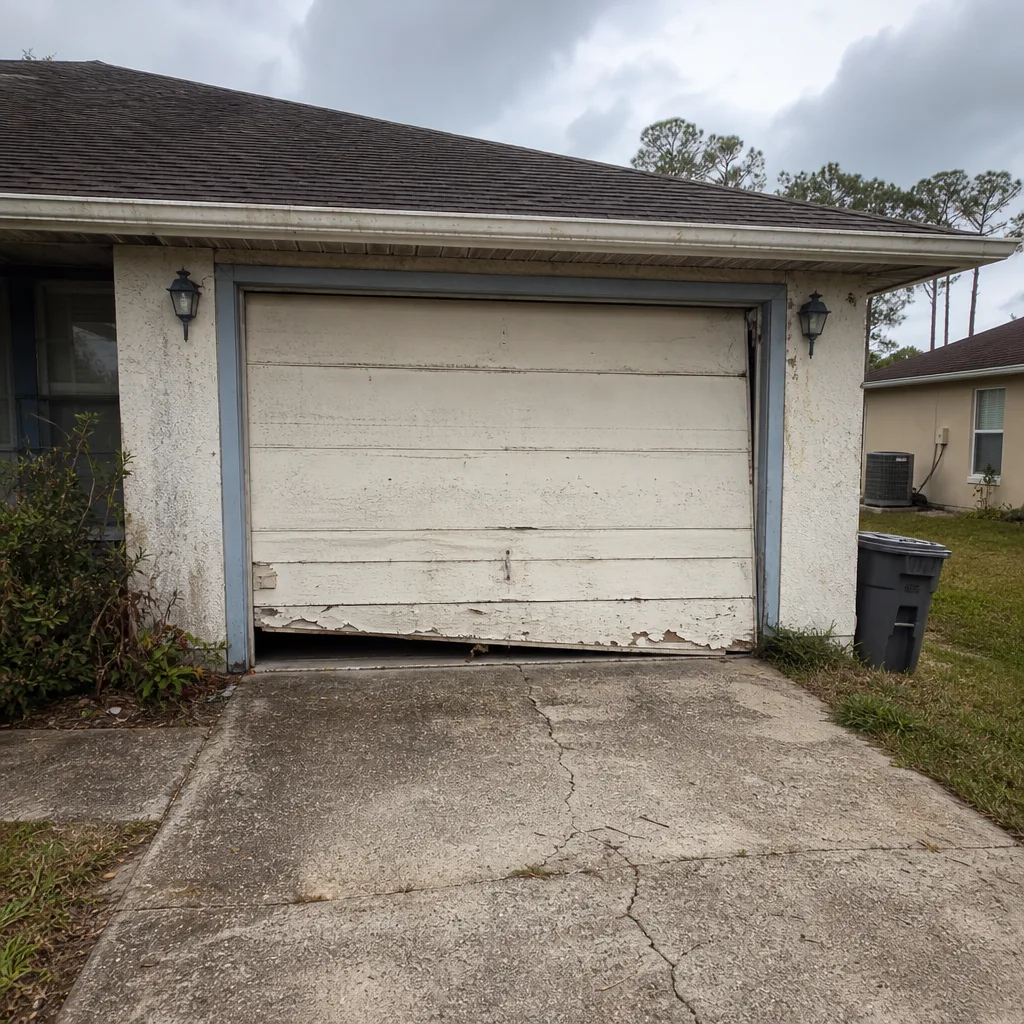 Before
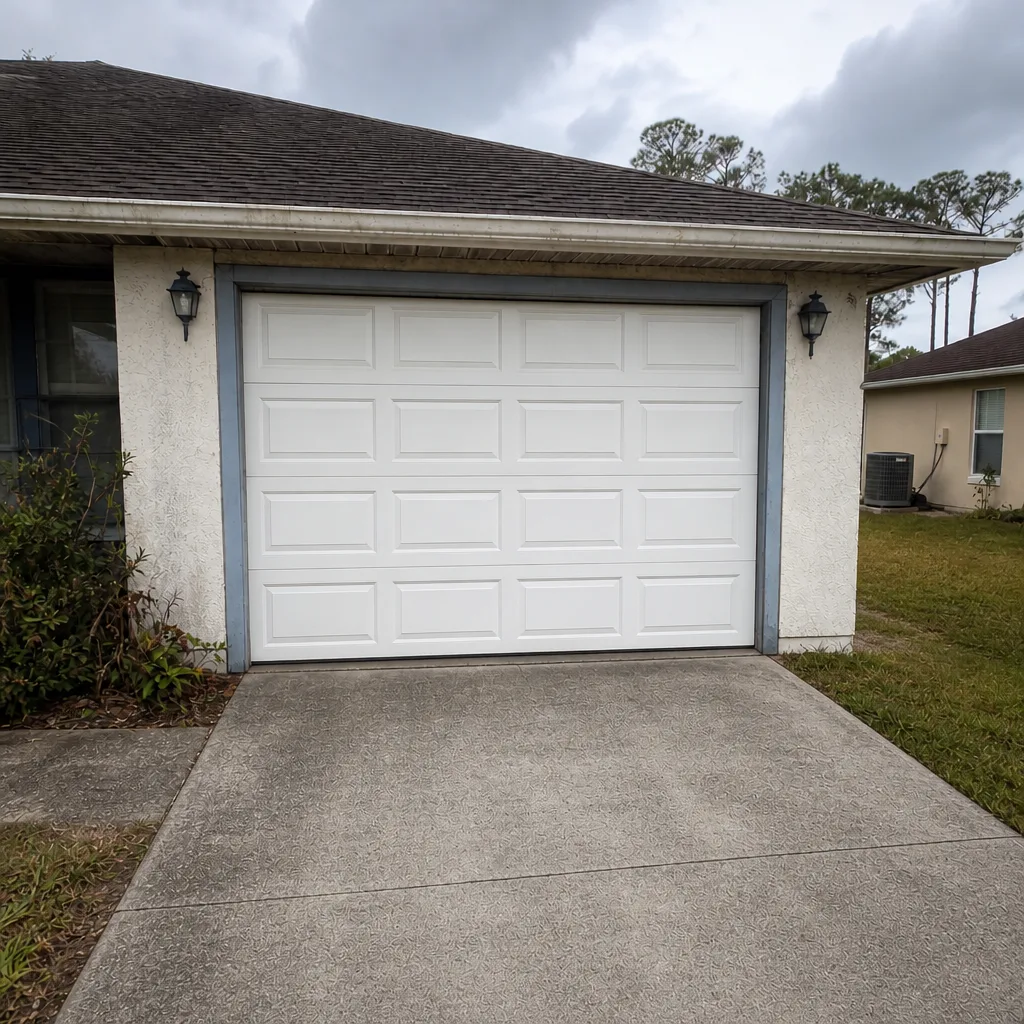 After
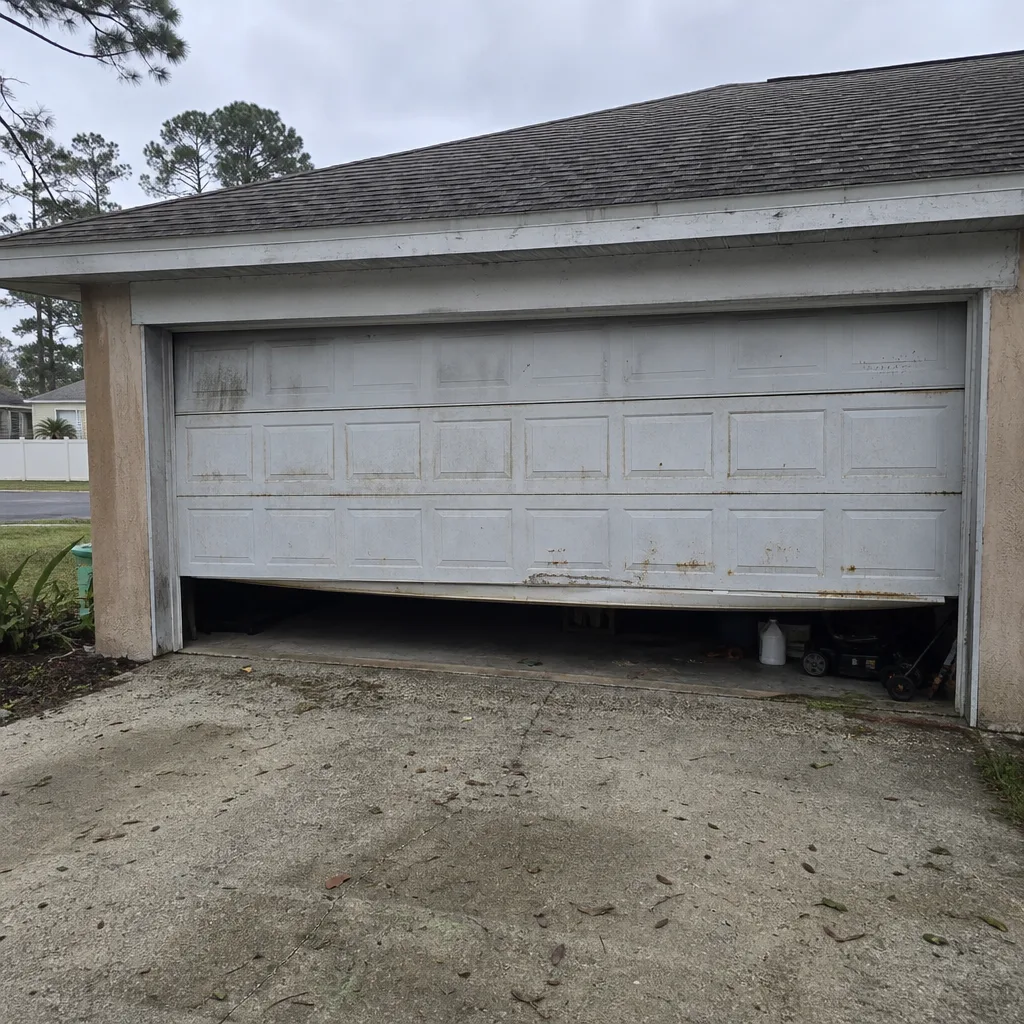 Before
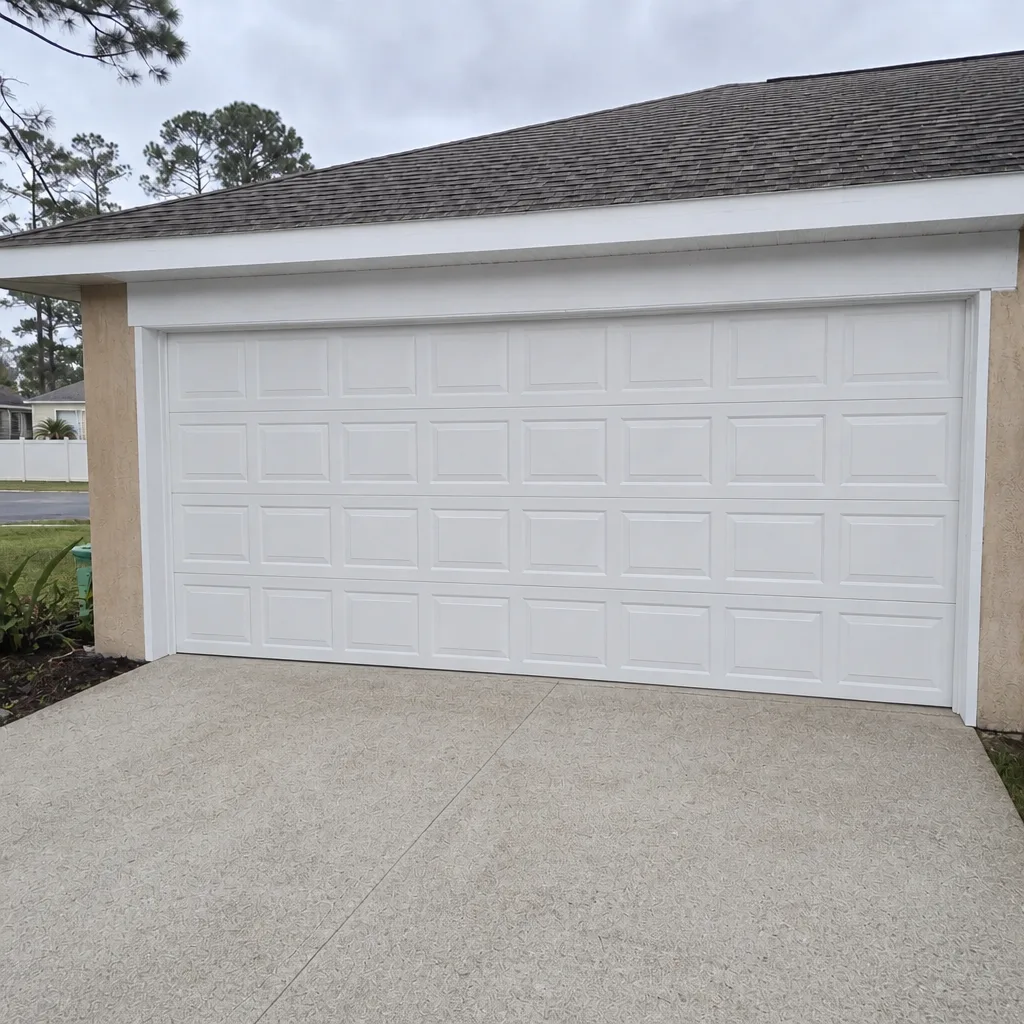 After
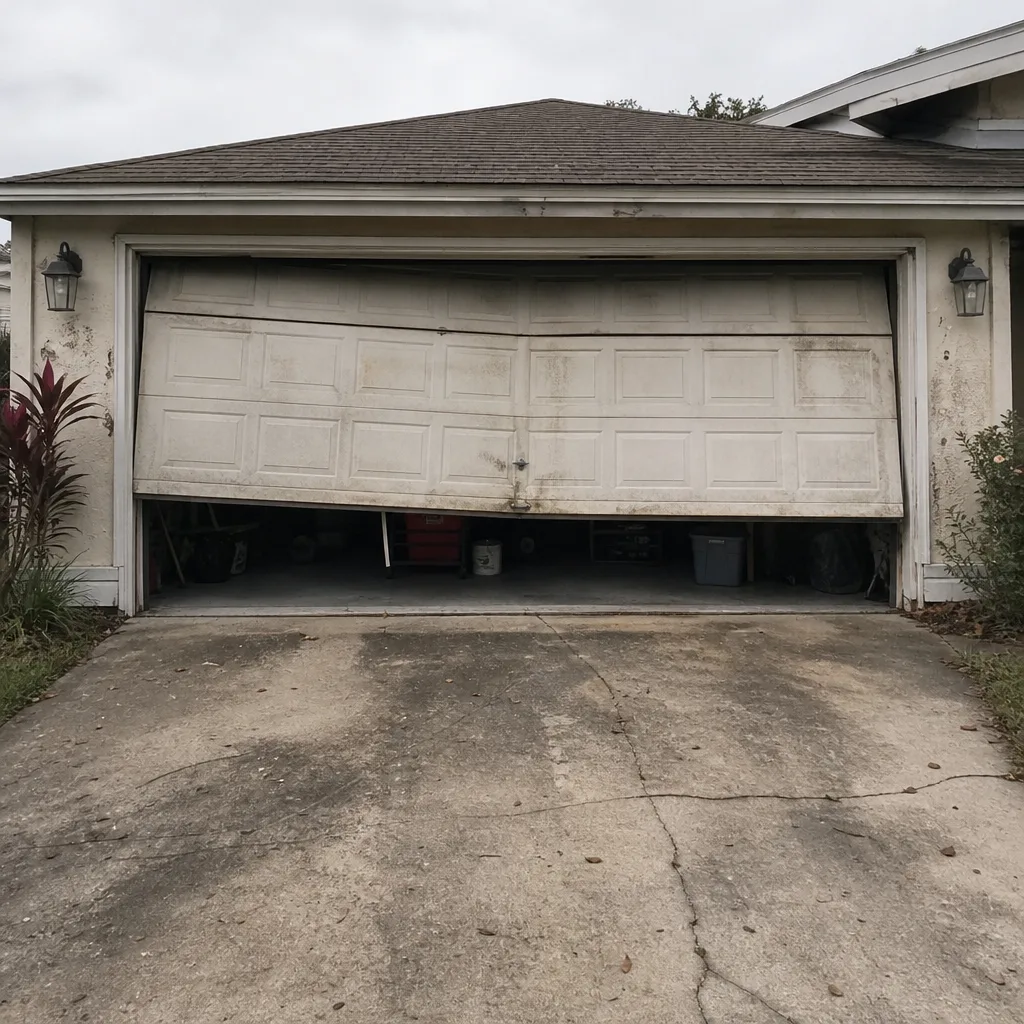 Before
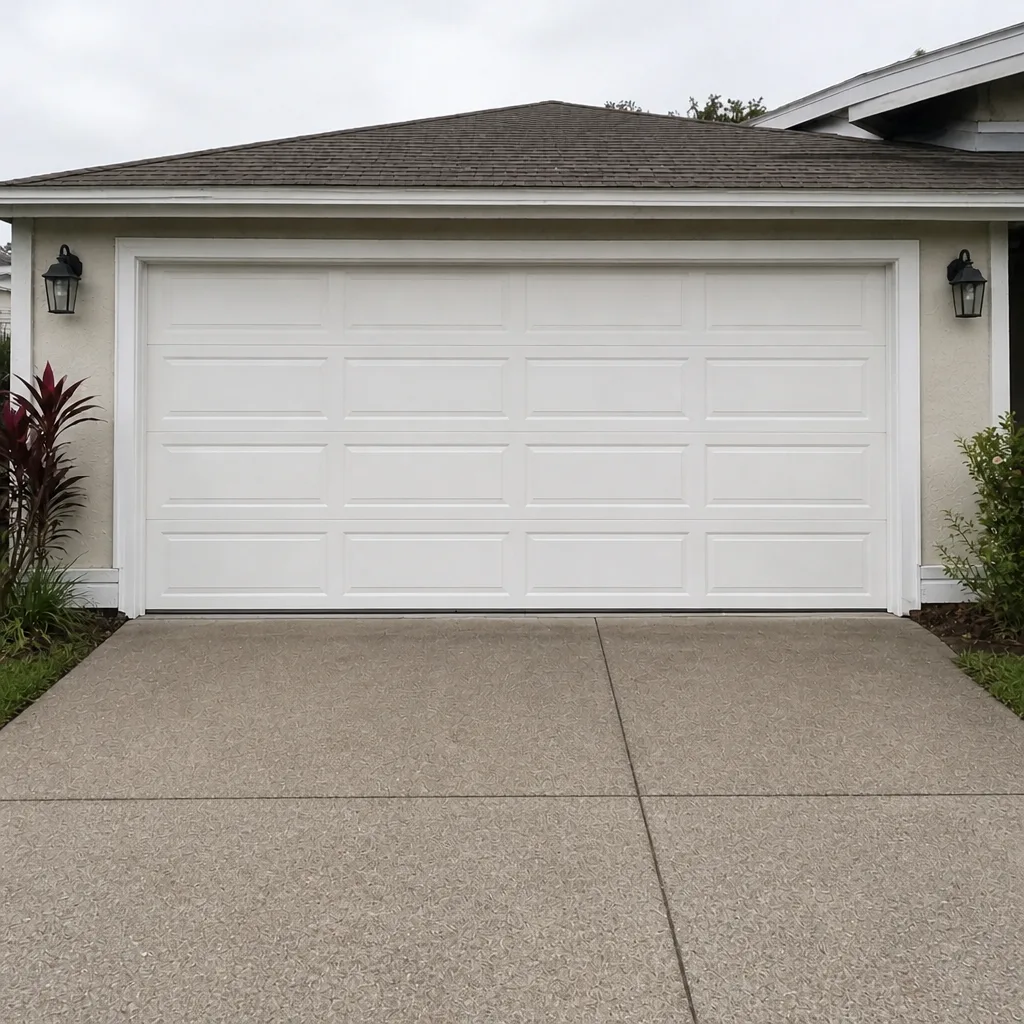 After
When to Call a Professional
Some garage door issues are safe to inspect and a few are safe to fix. Others aren’t worth the risk. Call a professional if your door has a snapped or badly rusted spring, a frayed or slack cable, a door that’s come off its track, or a door that’s become dangerously heavy to lift by hand. Those are spring and cable jobs, and they carry a real risk of injury. Also call if the door is binding, the opener runs but the door doesn’t move, or a storm has shifted the framing and left one side of the door dragging. A professional can also tell you whether a costly repair is worth it or whether the door has reached the end of its service life. Charter Garage Door Repair offers free estimates in Palm Coast – call (866) 984-8329. Our technicians have up to experience and work on whatever brand is on your door.
Frequently Asked Questions
A garage door in Palm Coast typically lasts about as long as its hardware and finish allow, which in humid air can mean a shorter window than the national average if the door isn’t maintained. The panel itself often outlasts the springs, hinges, and seals around it. Choosing galvanized and powder-coated hardware and keeping up with lubrication and seal replacement is what gets the longest life here. Call (866) 984-8329 for an exact quote on any repair – estimates are free.
Insulated steel with a galvanized base and factory powder coat is the strongest all-round choice for a humid climate, with aluminum and composite better for high-moisture spots or wood-look styling. Wood looks warm but needs ongoing sealing and refinishing. The finish system matters as much as the material name. For a new door or to discuss options, call (866) 984-8329 – the measure and estimate are free.
In many cases we can, because we field same-day repair requests and diagnose by brand rather than guessing. We answer 24/7, with fast dispatch from 7am to 7pm, Sunday through Friday. If your call comes outside dispatch hours, we’ll book you into the next opening. Call (866) 984-8329 for an exact quote – estimates are free.
No – the written estimate sets the price, and we confirm it with you before any work starts. We don’t add surprises once the door is apart. If we find something the initial inspection missed, we explain it and get your approval before proceeding. Call (866) 984-8329 for a free estimate.
Yes – our technicians are state-licensed and insured, so the work is covered from start to finish. We connect homeowners with independent local professionals who perform the work, and every job runs on a written estimate agreed before the work begins. Call (866) 984-8329 to set up a free estimate.
No. We work on LiftMaster, Chamberlain, Genie, Clopay, Amarr, Wayne Dalton, Craftsman, and Raynor, and we diagnose by how that specific brand behaves rather than applying generic advice. A brand that some handymen decline – like Wayne Dalton’s proprietary torque-tube spring – is well within our scope. If you’re unsure whether your setup can be repaired, call (866) 984-8329 and we’ll tell you straight.
The Bottom Line
Your garage door’s lifespan in Palm Coast comes down to how well it’s matched to the local climate and how consistently its vulnerable parts are maintained. Steel with a proper finish, corrosion-resistant hardware, an intact bottom seal, and regular lubrication do most of the heavy lifting. Don’t skip the spring and cable inspections – those are jobs for a trained professional. And don’t assume a brand or a binding door means replacement; diagnosis usually shows the real fix is smaller. Whether you need a repair, an opener service, or a full new installation, one call covers all three. Call (866) 984-8329. We answer 24/7. Fast dispatch from 7am to 7pm, Sunday through Friday.
Written by the team at Charter Garage Door Repair.