
Last updated November 15, 2026
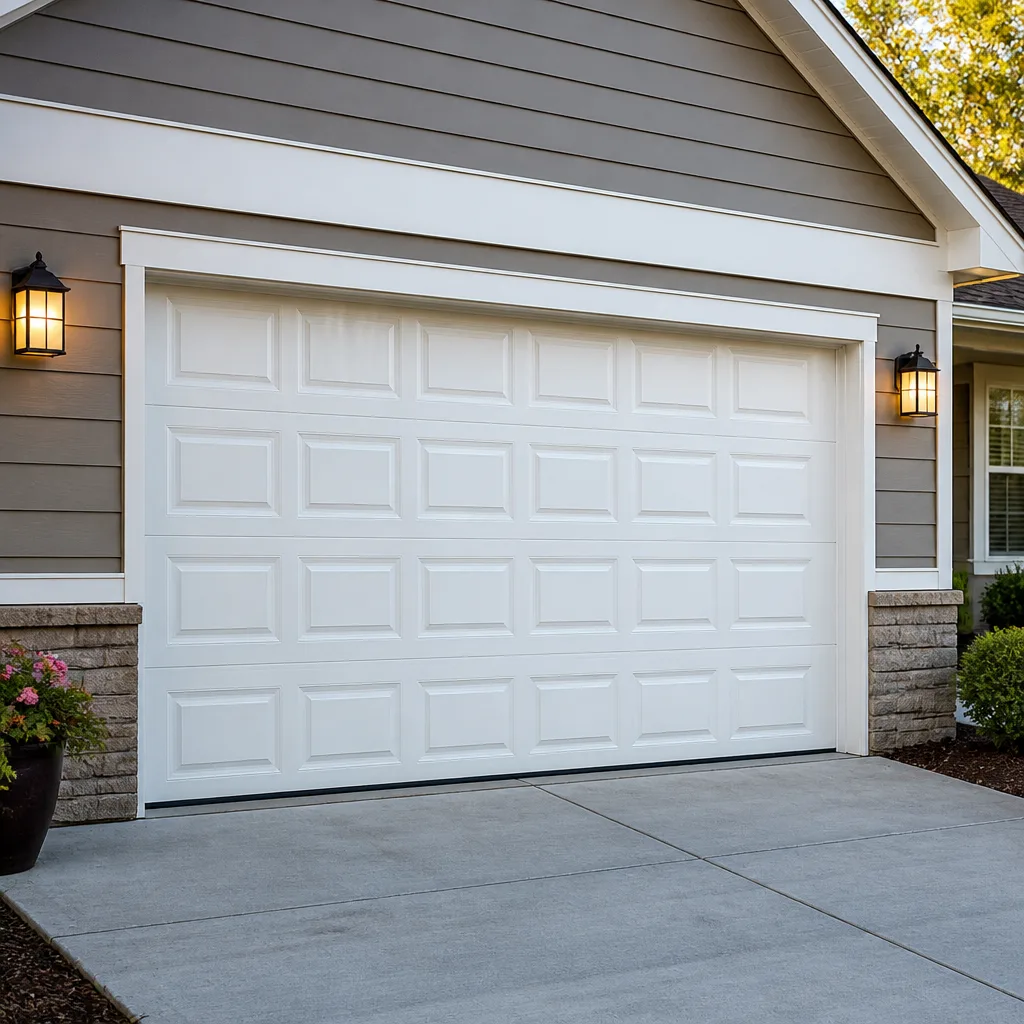 Raised-panel steel
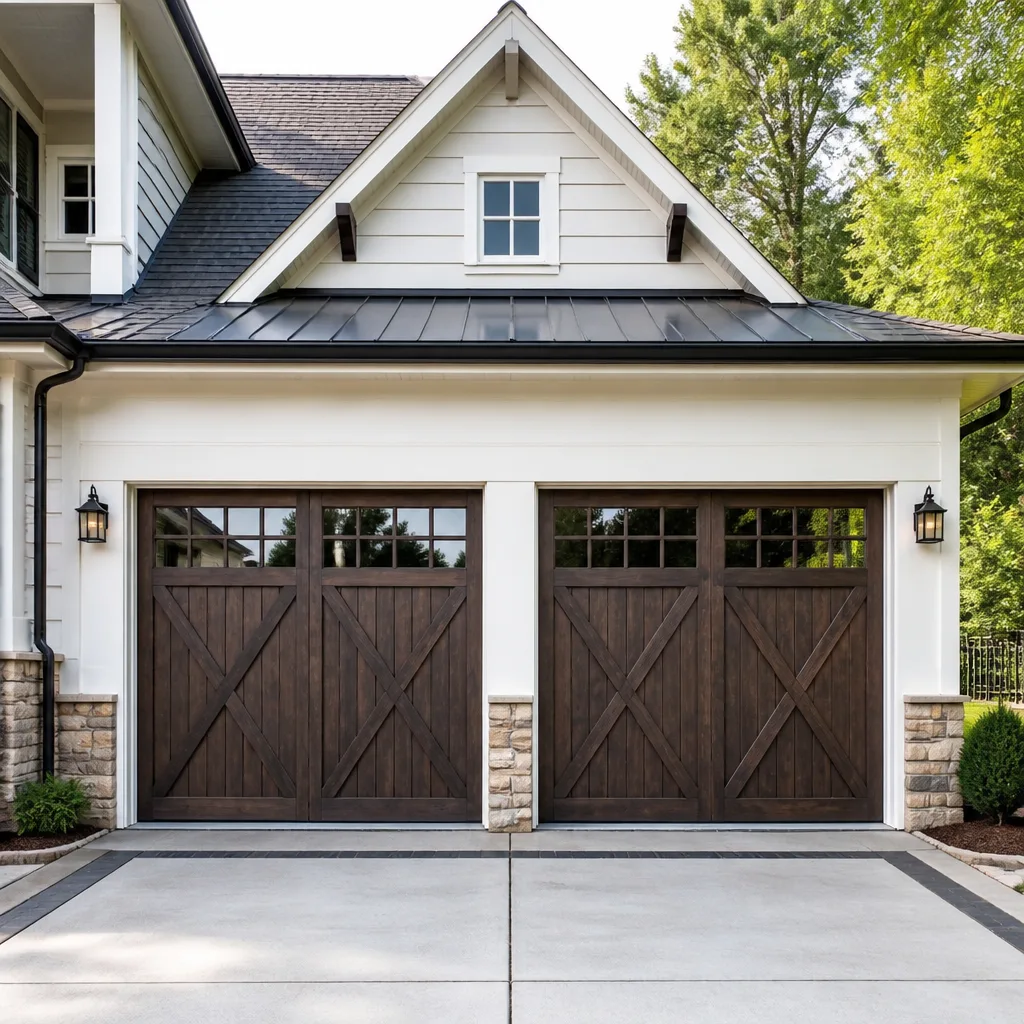 Carriage house
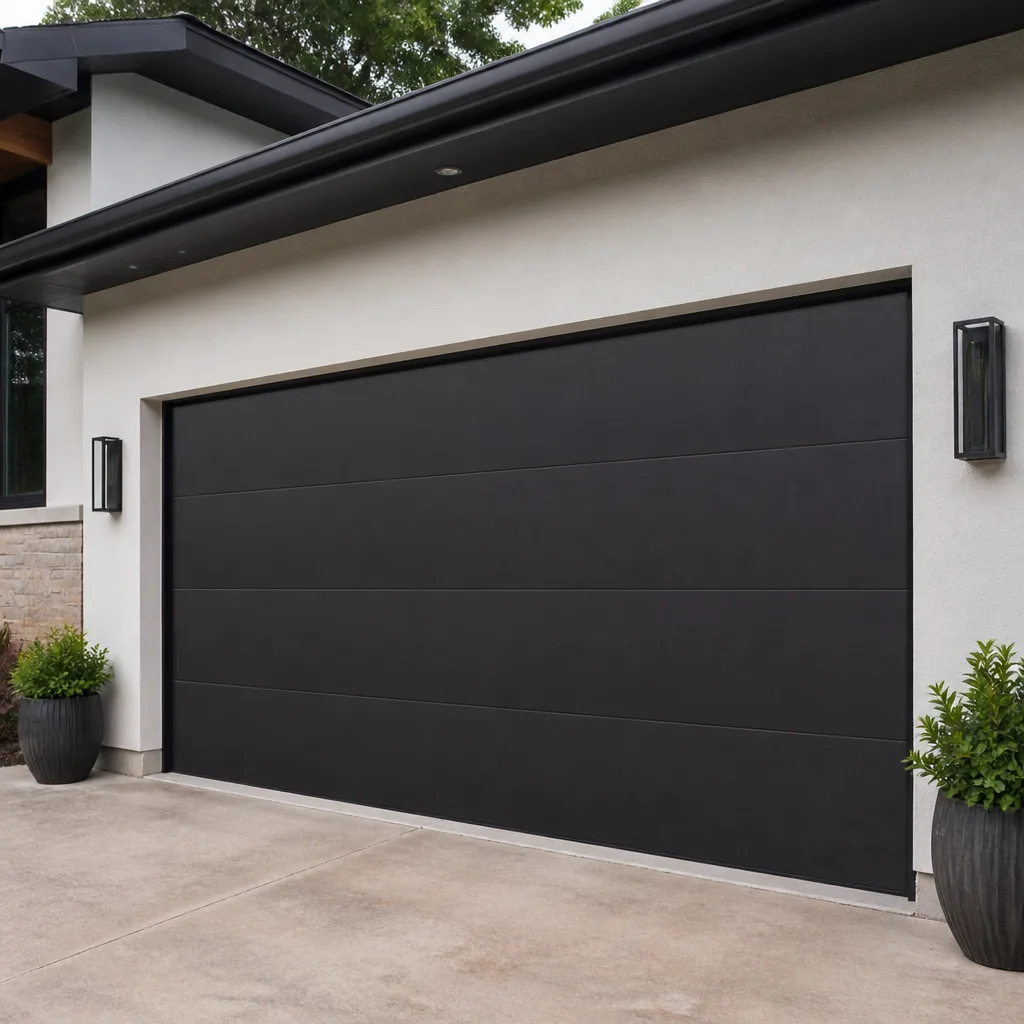 Modern flush
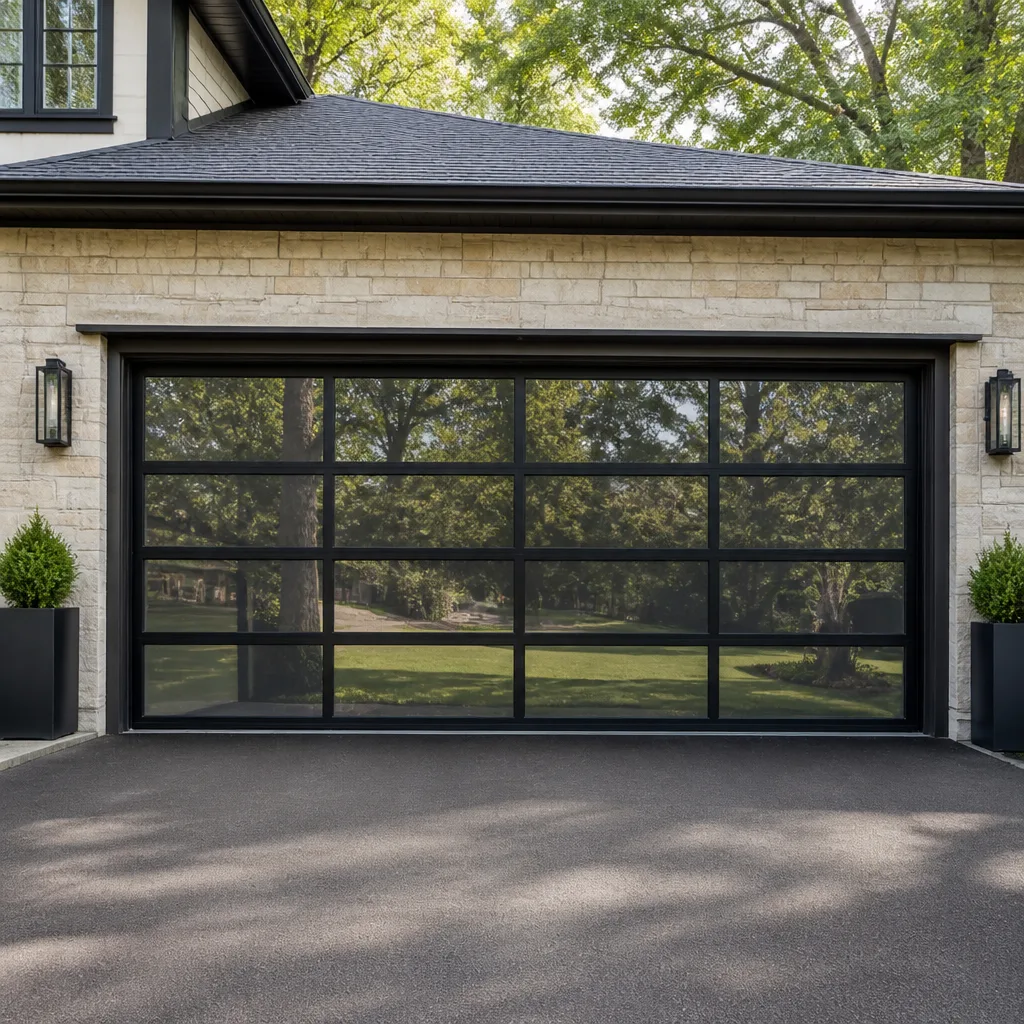 Full-view glass
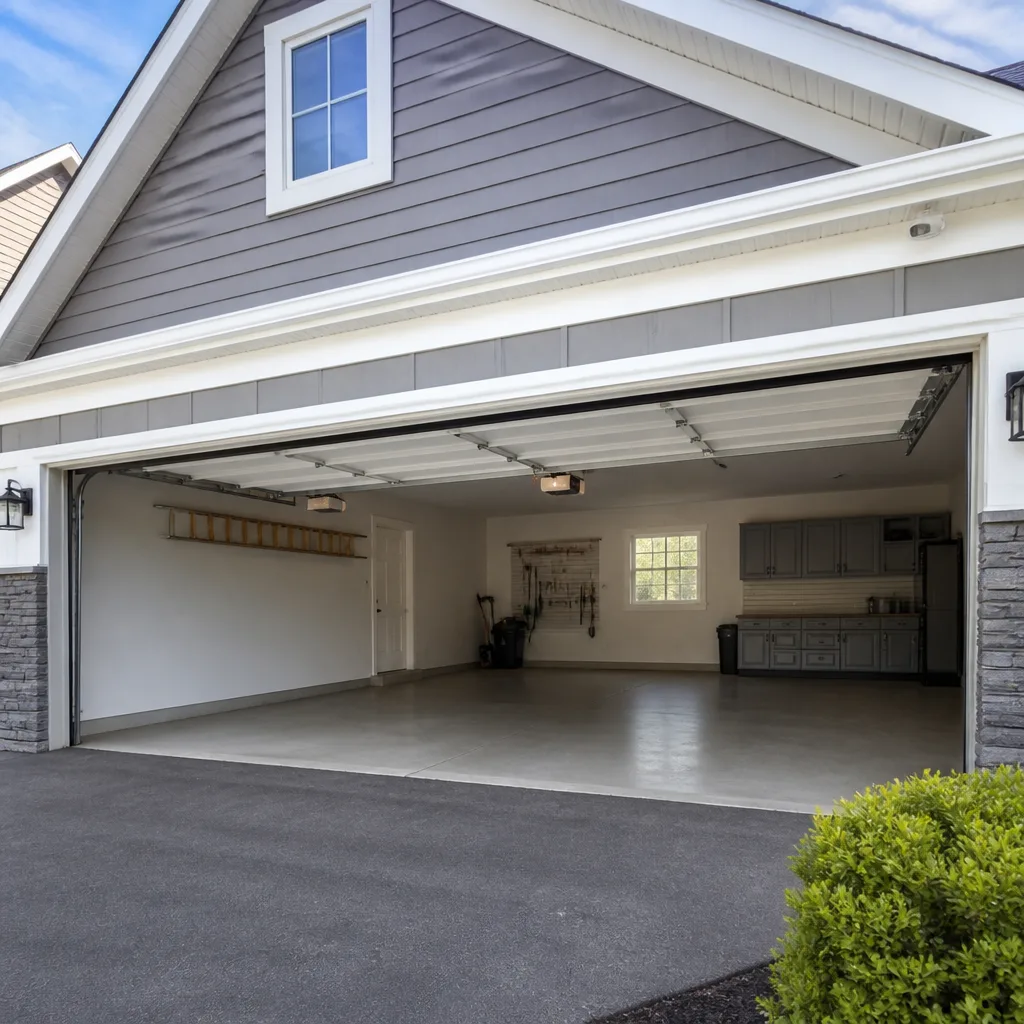 LiftMaster openers
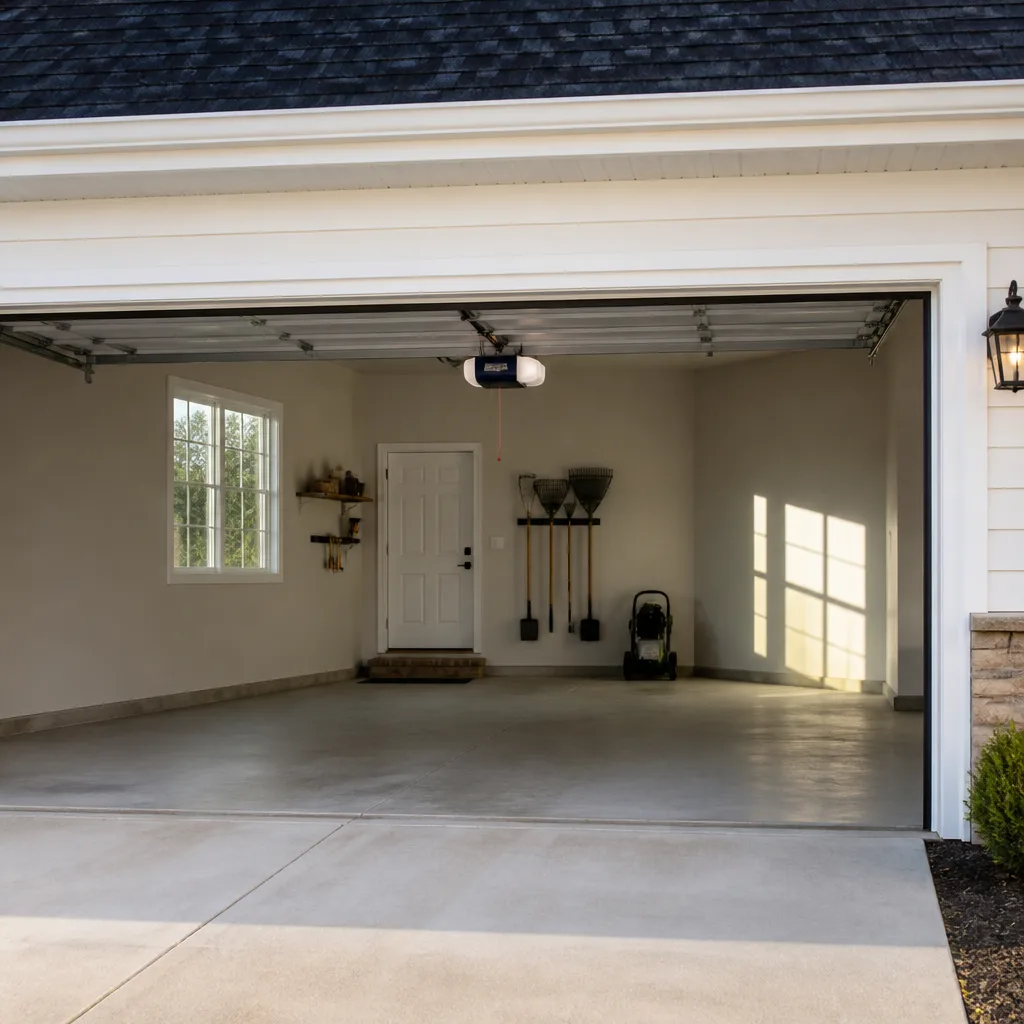 Chamberlain openers
Full 25-point door and opener safety check with every visit - springs, cables, rollers, tracks, and your LiftMaster or Chamberlain opener included
You get a price before we start. It does not change when the pro arrives.
Get your free estimateGarage Door Warning Signs: A Palm Coast Homeowner’s Reference Guide
Most garage doors don’t fail without warning. They fail because the warning was quiet, or because it looked like something else. A door that hesitates for half a second before it closes isn’t “just getting old” – it’s a symptom with three common causes, and one of them will leave your car stranded in the garage on a weekday morning. A squeal that shows up in July isn’t cosmetic; it’s metal telling you something is moving against something it shouldn’t. This guide maps the visual, sound, and behavioral warning signs we look for on doors across Palm Coast, and gives you a three-minute monthly self-test to catch problems while they’re still small.
Quick Answer
The main garage door warning signs are a door that reverses before touching the floor, uneven travel on one side, grinding or popping sounds during operation, a door that won’t stay open, rust or white mineral streaks on hinges and springs, and slow or delayed response from the opener. Any single one of these means the door needs a professional inspection before you keep using it. The signs that require stopping immediately are a snapped spring, a frayed or hanging cable, and a door that will not open or close at all.
Styles & brands we work with
- Raised-panel steel
- Carriage house
- Modern flush
- Full-view glass
- LiftMaster openers
- Chamberlain openers
Table of Contents
- Visual Warning Signs: What to Look At on a Palm Coast Door
- Sound-Based Diagnostics: What Each Noise Is Telling You
- Behavioral Warning Signs: Uneven Travel, Reversal, and Delayed Response
- Why a Working Door That Struggles in Heat and Humidity Is Already Failing
- The Three-Minute Monthly Self-Test
- Brand-Specific Warning Signs: LiftMaster, Chamberlain, Genie, Clopay
- Signs That Mean Stop Using the Door Today
- A Seasonal Watch List for Palm Coast Weather
Visual Warning Signs: What to Look At on a Palm Coast Door
Look at the door before you press the button. Set aside two minutes in daylight and walk the full width of the door, both inside and outside, at eye level and at floor level. Homeowners who do this regularly catch most developing problems before anything breaks. Here’s what to look for.
Rust streaks and white mineral deposits
Rust streaks on hinges, spring plates, and bottom brackets are common on doors in Palm Coast because the air is warm and humid most of the year and doors sit in it constantly. When humidity condenses on cold metal in the morning and burns off by afternoon, the cycle repeats. White, chalky deposits on the same hardware are usually dried mineral residue left behind when moisture evaporates off the metal. Neither one is a reason to panic, but both mean the hardware is losing its protective coating and will need attention sooner rather than later. If rust shows up in the middle of a panel rather than at a joint, check whether the paint there is intact.
Paint bubbling near hinges and seams
Paint that bubbles or lifts near hinges, at the bottom rail, or along panel seams usually points to moisture sitting underneath the finish. On a steel or wood door, that’s the early stage of a bigger problem – usually surface rust spreading beneath the paint or a wood door taking on water at the joints. Once paint lifts, the metal underneath is unprotected and the problem accelerates. Catch it early and it’s a simple cosmetic repair; let it go and the panel itself becomes the issue.
Visible sag, gaps, and uneven panels
Stand inside the garage and look along the bottom edge of the closed door against the floor. The gap should be even across the full width. A gap that’s wider on one side means the door is out of balance or a track has shifted. Look up at the panels too – any panel that leans or sits at an angle to its neighbor means the sections are no longer running true. On a multi-panel door, this is the first thing we check when a homeowner mentions noise or uneven travel.
Hinge, roller, and spring hardware
Check every hinge point for looseness by hand – the door should not move at the hinge when you gently push. Look at the rollers in the track: any roller that’s worn flat on one side, cracked, or wobbling needs replacing. On torsion-spring doors, check the spring shaft for rust streaks radiating outward – that’s a sign of stress on a component that is under high tension.
If you spot any of this on your door, the next step is a proper look at the hardware by a technician. Our garage door repair service starts with a full inspection of springs, cables, tracks, rollers, and panels before anything is quoted.
Sound-Based Diagnostics: What Each Noise Is Telling You
Your ear is a diagnostic tool. A door that sounds different this month than it did last month is telling you something changed. Here’s how we map the four most common sounds.
Grinding
Grinding is metal-on-metal contact, and it usually comes from one of three places: a dry or worn roller in the track, a bent track section the roller is scraping against, or an opener gear or chain that has lost lubrication or is wearing out. Grinding that starts suddenly and stays consistent through the full travel is usually a roller or track problem. Grinding that only happens at the start or end of travel tends to be opener-side. Either way, a grinding door should be checked before it gets louder – by the time it’s loud enough to hear from inside the house, the damage underneath has usually spread.
Popping
A sharp pop or bang during operation is the sound of something slipping or catching under tension. The most common cause is a torsion spring that has started to fatigue, or a cable that has come off its drum and is catching. Popping that happens once and then the door works is a warning. Popping that repeats on every cycle means stop and get it looked at. This is the sound we treat as the most urgent of the four.
Squealing
A high-pitched squeal is almost always a lubrication problem – metal rubbing on metal without enough grease between. Rollers, hinges, and the spring coils themselves are the usual culprits. Squealing is the least urgent of these sounds, but it’s the easiest to catch early and the easiest to fix. Left alone, it becomes grinding.
Rattling and banging
Loose hardware – hinges, brackets, bolts – rattles against the panel as the door moves. On a door with loose panels, the rattle can be loud enough that it sounds like the door is coming apart. It usually isn’t, but the looseness itself needs attention before the vibration works a fastener loose somewhere it matters.
Which sounds mean stop using the door immediately
We tell homeowners to stop using the door if they hear any of the following:
- A sharp popping or snapping sound followed by the door feeling unusually heavy or refusing to lift.
- A whipping or scraping sound from the cable side of the door.
- Any grinding that is accompanied by the door visibly stalling.
Springs and cables are under enormous tension, and a failed spring or snapped cable can release that tension suddenly. A door in that state is not a DIY repair, and it is not safe to keep cycling while you diagnose it. Call a trained technician.
Behavioral Warning Signs: Uneven Travel, Reversal, and Delayed Response
The way the door moves tells you as much as the way it sounds. These are the behavioral symptoms we ask about first on a diagnostic call, because each points to a different root cause.
Uneven travel
If the door rises faster on one side than the other, or the panels visibly skew as the door goes up, the two sides are lifting at different tensions. That means one of the springs is doing more work than the other, one of the cables has stretched or slipped, or the door itself has lost balance. Uneven travel accelerates wear on the rollers and the tracks and should be corrected before it leads to a stuck door.
Reversal before the floor
A door that goes down most of the way, then reverses and goes back up, is a door with a broken safety system or an obstructed sensor. The opener’s safety sensors at the base of the door – the small light-emitting pair near the track – are there to stop the door if something crosses the path. On a LiftMaster or Chamberlain opener, the sensor lights on each unit will flash when the beam is interrupted or the sensors are misaligned. The door reversing is a sign the system is working correctly, but something is breaking the beam. It could be dirt on the lens, a misaligned bracket, an object on the floor, or a failing sensor.
Delayed response from the opener
Press the button and the door should start moving within a second. If you press and nothing happens for two or three seconds, the opener has a signal problem, a battery problem in the remote, or an internal control board issue. On older Craftsman and Genie units, delayed response is often a worn gear or a remote that needs re-pairing. On a modern LiftMaster or Chamberlain unit, it’s more often a Wi-Fi or control-board symptom. Delay is the sign that precedes most opener failures.
Door that won’t stay open
If your door closes on its own after you open it, or won’t hold at the top of travel, the balance is off – most commonly a spring that has lost tension. This is the sign that strands a car in the garage, because the opener is fighting a door that no longer has enough lift assist to stay up. In Palm Coast humidity, torsion springs fatigue slowly and the change can be hard to notice until the door simply won’t hold.
If your door is showing any of these behaviors, our garage door opener repair service can tell for certain whether the problem is the opener or the door itself.
Why a Working Door That Struggles in Heat and Humidity Is Already Failing
A door that “still works” but hesitates, grunts, or takes longer than it used to is not a door in good shape. It’s a door in early failure. Palm Coast’s warm, humid climate stresses garage doors in ways that aren’t obvious from the inside of the house. Here’s what actually happens.
Heat expansion and track alignment
Steel and aluminum tracks expand slightly in the heat of the day. On a well-installed door, that expansion is absorbed by the clearance in the track. On a door whose brackets have shifted or loosened, the clearance is smaller than it should be – and the door will run smoothly in the morning and drag in the afternoon. That pattern is easy to miss, especially since most people use their garage in the morning. If your door works fine early in the day and sounds different later, that’s a track alignment symptom.
Humidity and lubrication breakdown
The grease that protects rollers, hinges, and springs breaks down faster in humid air. Lubricant that stays put for a year in a drier climate can thin or wash out faster in a Palm Coast garage that sees moisture almost daily. Thinned lubricant means metal-on-metal contact, which is where grinding and squealing start. This is why seasonal lubrication matters more here than it does in cooler climates.
Wood doors and moisture
A wood door absorbs and releases moisture with the seasons. In Palm Coast, a wood door can take on water in the summer and dry out in a cooler, drier stretch – and each cycle leaves it slightly less flat. Paint that hides the swelling at the joints will eventually bubble or crack and let in more moisture. Once a wood panel starts to warp, the door’s balance is affected because the panel’s weight distribution has changed, and the springs are now calibrated for a door that no longer exists.
Rubber seals and weatherstripping
The rubber seal at the bottom of the door and the weatherstripping around the frame are the first line of defense against heat, moisture, and insects. These seals harden with age and heat, and once they lose their flexibility they no longer seal properly. A door with a worn bottom seal lets warm, humid air under it, which increases the moisture load inside the garage and speeds up everything described above. A seal is cheap and easy to replace; the damage it prevents is not.
Why a struggling door is a failing door
The distinction matters. A door that’s struggling has one or more components already at the edge – a spring that’s below tension, a roller that’s worn flat, a track that’s been knocked out of alignment. Every cycle causes more wear than the last. Catching it while it’s a struggle means a small repair; waiting until it doesn’t move means a bigger one, and usually a day your car is stuck in the garage while it’s sorted out. That’s why we encourage Palm Coast homeowners to treat a change in the door’s behavior as a signal, not a nuance.
The Three-Minute Monthly Self-Test
This is the simplest thing a homeowner can do to stay ahead of a garage door failure. Set a reminder for the first of every month. The whole test takes about three minutes, and it doesn’t require any tools or any step that puts you near the springs or cables under tension.
Step 1: The visual pass (30 seconds)
With the door closed, walk the full width of the door. Look for rust streaks, white chalky deposits, paint bubbling, and visible gaps along the bottom edge. Look up at the springs – don’t touch them – and check for rust streaks radiating from the plates. Look at the hinges for looseness. This catches most developing issues before they become audible.
Step 2: The balance test (60 seconds)
Open the door by hand only if it’s safe to do so – on many openers there’s a manual release, but if you’re not sure your door is safe to release manually, skip this step and do the rest of the test. If you can release it safely, lift the door halfway by hand with the opener disconnected and let go at about waist height. A properly balanced door should stay roughly where you left it. If it sags or falls, the springs are out of balance and need a professional look. Do not do this test if you hear or see any sign of a broken spring or cable.
Step 3: The sound check (30 seconds)
Reconnect the door and cycle it once with the opener. Stand still and listen. Note any grinding, popping, squealing, or rattling. Any sound that’s new or louder than last month is a signal to note and address. We recommend keeping a short note on your phone – a word or two per cycle – to compare month over month, since changes in sound are easy to normalize.
Step 4: The safety sensor test (30 seconds)
With the door open, wave your foot or a broom handle through the beam of the sensor at the base of the door while you close the door. The door should reverse immediately. If it doesn’t reverse, or if the sensor lights are flashing, the safety system needs attention. Next, place a small object (a roll of tape, a full water bottle) under the door and press close – the door should reverse as soon as it touches the object. If either of these fails, stop using the door and schedule a service visit.
Step 5: The response test (30 seconds)
Press the remote and time how long the door takes to start moving. If it’s slower than last month, if the remote feels short-ranged, or if you sometimes have to press twice, note it. These are the earliest signs of opener wear.
If anything in the self-test looks off, that’s the point to get it looked at – our team handles full-scope inspection and repair for every door type in our lineup. Reach out to Charter Garage Door Repair for an assessment.
Brand-Specific Warning Signs: LiftMaster, Chamberlain, Genie, Clopay
Warning signs show up differently by brand. A symptom that sounds like one problem on a LiftMaster opener can mean something different on an older Genie. That’s why we diagnose by brand behavior, not by generic troubleshooting.
LiftMaster and Chamberlain openers
These two share a lot of design language, and the warning signs are similar. On a modern Wi-Fi-connected unit, the earliest sign of a failing control board is a dropped Wi-Fi connection that doesn’t come back after a router restart, followed by remote pairing issues. On older belt-drive units, the belt itself will start to fray or stretch after years of use, and the first sign is a door that runs slightly slower and noisier than it used to. If a Chamberlain or LiftMaster unit starts reversing on its own, the sensor alignment is the first thing our technicians check, followed by the control board. Combined, these two brands account for a large share of the openers we service – we know their failure patterns well because we see them constantly.
Genie openers
Genie units (including older screw-drive and chain-drive models) have a distinctive warning sign: a slow, rhythmic clicking that gets louder as the door cycles. On a screw-drive Genie, that’s usually the screw itself wearing or the carriage losing grip. Older Genie models also tend to show their wear in the start-up – if the opener hums for a full second before the carriage engages, a gear or controller is on its way out. Genie remotes and keypads also have a common symptom where they need to be re-paired more often before they fail completely.
Clopay and Amarr doors
On the door side, section problems vary by material and construction. Clopay steel doors tend to show their first warning sign at the bottom rail – paint lifting or rust starting where heavy floor-level moisture sits. Clopay wood-composite doors show warning signs at the joints, where humidity takes its toll first. Amarr doors often show their first problem at the hinges – a slight sag at the hinge points that leads to uneven travel over time. Walking the door with these brand-specific patterns in mind catches most developing issues before they affect the whole panel.
Why brand matters in diagnostics
We’re trained to service 8 of the most widely installed brands in North America, which means when we hear a specific sound we already know which brand-specific component is most likely responsible. It shortens the diagnostic step and avoids guesswork. If your door or opener is from one of the brands we service, our technicians have seen the failure mode before.
Signs That Mean Stop Using the Door Today
Most garage door warning signs are safe to investigate calmly. A few mean the opposite: stop using the door until a trained technician has looked at it. Here’s the list we give every homeowner, in order of urgency.
- A snapped torsion spring. You’ll hear a loud bang and the door will feel very heavy. Springs store enormous energy, and a broken spring can release it unpredictably. Do not try to open the door by hand and do not try to replace the spring yourself.
- A broken or frayed cable. Cables are under tension opposite the spring. A frayed cable can snap without warning. If you see strands hanging off a cable or a cable that has come off its drum, keep away from it and call.
- A door stuck partially open. A door hanging at an angle puts uneven tension on the remaining spring and cable, and can fall. Keep people and pets clear of the area underneath.
- Spring or cable hardware touching the door. If a broken spring or loose cable is resting against the door panel, that’s a sign the whole assembly has shifted. Stop using the door and call.
- Visible damage to the track or brackets. A bent track or a bracket that has pulled out of the wall is a structural signal. The door may still move, but it can come off the track.
In any of these cases, don’t cycle the door, don’t try to force it, and don’t try to replace a spring or cable yourself. These components are under tension and handle poorly without the right tools and training. Call a professional.
A Seasonal Watch List for Palm Coast Weather
Palm Coast’s climate gives garage doors a specific wear pattern through the year. We tell homeowners to check specific things at specific times, because that’s when each warning sign tends to show up first.
- Late spring (before the hottest stretch): check the tracks and hinges for looseness. Expansion in early heat is when a slightly loose bracket first starts to drag.
- Mid-summer: check the opener’s heat tolerance. A control board that’s been getting hot will start showing delay symptoms during the hottest weeks – if your door is slower at 3pm than at 8am, that’s the sign.
- Late summer and early fall: check the bottom seal and weatherstripping. This is when humid air gets under a worn seal and starts working on the panel.
- Fall and winter: check the door’s balance and spring tension. Springs that stretched through the summer will show their fatigue here, and this is when “won’t stay open” symptoms first appear.
- Any storm in the forecast: do a visual pass on panels, tracks, and seals before and after. Wind and debris damage shows up first at panel edges and track brackets, sometimes with no obvious outward sign.
None of this is difficult. The hardest part is remembering to do it. That’s why the monthly self-test above is the single most valuable habit we recommend – but the seasonal watch list is the backup for homeowners who’d rather do a deeper check a few times a year than a quick one monthly.
Common Mistakes to Avoid
- Assuming a slow door is normal wear. A door that grunts, hesitates, or lifts slower than it did six months ago is telling you something is failing. The change from “slow” to “won’t open” usually happens in a single cycle.
- Trying to fix a spring or cable yourself. Springs and cables store enough energy to cause serious injury. Every garage door professional has a story about a homeowner who tried; the fix is never worth the risk.
- Ignoring sensor misalignment because the door “mostly works.” A door that reverses before the floor is a door whose safety system is being triggered. On a Palm Coast door, the sensors can be knocked out of alignment by a light bump, a fallen leaf, or a kid’s bike tire – and the door will keep cycling until you fix the alignment.
- Skipping lubrication because the door “isn’t noisy.” Humid air here breaks down lubricant faster than in cooler climates. Once the grease is gone, corrosion starts on the metal it was protecting, and the damage is already happening before you hear it.
- Replacing the opener when the door is the problem. A door that won’t stay open or is very heavy before the opener engages is usually a door-side problem, not an opener problem. Replacing the opener without fixing the door leads to premature failure of the new opener.
- Not getting a professional inspection before a scheduled installation. If you’re planning a new door, the existing track, opener, and structural mounting are part of the job. An inspection before installation prevents surprises once the door is delivered.
- Forgetting the safety sensor test during your monthly check. The test takes thirty seconds and it’s the one part of the door you can’t skip, because a failed safety sensor is a genuine hazard if someone is in the path of the door.
See the difference
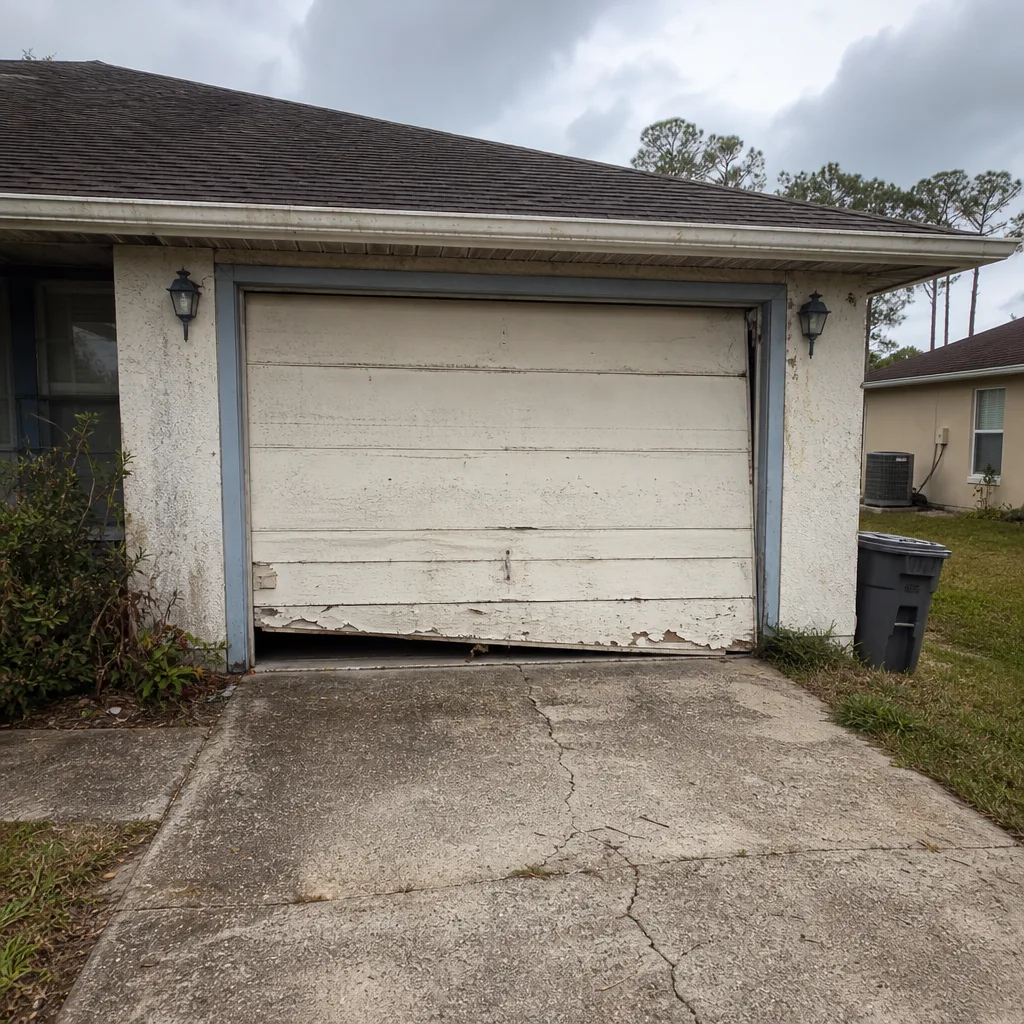 Before
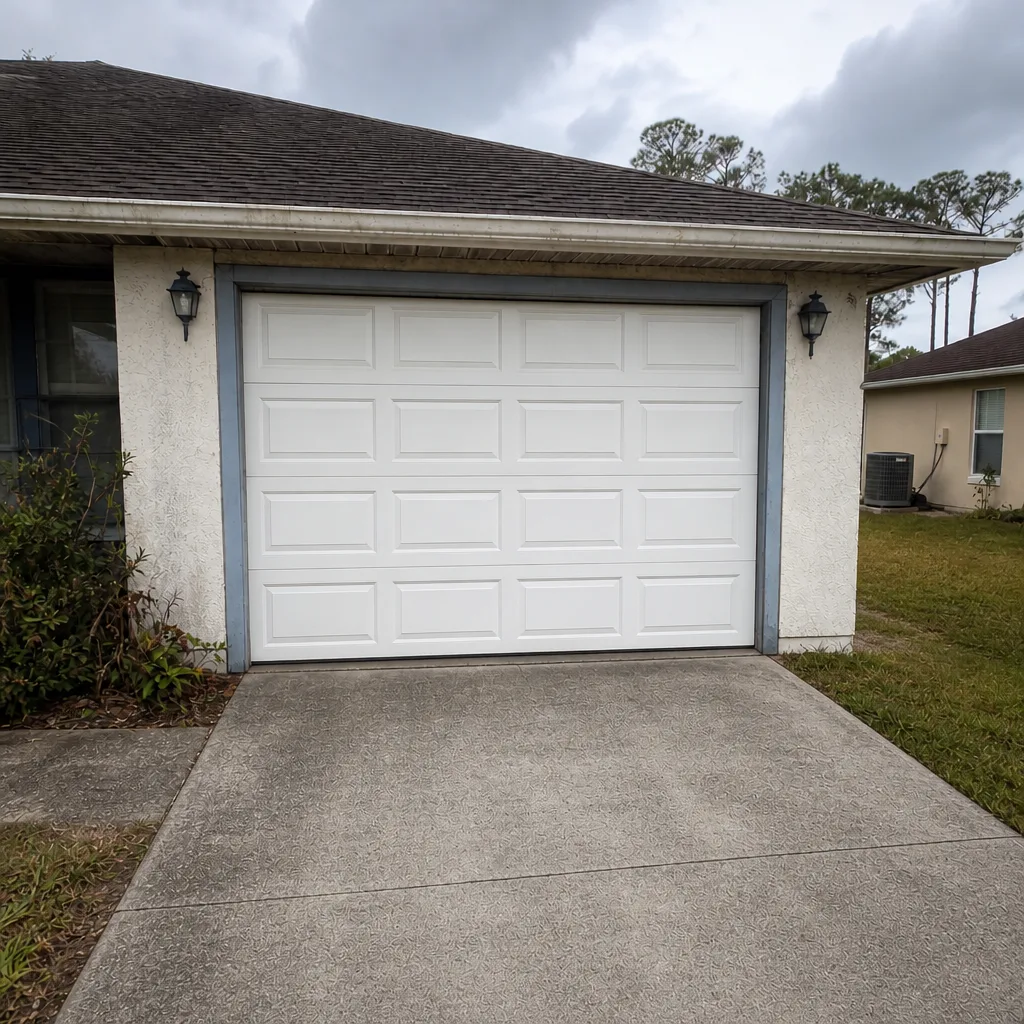 After
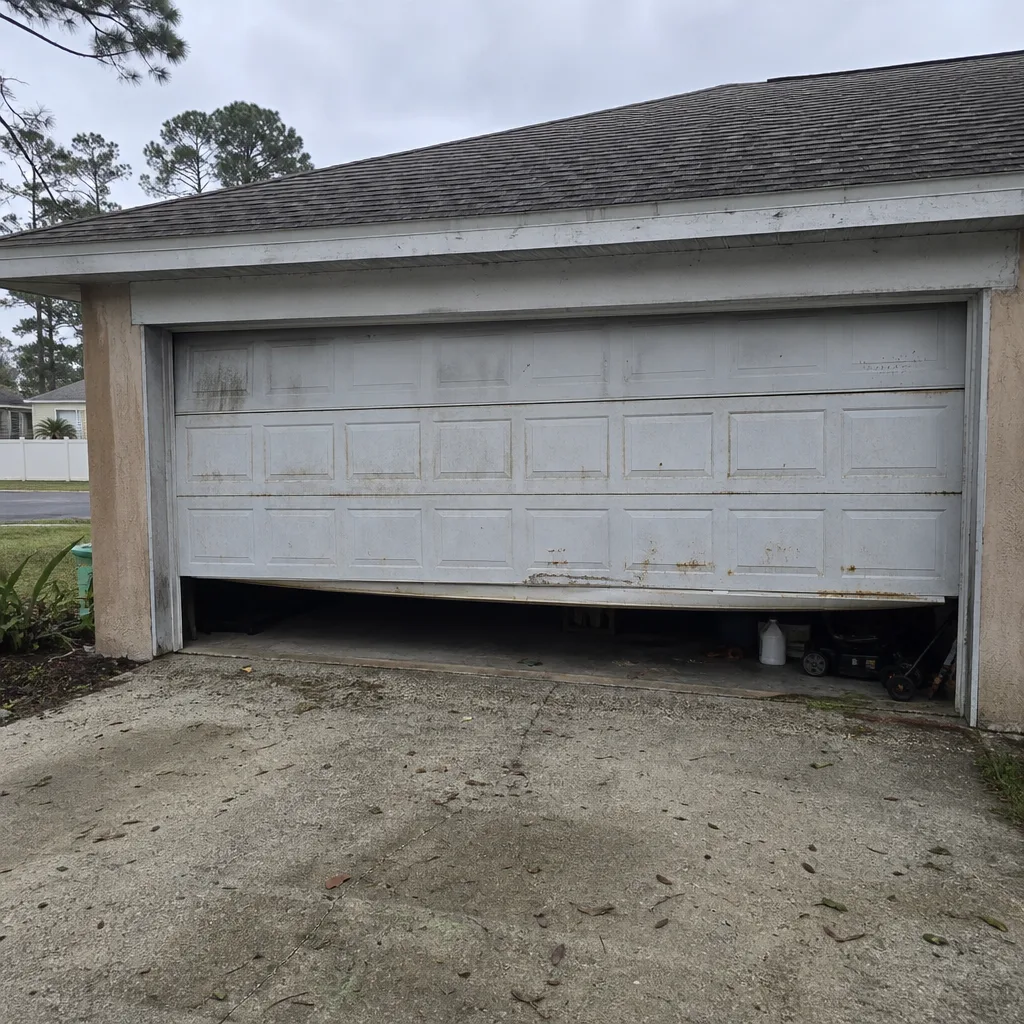 Before
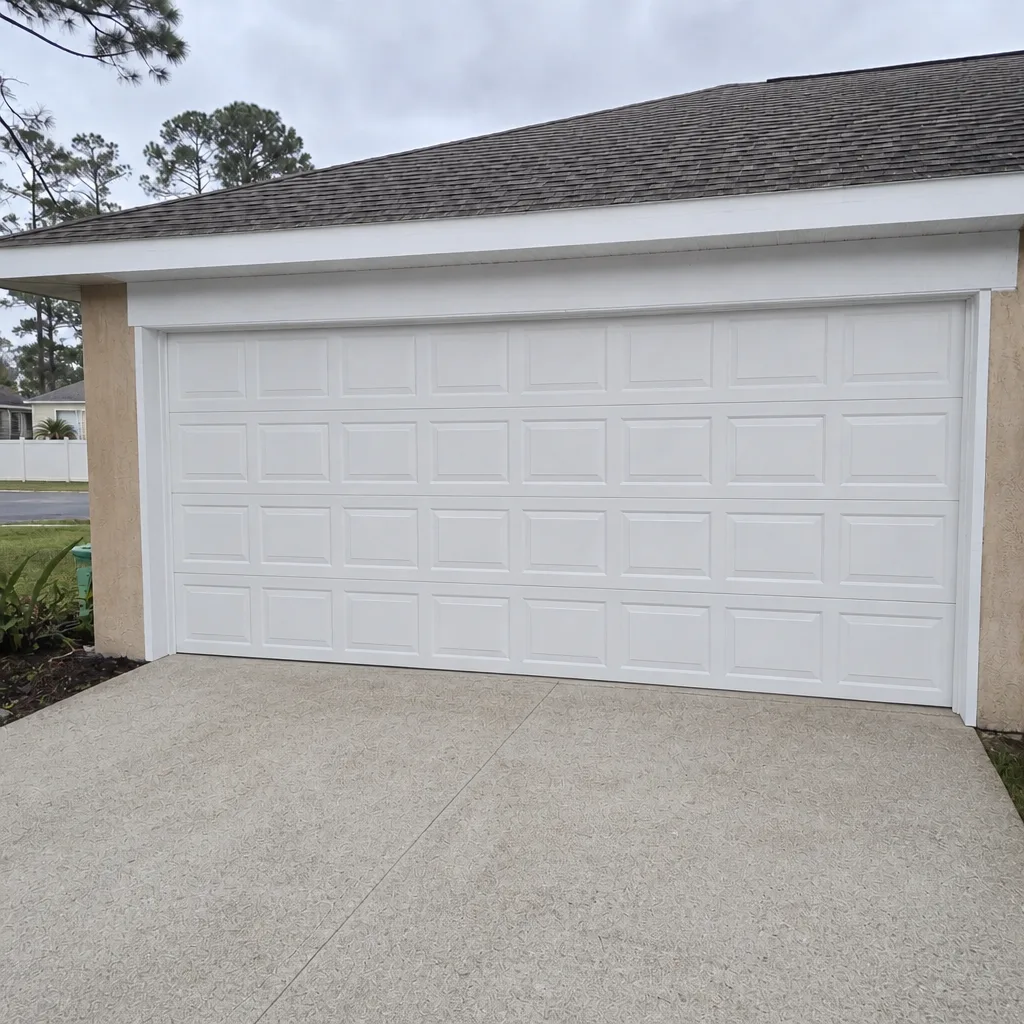 After
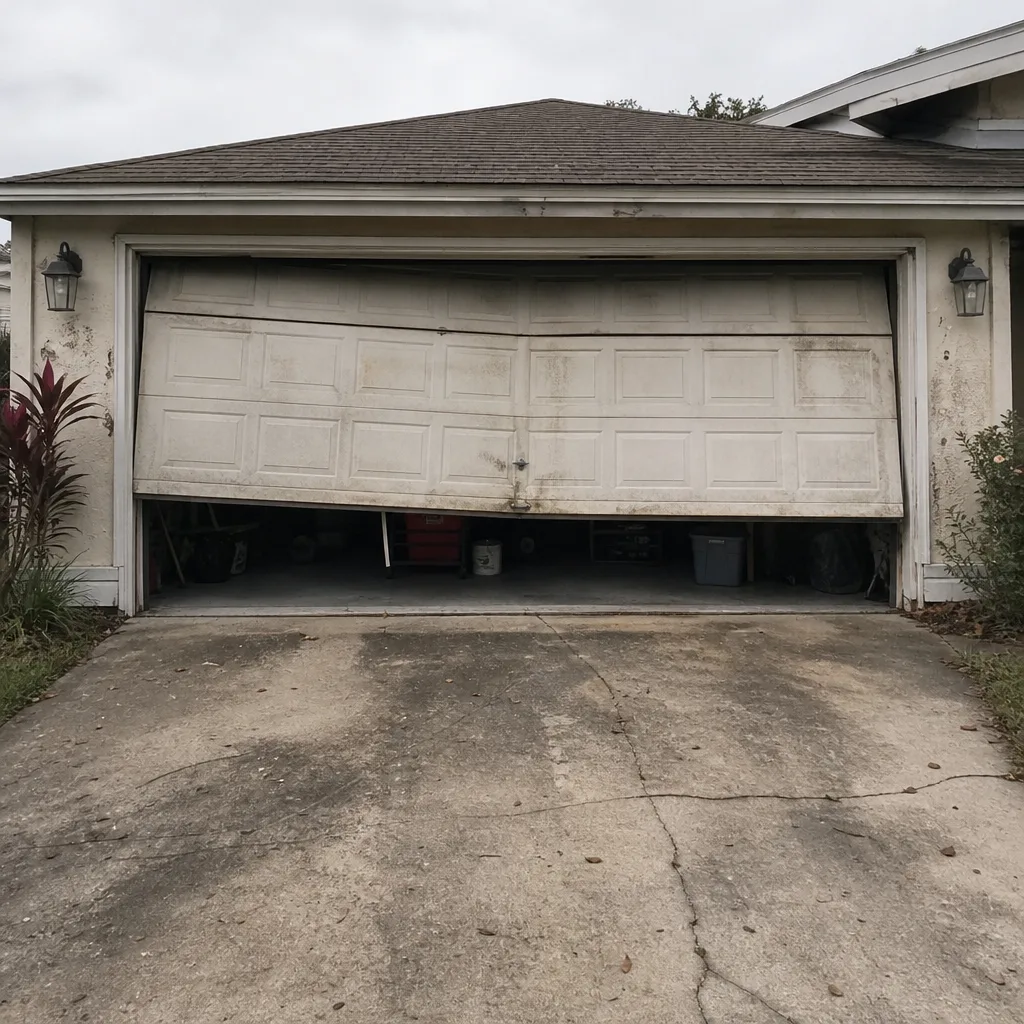 Before
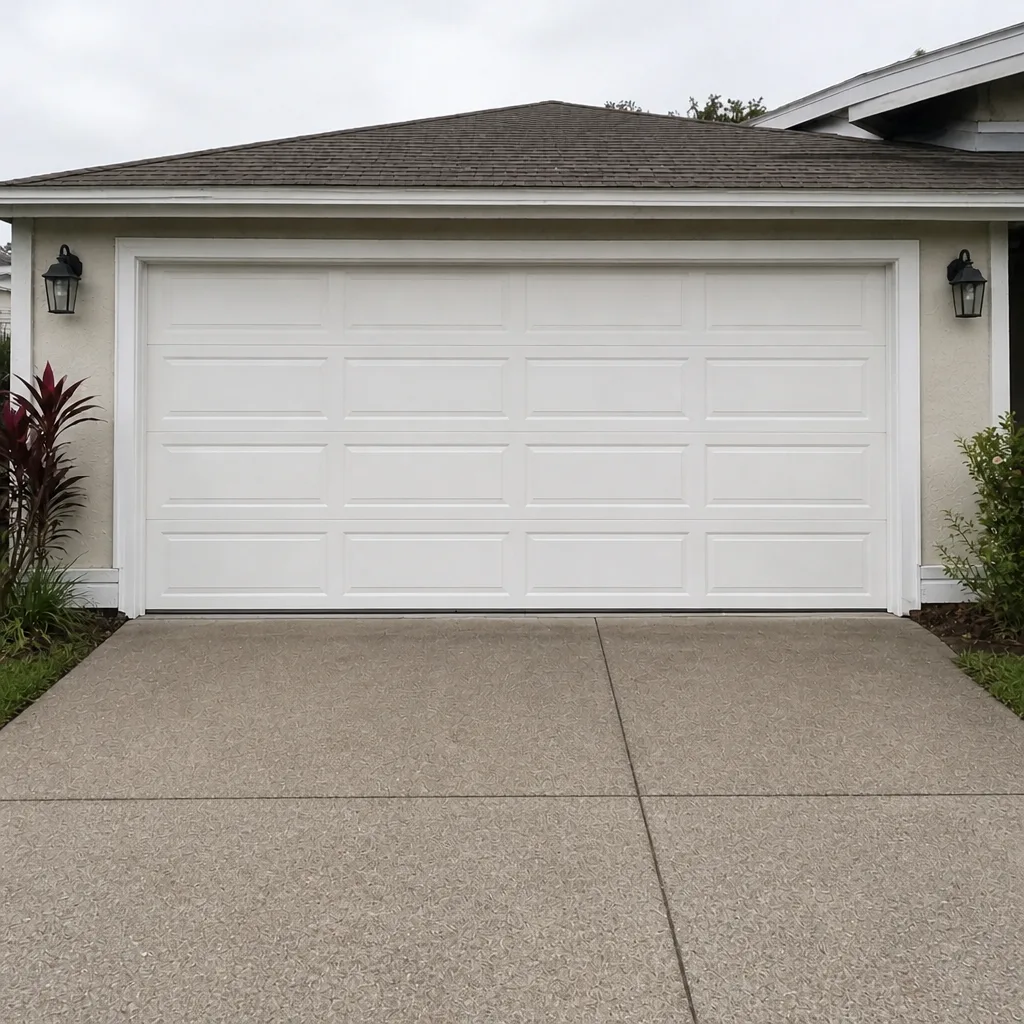 After
When to Call a Professional
Call us when any of the following is true: you hear a popping or snapping sound and the door stops moving; you see a broken spring or a frayed cable; your door reverses before the floor and you’ve already checked the sensor lenses for dirt; your door won’t stay open; the door travels unevenly or the panels visibly skew; or the month-to-month self-test shows a change you can’t explain. For everything else, we still recommend scheduling an inspection if the door has been acting differently for more than a few weeks. Charter Garage Door Repair offers free estimates in Palm Coast – call (866) 984-8329. Our technicians have up to experience, and we work on whatever brand is already on your home.
Frequently Asked Questions
The most common warning signs we see on Palm Coast doors are uneven travel, a door that reverses before reaching the floor, grinding or squealing during operation, and rust or white mineral streaks on hinges and springs. These are usually the earliest symptoms of spring fatigue, track misalignment, or humidity-related corrosion. Catching them at the symptom stage keeps the repair small – catching them after the door stops moving usually means a bigger job.
A broken garage door spring usually makes a loud bang and is followed by a door that feels extremely heavy and won’t lift. On a torsion-spring door, you may also see a visible gap in the spring itself, or rust streaks that radiate from the spring plates. If you suspect a broken spring, do not try to open the door and don’t try to replace the spring yourself. Call (866) 984-8329 – we answer 24/7, and fast dispatch runs from 7am to 7pm, Sunday through Friday.
A door that reverses before the floor is almost always a safety sensor issue. The opener’s sensors at the base of the door detect an obstruction and reverse the door as a safety feature. The most common causes are dirt or debris on the sensor lenses, a misaligned sensor bracket, or an object sitting in the beam’s path. Check the lenses first; if they’re clean and aligned and the door still reverses, the sensors themselves may need replacing.
Grinding means stop treating the door as working normally. Grinding is metal-on-metal contact, and it usually comes from a worn roller, a bent track, or a dry opener component. It’s rarely an immediate emergency, but continuing to run a door that’s grinding accelerates the damage faster than any other warning sign. Have it looked at within a few days rather than waiting for it to get worse.
Once a month, using the three-minute self-test described above. Palm Coast’s warm, humid air breaks down lubricant and accelerates corrosion faster than you’d see in a drier climate, so the interval matters. A monthly check catches most issues while they’re still small; a quarterly check usually catches them after they’ve started to affect adjacent components.
Not always, but the door and opener need to be matched in weight and lift capacity. A heavier door may need a stronger opener or a different spring setup, and the existing opener may not be rated for the new door’s weight. If you’re planning an installation, we check the existing opening and mounting before we quote, so the new door and opener work together correctly. Call (866) 984-8329 for a free estimate on the full job.
The Bottom Line
Most garage door failures announce themselves weeks before anything breaks. A half-second hesitation, a new squeal, a rust streak on a hinge, a door that reverses before the floor – these are your early warnings, and each one has a specific cause you can act on while the repair is still small. Run the three-minute self-test monthly, do the seasonal check a few times a year, and treat any pop, snap, or sign of a broken spring or cable as a stop signal. We’re here for the parts you shouldn’t handle yourself: Palm Coast homeowners can call us for free estimates and a proper look at the door before the repair gets expensive. Charter Garage Door Repair handles repair, opener service, and full installation, and our technicians have up to experience across the brands that are most likely on your home.
Call (866) 984-8329 for a free estimate. We answer 24/7. Fast dispatch from 7am to 7pm, Sunday through Friday.
Written by the team at Charter Garage Door Repair.